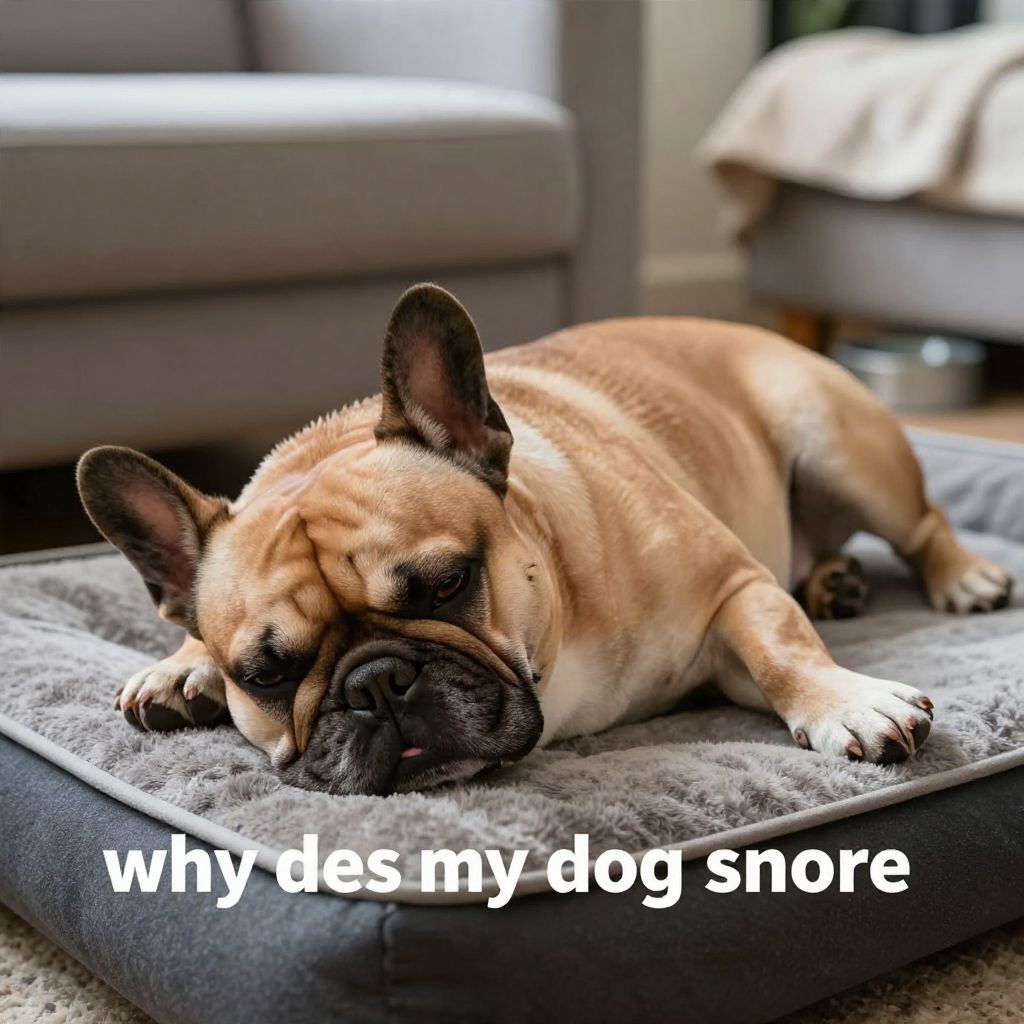
If you’re wondering, “Why does my dog snore?” the answer is often simple: air is having a harder time moving through the nose or throat while your dog sleeps. Snoring can be harmless, but it can also point to congestion, anatomy, weight gain, allergies, or a health problem that needs a vet’s attention.
The key is to notice whether the snoring is new, getting louder, or happening with other symptoms such as noisy breathing, coughing, or trouble sleeping. Those details help you tell the difference between a normal sleep sound and something that should be checked.
Why does my dog snore?
Dogs snore when airflow vibrates relaxed tissues in the nose, mouth, or throat during sleep. It can be normal in some dogs, especially those with short noses, but sudden snoring, worsening snoring, or snoring with breathing trouble may signal illness, irritation, or an airway obstruction that needs veterinary evaluation.
Common causes of dog snoring
Many different things can make a dog snore. Some are harmless and temporary, while others need treatment.
Breed and facial structure
Dogs with shorter muzzles often snore more because their airways are naturally narrower. This is common in many brachycephalic breeds, but not every dog of those breeds snores, and mixed-breed dogs can have similar anatomy too.
- Shorter nasal passages can create more vibration during sleep.
- Soft palate or throat shape may contribute to noisy breathing.
- Some dogs also have narrow nostrils that make airflow less efficient.
Sleeping position
Some dogs snore only when they sleep on their backs or with their neck bent in an awkward position. If the snoring stops when your dog changes position, it may be more of a sleep habit than a medical issue.
Weight gain
Extra body fat can narrow the airway and make snoring more likely. If your dog has gained weight recently, snoring may be one of several signs that their body condition is affecting breathing and sleep quality.
Nasal congestion or irritation
Just like people, dogs can snore more when their nose is stuffy. Causes may include mild allergies, dust, smoke, strong scents, or a temporary upper respiratory infection.
- Dry indoor air can make congestion worse.
- Environmental irritants may lead to snoring that comes and goes.
- Persistent nasal discharge, sneezing, or reverse sneezing may point to a deeper issue.
Dental or mouth problems
Oral pain, tooth disease, swollen gums, or an object lodged in the mouth can change how air moves through the airway. If your dog’s snoring started with bad breath, drooling, chewing changes, or facial swelling, a dental or oral exam is important.
Age-related changes
Older dogs may snore more because muscle tone changes with age, and some health conditions become more common over time. New snoring in a senior dog should not automatically be dismissed as “just aging.”
Polyps, masses, or airway disease
Less commonly, growths in the nose or throat, chronic inflammation, or structural airway problems can cause snoring. These issues are more concerning when the snoring is one-sided, noisy while awake, or paired with breathing difficulty.
When snoring is normal and when it is not
Occasional snoring that only happens in certain positions and does not affect your dog’s energy, appetite, or breathing may be normal. The concern rises when the sound is new, frequent, louder than before, or paired with other symptoms.
Usually less concerning
- Snoring only in deep sleep
- Snoring that changes with position
- A lifelong pattern in a short-nosed dog with no other symptoms
More concerning
- Sudden onset of snoring
- Snoring that gets progressively worse
- Snoring plus coughing, gagging, or wheezing
- Nasal discharge, bleeding, or repeated sneezing
- Poor appetite, lethargy, or exercise intolerance
Red flags that need a vet promptly
Some signs mean your dog should be seen quickly, and some are emergencies. Do not wait if breathing seems compromised.
- Open-mouth breathing at rest
- Labored breathing, blue or pale gums, or collapse
- Sudden swelling of the face, throat, or tongue
- Repeated choking, gagging, or distress while sleeping
- Blood from the nose or persistent one-sided nasal discharge
- Snoring with marked lethargy, fever, or not eating
If your dog has any of these signs, contact a veterinarian right away or seek emergency care.
What you can do at home
If your dog’s snoring seems mild and they otherwise seem well, a few practical changes may help. These steps are about comfort and risk reduction, not a substitute for veterinary care if symptoms worsen.
- Watch the pattern. Note when the snoring happens, how loud it is, and whether it changes with position or activity.
- Check for other symptoms. Look for coughing, sneezing, discharge, appetite changes, or trouble exercising.
- Reduce irritants. Avoid smoke, strong cleaning sprays, heavy perfumes, and dusty sleeping areas.
- Support a healthy weight. If your vet says your dog is overweight, a gradual weight-loss plan may reduce snoring.
- Adjust sleep setup. A comfortable bed that supports natural neck positioning may help some dogs breathe more easily.
- Keep the nose and mouth healthy. Regular dental care and routine vet visits can catch problems early.
What not to do
It is easy to assume snoring is harmless and ignore it, but it is also easy to overreact with unsafe home fixes. Stick to sensible, low-risk steps.
- Do not give human cold medicines or allergy medicines unless your veterinarian specifically instructs you to.
- Do not use essential oils or strong decongestant products around your dog.
- Do not force your dog into uncomfortable sleeping positions.
- Do not assume snoring is “just the breed” if it is new or changing.
How a vet may evaluate snoring
If your veterinarian is concerned, they may start with a physical exam and ask about when the snoring began, whether it is constant, and whether your dog has other breathing signs. Depending on the findings, they may recommend dental evaluation, imaging, or a closer look at the nose and airway.
The goal is to find out whether the sound is simply a sleep habit or part of a larger breathing problem. That distinction matters, especially in dogs with short noses, older dogs, or dogs with new symptoms.
Special considerations for puppies and senior dogs
Puppies can snore from congestion, sleeping position, or temporary upper respiratory irritation. If a puppy is snoring and also not nursing well, seems weak, or has discharge, a vet should assess them promptly.
Senior dogs may snore more because of age-related changes, but new snoring in an older dog deserves attention. Older dogs are also more likely to have dental disease, weight changes, or chronic airway issues that can affect breathing.
How to tell if your dog’s snoring is getting worse
Tracking changes over time can help you decide when to call the vet. A phone video of the snoring can also be useful at an appointment.
- Is it louder than before?
- Does it happen while awake or only asleep?
- Is your dog breathing harder during walks or play?
- Has appetite, energy, or sleep quality changed?
- Are there new nasal sounds, discharge, or coughing?
Bottom line
Why does my dog snore? Often it is due to normal anatomy, sleep position, or mild congestion, but new or worsening snoring can also signal a health issue. If the snoring is persistent, loud, or paired with breathing trouble, contact your veterinarian for guidance.
If you want to compare snoring with other breathing concerns, you may also find it helpful to read why is my dog breathing heavy? and why is my dog snoring?.