
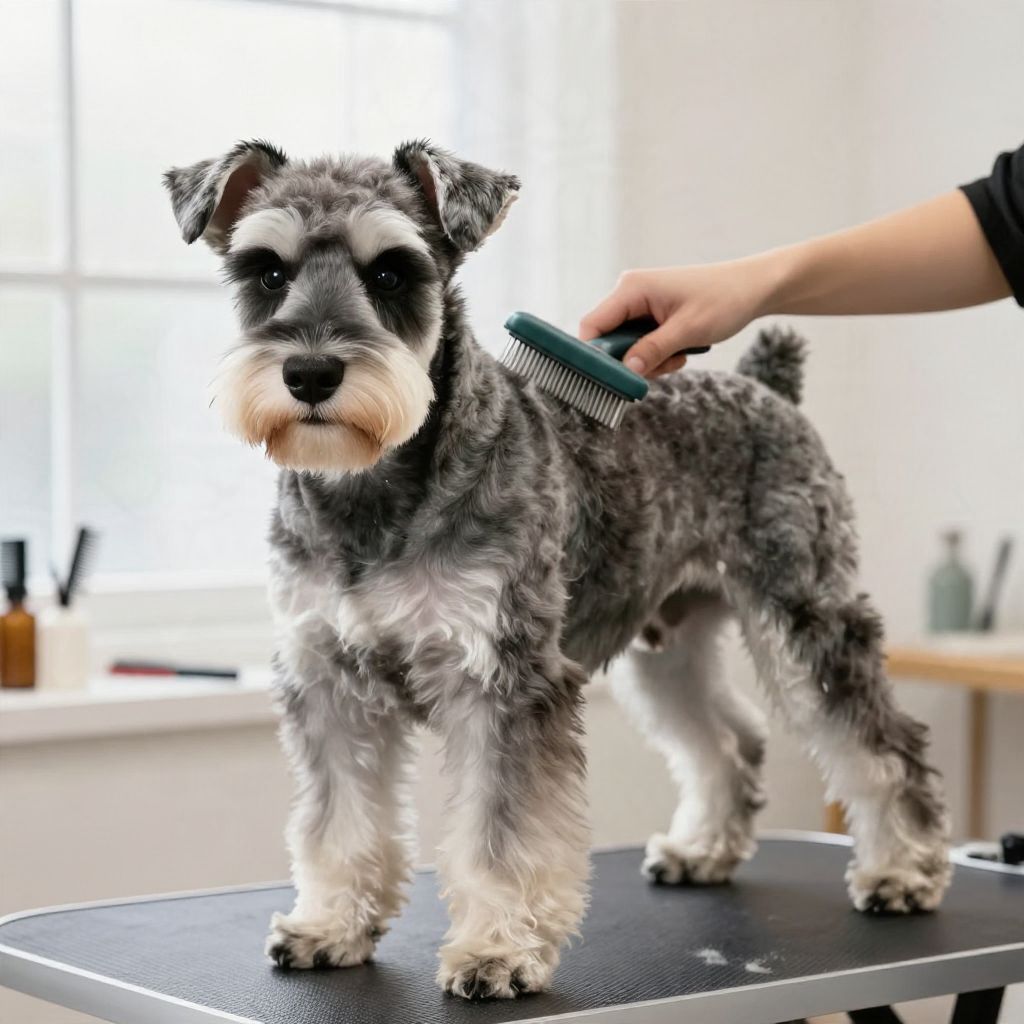
If you’re asking, “Do Schnauzers shed?” the short answer is yes, but usually far less than many other breeds. Their wiry coat tends to shed lightly, and regular grooming helps keep loose hair under control.
How much you notice depends on the individual dog, the coat type, grooming routine, season, and overall health. Some Schnauzers seem almost non-shedding in the home, while others leave more hair than owners expect.
Do Schnauzers Shed?
Yes. Schnauzers do shed, but they are generally considered a low-shedding breed because their coat often holds onto loose hair instead of dropping it everywhere. Regular brushing, hand-stripping or clipping, and good skin care can make shedding much more manageable.
Why Schnauzers Usually Shed Less Than Other Dogs
Schnauzers have a coat texture that is different from many double-coated breeds. Their outer coat is typically wiry, and that can reduce the amount of loose hair that ends up on your furniture and clothes.
That said, “low-shedding” does not mean “no shedding.” Every dog sheds hair as part of the normal hair-growth cycle, and the amount can vary with:
- coat type and grooming style
- age and hormonal changes
- seasonal coat changes
- diet and overall health
- skin irritation, allergies, or parasites
Coat Type Matters
Not all Schnauzers have the exact same coat quality. A dog with a softer coat may shed differently from one with a harsher, wirier coat. Grooming methods also affect how much loose hair you notice at home.
How Much Shedding Is Normal?
Normal shedding in a Schnauzer is usually light and steady rather than heavy and dramatic. You may see a little hair on brushes, bedding, or floors, especially if grooming has been delayed or your dog is changing coat.
It is worth paying attention if you notice:
- patchy hair loss
- red, flaky, or greasy skin
- constant scratching or licking
- more shedding than usual over a short time
- hair loss around the ears, tail, belly, or paws
Those signs can point to a medical or skin issue that needs veterinary attention.
Grooming Tips to Reduce Loose Hair
Good grooming is the most practical way to manage shedding in Schnauzers. It also helps you spot skin problems early and keeps the coat from matting.
Brush Regularly
Brushing removes loose hair before it ends up around your home. For many Schnauzers, a few short brushing sessions each week work better than one long session.
- Use a slicker brush or comb suited to the coat
- Work gently through the legs, beard, chest, and undercoat areas
- Check for tangles behind the ears and under the collar
Use the Right Grooming Style
Many Schnauzers are clipped or trimmed regularly, while some show dogs are hand-stripped to maintain a harsher coat texture. The best approach depends on your dog’s coat, your grooming goals, and your groomer’s advice.
If you are unsure which method suits your dog, ask a professional groomer familiar with Schnauzers. A poor grooming routine can make shedding seem worse because loose hair is not being removed efficiently.
Bathing Helps, but Don’t Overdo It
Bathing can loosen dead hair and debris, but too-frequent bathing may dry the skin. Use a dog-safe shampoo and follow your groomer or veterinarian’s guidance if your dog has sensitive skin.
When Shedding Is More Noticeable
Some shedding changes are normal and temporary. You may notice more hair loss during seasonal shifts, after a grooming change, or as your dog matures. Puppies often have softer coats that change as they grow into their adult coat.
Shedding can also increase if your Schnauzer is stressed, recovering from illness, or dealing with skin irritation. If the increase is sudden or severe, it is best not to assume it is just normal coat change.
Health Problems That Can Cause Extra Shedding
Excessive shedding is sometimes a sign of an underlying problem rather than a grooming issue. A veterinarian can help determine whether the cause is skin-related, hormonal, nutritional, or something else.
Common Causes to Consider
- Parasites: fleas, mites, or other skin parasites can trigger itching and hair loss
- Allergies: environmental or food-related allergies may cause scratching and shedding
- Skin infections: bacterial or yeast infections can lead to redness, odor, and coat changes
- Hormonal disorders: some medical conditions affect coat quality and hair growth
- Poor nutrition: an unbalanced diet can show up in the skin and coat
Red Flags That Need a Vet Visit
Arrange a veterinary exam soon if shedding comes with any of the following:
- bald spots or rapidly thinning coat
- open sores, scabs, or bleeding skin
- strong odor from the skin
- intense itching, biting, or licking
- lethargy, weight change, or appetite changes
Seek urgent veterinary care if your dog has swelling, trouble breathing, severe facial itching after a possible exposure, or sudden widespread hives. Those can be signs of a serious allergic reaction.
Diet and Coat Health
A balanced diet supports healthy skin and coat, but food alone will not fix every shedding problem. If your Schnauzer’s coat looks dull or dry, the issue may be grooming, allergies, or a medical condition rather than nutrition alone.
Helpful feeding habits include:
- feeding a complete and balanced dog food appropriate for your dog’s life stage
- keeping treats to a sensible portion of the daily diet
- providing fresh water at all times
- talking to your vet before adding supplements
If you are considering supplements for skin or coat support, ask your veterinarian first. Some products are unnecessary, and others may not be appropriate for your dog’s specific needs.
How to Keep Hair Under Control at Home
Even a low-shedding dog can leave hair around the house. The goal is not to eliminate shedding completely, but to manage it in a way that is easy and humane for you and your dog.
- Brush your Schnauzer on a regular schedule.
- Keep grooming appointments consistent.
- Wash bedding often to remove loose hair and dander.
- Vacuum or sweep high-traffic areas more frequently.
- Check collars, harnesses, and armpits for matting.
- Monitor the skin during grooming for redness or flakes.
Common Mistakes Owners Make
Many shedding problems are made worse by avoidable grooming or care mistakes. A little routine maintenance usually works better than waiting until the coat is already tangled or the skin is irritated.
- Skipping brushing: loose hair stays trapped in the coat
- Using the wrong tools: harsh tools can irritate skin or damage coat texture
- Bathing too often: this may dry the skin
- Ignoring itching: scratching is often a clue that something is wrong
- Assuming all shedding is normal: sudden changes deserve attention
Do Schnauzers Shed More as They Age?
Age can affect coat quality, but changes are individual. Some older Schnauzers develop drier skin or a thinner coat, while others keep a fairly stable coat for years.
If your senior dog is shedding more than before, especially with other changes such as lower energy, weight change, or skin discomfort, a veterinary checkup is a good idea. Older dogs benefit from earlier attention to skin and coat changes.
What About Miniature, Standard, and Giant Schnauzers?
Different Schnauzer sizes may share similar coat traits, but individual grooming needs can still vary. Size alone does not determine how much a dog sheds. Coat quality, grooming routine, and health matter more than the label on the breed.
So if you are comparing Schnauzers, focus less on the size category and more on the specific dog’s coat, lifestyle, and care needs.
When to Talk to a Professional
Contact a veterinarian if shedding seems excessive, sudden, or paired with skin symptoms. A certified groomer can help with coat maintenance, while a certified trainer or veterinary behaviorist may help if grooming has become stressful for your dog.
Professional help is especially useful if your Schnauzer resists brushing, has mats, or becomes anxious during grooming. Gentle, reward-based handling usually makes future care easier and safer.
Conclusion
So, do Schnauzers shed? Yes, but typically less than many other breeds. With regular brushing, proper grooming, and attention to skin health, most Schnauzers are manageable for owners who want a lower-shedding dog.
If you want more dog-care reading, you may also find Do Schnauzers Shed? and Do Dogs Shed? helpful for comparing coat care basics.