
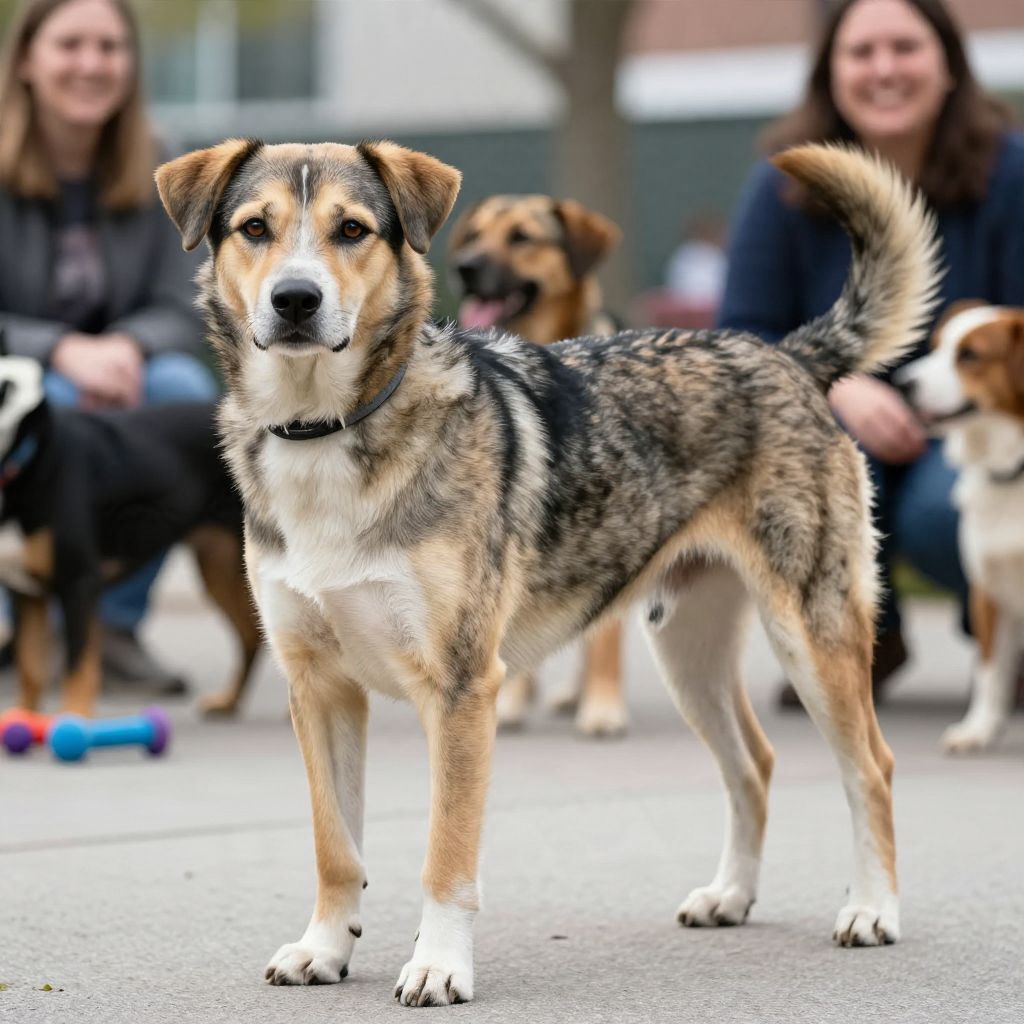
If you’ve seen the term “super mutt” on a DNA test or in casual conversation, you may be wondering what it actually means. In dog terms, it usually refers to a dog with a very mixed ancestry and no single breed making up a large share of the genetic makeup.
That can be exciting, but it also means appearance, size, behavior, and health risks may be less predictable than in a dog with a more defined breed mix. Here’s what the term means and what it does not mean.
What Is A Super Mutt?
A super mutt is a dog whose DNA comes from many different breeds, with no one breed contributing a dominant share. The label is commonly used by dog DNA companies to describe mixed-breed dogs that are too genetically blended to identify a clear primary breed mix.
What The Term Usually Means
In practice, “super mutt” does not describe a separate breed. It means the dog has a highly mixed background, often with several small breed contributions rather than one or two major ones.
How it differs from “mutt” or “mixed breed”
- Mixed breed is the broadest term and can apply to any dog with more than one breed in its ancestry.
- Mutt is a casual, general term for a mixed-breed dog.
- Super mutt usually suggests an especially complex mix, often with many breeds represented in small amounts.
What it does not mean
- It does not mean the dog is healthier by default.
- It does not mean the dog will behave in one predictable way.
- It does not mean the dog is less lovable, trainable, or worthy of care than any other dog.
How Dog DNA Tests Use The Label
Many DNA tests report a “super mutt” category when they can detect ancestry signals that are too small or too mixed to assign confidently to specific breeds. This is a testing label, not a formal veterinary diagnosis or a breed classification.
Because DNA panels vary, two tests may describe the same dog differently. One company might name several low-percentage breeds, while another may group those same signals into a super mutt result.
What A Super Mutt Dog May Look Like
There is no single super mutt appearance. A dog’s looks depend on which breeds are in the mix, which traits are inherited, and how those traits combine.
- Coat type may be short, long, wiry, curly, or somewhere in between.
- Size can range from small to large depending on ancestry.
- Ears, muzzle shape, tail carriage, and body build may vary widely.
- Color and markings can change a lot even within the same litter.
Because mixed-breed genetics are varied, appearance is only a rough clue. A dog that looks like one breed may have very different ancestry underneath.
Behavior And Temperament: What You Can Expect
A super mutt’s personality is shaped by genetics, early socialization, training, health, and life experience. Breed background may influence some tendencies, but it does not determine behavior on its own.
Typical factors that affect behavior
- Early socialization: Positive exposure to people, dogs, sounds, and environments can help build confidence.
- Training history: A dog with consistent reward-based training usually adapts better to home life.
- Energy level: Some mixed dogs are calm, while others need more exercise and mental work.
- Stress or fear: Uncertainty can show up as barking, hiding, reactivity, or destructive behavior.
If your super mutt seems anxious, overly excitable, or difficult to manage, start with structure, enrichment, and humane training. If the behavior is severe or unsafe, a certified trainer or veterinary behaviorist can help.
Health Considerations For A Super Mutt
Mixed-breed dogs may inherit health traits from any of the breeds in their background, and they can still develop common canine illnesses unrelated to breed. A mixed ancestry does not guarantee fewer health problems.
What to watch for
- Changes in appetite or water intake
- Weight gain or loss
- Limping, stiffness, or reluctance to jump
- Itching, ear infections, or skin irritation
- Coughing, vomiting, diarrhea, or low energy
- Dental disease signs such as bad breath or red gums
Urgent veterinary care is needed for trouble breathing, collapse, repeated vomiting, a bloated abdomen, seizures, severe bleeding, suspected poisoning, or sudden weakness. Do not wait if your dog shows these signs.
Why regular vet care still matters
- Annual exams help catch problems early.
- Vaccines, parasite prevention, and dental care remain important.
- Bloodwork or imaging may be recommended based on age and symptoms.
Feeding And Exercise Tips For A Super Mutt
There is no special diet for a super mutt. Feed a complete and balanced dog food that matches your dog’s life stage, body condition, and activity level.
Nutrition basics
- Choose a food appropriate for puppy, adult, or senior needs.
- Measure portions instead of free-feeding if weight control is a concern.
- Use treats sparingly and count them as part of daily calories.
- Ask your veterinarian before changing diets if your dog has allergies, digestive issues, or chronic disease.
Exercise and enrichment
- Daily walks, sniffing time, and play help many dogs stay balanced.
- Training games, puzzle feeders, and scent work can reduce boredom.
- Adjust activity for age, size, joint health, and fitness level.
Some dogs need only moderate exercise, while others need a lot more. Watch your dog’s recovery, enthusiasm, and body condition rather than assuming a certain amount based on mixed ancestry alone.
Grooming And Routine Care
Grooming needs depend on coat type, not the “super mutt” label. A dog with a short coat may need less brushing, while a dog with a dense or curly coat may need regular coat care to prevent matting and skin issues.
- Brush as needed for your dog’s coat.
- Check ears, nails, teeth, and paw pads regularly.
- Bathe only when necessary with a dog-safe shampoo.
- Trim nails before they become painful or affect gait.
If your dog resists grooming, introduce tools slowly and pair them with treats and calm handling. For severe fear or handling sensitivity, ask a professional trainer or groomer experienced with low-stress methods.
Common Mistakes Owners Make
Because the term sounds unusual, people sometimes overthink it. The most important thing is to care for the dog in front of you, not the label.
- Assuming the dog will have predictable traits because of a DNA result.
- Ignoring training because the dog is “just a mutt.”
- Overfeeding due to unclear size expectations.
- Skipping vet visits because mixed-breed dogs are thought to be automatically hardy.
- Using punishment-based training instead of reward-based methods.
When To Get Professional Help
Contact your veterinarian if your dog has ongoing itching, digestive upset, pain, lameness, weight changes, or behavior changes. These issues can signal medical problems, not just “mixed-breed quirks.”
Seek a certified trainer or veterinary behaviorist if your dog shows aggression, severe fear, separation-related distress, or reactivity that is hard to manage safely. Early help is usually easier and more effective than waiting.
Bottom Line
A super mutt is simply a dog with very mixed ancestry, often identified that way by a DNA test. The label can be interesting, but your dog’s daily care should be based on their individual health, temperament, age, and needs.
Focus on good nutrition, regular exercise, preventive vet care, and positive training. If you want to learn more about mixed-breed dogs, you may also find what a mutt dog is and this super mutt guide helpful.