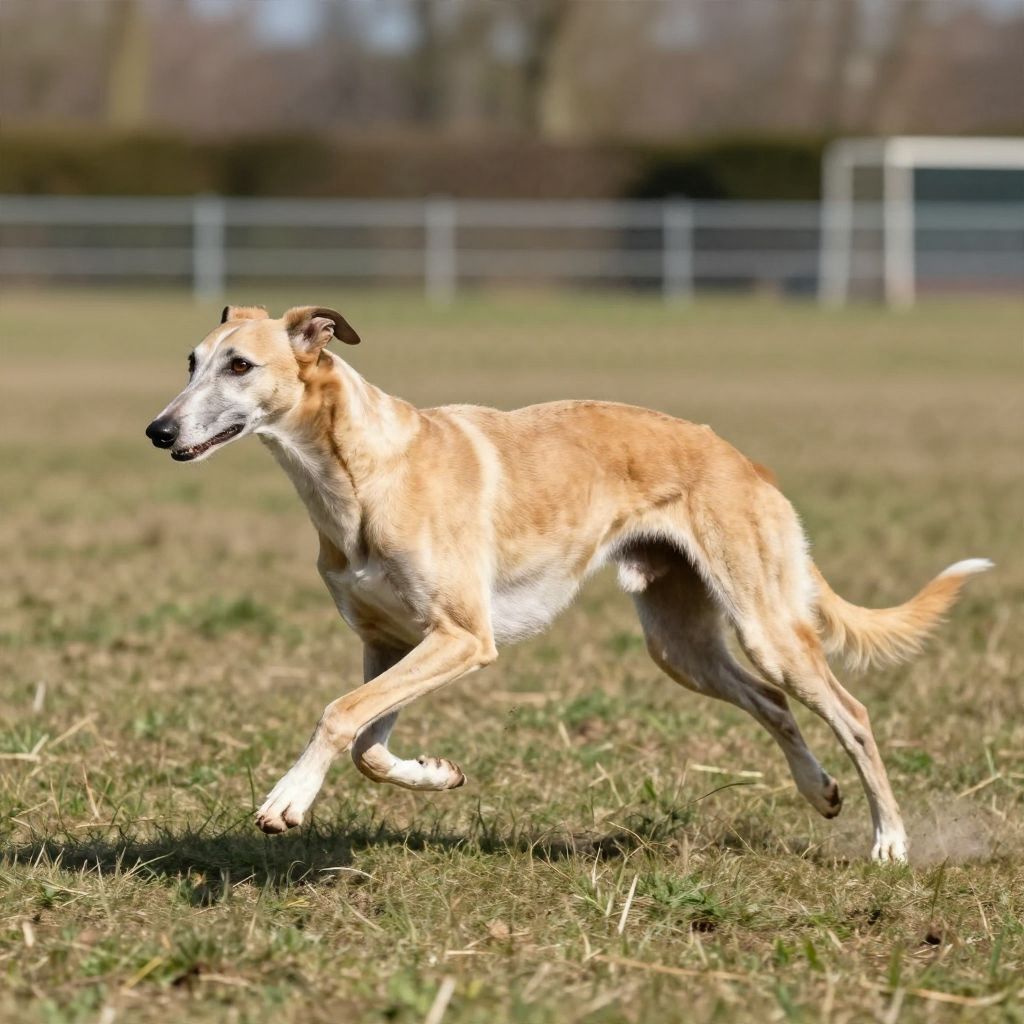
What is the fastest dog? In general, the fastest dog is the Greyhound, a breed built for speed with a lean body, deep chest, and long legs. Individual fitness, age, health, and training still matter, so not every dog of a fast breed will run at the same pace.
If you’re comparing breeds or wondering whether your own dog can keep up, it helps to understand what speed means in dogs, what affects it, and when running becomes unsafe. The answer is simple, but the details matter.
What is the fastest dog?
The Greyhound is widely considered the fastest dog breed, with a body designed for sprinting rather than endurance. Other sighthounds, such as the Saluki and Whippet, are also very fast, but the Greyhound is the most commonly recognized answer when people ask about the fastest dog.
Why are Greyhounds so fast?
Greyhounds have several physical traits that support speed. Their long legs, flexible spine, narrow body, and powerful hindquarters help them accelerate quickly and cover ground efficiently.
Speed is about body design, not just size
Fast dogs are usually lean and athletic, but speed depends on more than being “light.” A dog needs efficient stride length, strong muscles, good joint structure, and a body that can handle repeated impact.
- Long legs help with stride length.
- Flexible backs allow more extension during a sprint.
- Deep chests support strong heart and lung capacity.
- Lean frames reduce extra weight during running.
Are all fast dogs the same?
No. Breed gives you a general idea, but each dog is an individual. Age, conditioning, motivation, body condition, and health all affect how fast a dog can run on a given day.
Common fast breeds
Besides Greyhounds, people often mention Whippets, Salukis, Borzois, and other sighthounds when discussing speed. Some herding and working breeds can also be very quick over short distances, even if they are not usually considered the “fastest dog.”
That said, speed rankings can vary depending on how they are measured. A dog that excels in a short sprint may not be the best at longer runs or quick turns.
What affects a dog’s running speed?
Even within the same breed, several factors can change how fast a dog runs. Understanding these helps you set realistic expectations and keep your dog safe.
- Age: Puppies are not built for intense running, and senior dogs often slow down.
- Health: Pain, arthritis, heart disease, and breathing problems can reduce performance.
- Conditioning: A fit dog usually runs better than one that is out of shape.
- Body condition: Extra weight can make running harder and less safe.
- Temperament and drive: Some dogs love to sprint; others prefer sniffing or trotting.
- Surface and weather: Heat, slippery ground, and rough terrain can slow a dog down and increase injury risk.
How fast can the fastest dog run?
People often ask for a single number, but exact speed can vary by dog and by how it is measured. The important point is that the fastest dogs are built for explosive sprinting, not for long-distance running. A dog’s top speed is less useful than whether it can run safely and comfortably.
If you want a more detailed comparison of breeds and running ability, you may also find how fast a dog can run helpful.
Can your dog be fast without being a racing breed?
Yes. Many mixed-breed dogs and non-racing breeds can run very quickly, especially over short distances. Athletic dogs with good muscle tone, healthy joints, and strong enthusiasm may surprise you, even if they are not known as speed breeds.
Don’t confuse speed with stamina
A dog that sprints well may not have the endurance for a long jog. Some breeds are quick in bursts, while others are better suited to steady movement. Matching exercise to your dog’s natural build helps prevent injury and frustration.
How to tell if your dog is ready for faster exercise
Before you ask your dog to run harder or longer, check whether the basics are in place. A dog should be healthy, well-conditioned, and comfortable with regular walking before you increase intensity.
- Start with regular leash walks and observe breathing and recovery.
- Increase exercise gradually instead of jumping to sprints.
- Watch for limping, lagging, stiffness, or unusual fatigue.
- Make sure your dog is at a healthy weight.
- Ask your veterinarian if your dog has any medical history that affects exercise.
Safety tips for fast-running dogs
Fast dogs can injure themselves if they run too hard, too soon, or in unsafe conditions. Good management matters just as much as speed.
- Warm up first with a short walk before vigorous exercise.
- Avoid heat and humidity; dogs can overheat quickly.
- Use secure fencing or a safe enclosed area for off-leash running.
- Check the ground for ice, sharp objects, holes, or slippery surfaces.
- Provide water and rest before and after exercise.
- Stop if your dog looks tired rather than pushing for “just one more run.”
Red flags that mean stop immediately
Get your dog out of activity right away if you notice heavy panting that does not settle, wobbliness, collapse, pale gums, vomiting, obvious pain, or a sudden limp. These signs can indicate overheating, injury, or another urgent problem.
How to exercise a fast dog safely
Fast dogs often do best with a mix of sprint opportunities, structured exercise, and mental enrichment. A dog that gets enough physical and mental activity is usually easier to manage at home.
- Use short fetch sessions instead of endless chasing.
- Try controlled running in a fenced space.
- Include sniffing walks to balance high-speed activity.
- Use puzzle toys and training games on low-activity days.
For some dogs, especially sighthounds, a secure area matters more than a long leash. A dog that can accelerate quickly may be difficult to stop if startled or distracted.
Common mistakes owners make with fast dogs
One common mistake is assuming that a fast breed can handle unlimited exercise. Another is expecting a puppy or an older dog to keep up with an adult athlete.
- Skipping warm-up and cool-down periods.
- Running a dog in hot weather.
- Letting a dog sprint on slippery or rough surfaces.
- Ignoring subtle signs of pain or fatigue.
- Assuming breed alone predicts ability or behavior.
When to ask a veterinarian for help
If your dog seems unusually slow, stiff, unwilling to run, or suddenly less interested in exercise, a veterinary check is a good idea. Changes in speed can reflect pain, injury, heart or lung disease, weight gain, or other health concerns.
Seek prompt veterinary care if your dog has trouble breathing, collapses, has repeated vomiting after exercise, shows severe lameness, or seems disoriented. Those are not normal signs of “just being tired.”
The bottom line on the fastest dog
When people ask what is the fastest dog, the best-known answer is the Greyhound. Still, speed depends on the individual dog, not just the breed name. If you want your dog to run safely, focus on health, gradual conditioning, and smart exercise choices.
If you want to keep learning, you can also read more about the fastest dog breed and compare it with other dogs’ running ability.