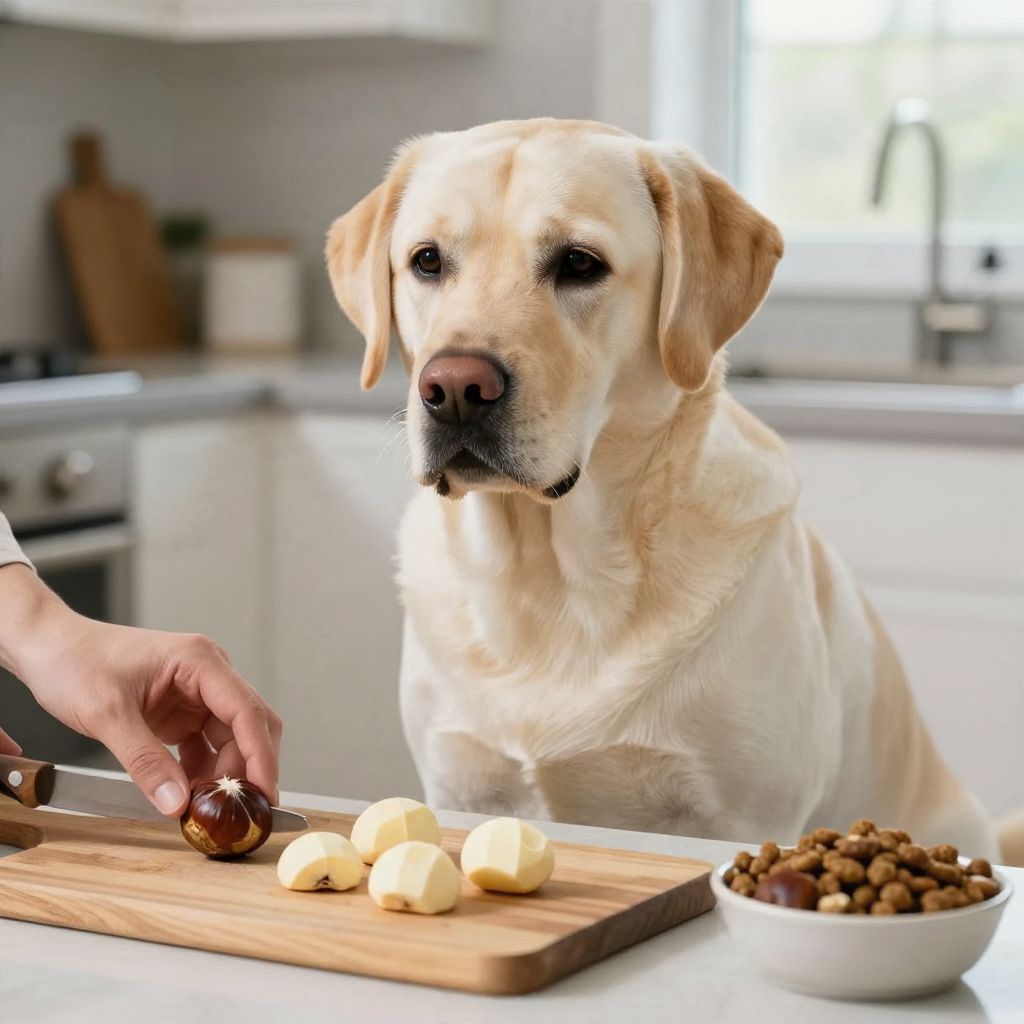
Can dogs eat chestnuts? Sometimes, yes—but only if they are plain, fully cooked, and served in small amounts. Chestnuts are not the same as horse chestnuts or buckeyes, which are unsafe for dogs.
The biggest risks are choking, stomach upset, and added ingredients like salt, butter, sugar, or seasoning. If your dog ate chestnuts from the ground or swallowed a shell, monitor closely and call your vet if symptoms appear.
Can Dogs Eat Chestnuts?
Yes, dogs can eat plain, cooked chestnuts in moderation as an occasional treat. They should be peeled, unseasoned, and cut into small pieces to reduce choking risk. Raw chestnuts, shells, and chestnuts prepared with butter, salt, garlic, or sugar are not safe choices for dogs.
Which Chestnuts Are Safe and Which Are Not?
Not every “chestnut” is safe for dogs, so the exact type matters.
Safe: edible chestnuts
- Plain, cooked sweet chestnuts are generally the type people mean when asking this question.
- They should be served without seasoning, sauces, or coatings.
- Always remove the shell and the thin inner skin if it is tough or difficult to chew.
Unsafe: horse chestnuts and buckeyes
- Horse chestnuts and buckeyes are not the same as edible chestnuts.
- These can cause serious illness if eaten by dogs.
- If you are unsure which nut your dog ate, contact a veterinarian or pet poison helpline right away.
Why Chestnuts Can Be a Problem for Dogs
Even edible chestnuts can cause trouble if they are given the wrong way. The main concerns are choking, digestive upset, and accidental exposure to unsafe ingredients.
1. Choking and blockage risk
Whole chestnuts are hard and round, which makes them a choking hazard, especially for small dogs, puppies, or dogs that gulp food quickly. Shell fragments can also irritate or injure the mouth, throat, or digestive tract.
2. Stomach upset
Chestnuts are starchy and rich enough to upset some dogs’ stomachs, especially if they eat more than a small amount. Signs may include vomiting, loose stool, gas, or mild abdominal discomfort.
3. Added ingredients
Many human chestnut dishes contain ingredients that are not dog-friendly. Butter, oil, salt, onion, garlic, honey glazes, and spice blends can all turn a harmless snack into a poor choice.
How to Safely Feed Chestnuts to Your Dog
If you want to share a tiny amount, preparation matters more than the nut itself. Keep it plain and simple.
- Use only edible chestnuts, not horse chestnuts or unidentified nuts.
- Cook them fully so they are soft enough to chew safely.
- Remove the shell and any tough skin.
- Cut the chestnut into small pieces, especially for small dogs.
- Offer only a small amount the first time to see how your dog tolerates it.
- Serve it plain, with no salt, butter, sugar, chocolate, or seasoning.
How much is too much?
There is no universal serving size that fits every dog. A toy breed, a puppy, a senior dog, or a dog with a sensitive stomach may tolerate less than a healthy adult dog. Treats of any kind should stay a small part of your dog’s daily intake.
When Chestnuts Are a Bad Idea
Some dogs should avoid chestnuts altogether, even if they are plain and cooked.
- Dogs with pancreatitis or a history of digestive upset may react badly to rich or starchy foods.
- Dogs that swallow food quickly have a higher choking risk.
- Small dogs and puppies are more vulnerable to choking on pieces that are too large.
- Dogs on a strict veterinary diet should not get extra treats unless your vet says it is okay.
- Dogs with food allergies or sensitivities may do better without new foods introduced casually.
What If Your Dog Ate Chestnuts Already?
If your dog ate a small amount of plain, cooked chestnut, they will often be fine. Watch for vomiting, diarrhea, drooling, coughing, gagging, or signs of discomfort over the next several hours.
Call your veterinarian promptly if:
- Your dog ate a shell or large pieces of shell.
- Your dog ate a horse chestnut or buckeye.
- Your dog ate chestnuts with seasoning, garlic, onion, or a sweet glaze.
- Your dog has repeated vomiting, diarrhea, or refuses food.
- Your dog seems painful, bloated, weak, or unusually tired.
Seek urgent veterinary care now if you notice:
- Choking, trouble breathing, or blue/pale gums
- Persistent gagging or inability to swallow
- A swollen or painful abdomen
- Collapse, severe lethargy, or unresponsiveness
- Repeated vomiting after eating a shell or unknown nut
Are Chestnuts Healthy for Dogs?
Chestnuts do contain some nutrients, but they are not a necessary or especially beneficial part of a dog’s diet. Your dog should get most nutrition from a complete, balanced dog food rather than from human snacks.
If you want to use chestnuts as an occasional treat, keep the portion tiny and think of it as a novelty, not a health food. For many dogs, lower-risk treats such as small pieces of plain cooked carrot or apple are easier to manage.
Common Mistakes to Avoid
- Giving whole chestnuts instead of small pieces
- Feeding chestnuts in the shell
- Sharing roasted chestnuts with salt or seasoning
- Offering chestnut desserts, stuffing, or holiday dishes
- Assuming all “chestnuts” are safe without checking the type
- Using chestnuts as a regular snack instead of an occasional treat
How to Tell Whether Your Dog Tolerates Chestnuts
Every dog is different. Some dogs may handle a tiny amount without any issue, while others may get an upset stomach from even a small bite.
- Start with one very small piece.
- Wait and watch for digestive changes.
- Do not offer more if your dog has vomiting, loose stool, or gas.
- If your dog has a sensitive stomach, skip chestnuts entirely.
Frequently Asked Concerns About Chestnuts and Dogs
Can dogs eat roasted chestnuts?
Yes, if they are plain roasted chestnuts with no seasoning, butter, or sugar. Let them cool, remove the shell, and offer only a small piece.
Can dogs eat raw chestnuts?
Raw chestnuts are harder to chew and may be harder to digest. They are not the best option for dogs, and the shell or skin can increase the choking risk.
Can puppies eat chestnuts?
Puppies can be more sensitive to new foods and are more likely to choke on hard pieces. It is usually better to avoid chestnuts for puppies unless your veterinarian says a tiny amount is okay.
Can senior dogs eat chestnuts?
Some senior dogs can, but older dogs may have dental problems, slower digestion, or medical conditions that make chestnuts a poor choice. Small, soft, plain pieces are the safest form if your vet approves.
Bottom Line
Can dogs eat chestnuts? Yes, plain cooked edible chestnuts can be safe in very small amounts, but they should never be given in the shell, seasoned, or confused with horse chestnuts or buckeyes. If your dog ate the wrong nut or shows concerning symptoms, contact your veterinarian right away.
If you want to compare chestnuts with other human foods, you may also find this guide helpful: can dogs eat chestnuts. For another common food-safety question, see can dogs eat avocado.