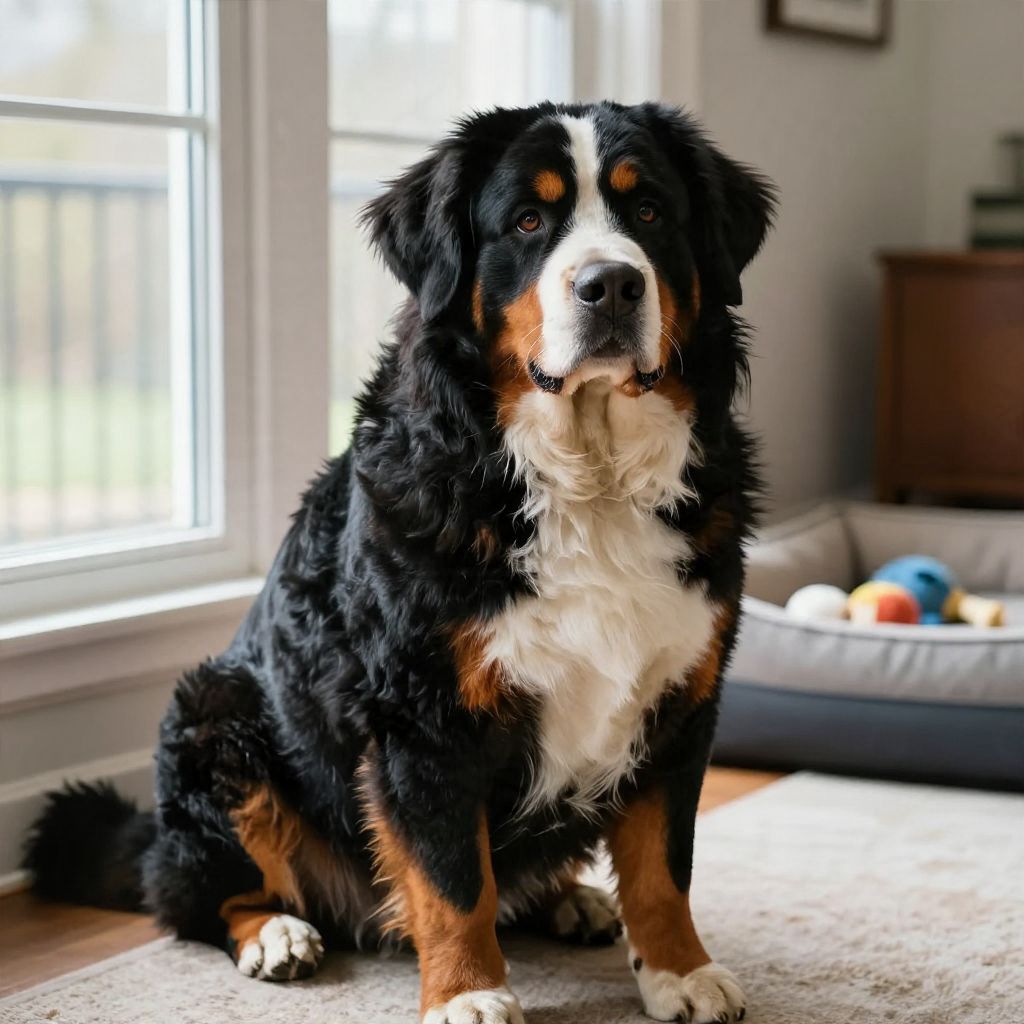
How long do Bernese Mountain Dogs live? Most live about 7 to 10 years, though some may live longer with good care and a bit of luck. Because they are a giant breed, their lifespan is usually shorter than that of many smaller dogs.
What you can do matters: healthy weight, regular vet care, safe exercise, and early attention to illness can improve quality of life. Knowing what to expect at each stage helps you support your Bernese Mountain Dog well.
How long do Bernese Mountain Dogs live?
Bernese Mountain Dogs typically live around 7 to 10 years, with individual dogs varying based on genetics, size, overall health, and care. Many owners should plan for a shorter lifespan than average because this breed is prone to certain serious health problems, especially cancers and orthopedic disease.
What affects a Bernese Mountain Dog’s lifespan?
Several factors can influence how long your dog lives. Some are out of your control, but many are not.
- Genetics: Family history can affect cancer risk, joint health, and other inherited conditions.
- Body size: Giant breeds often age faster and are more vulnerable to orthopedic strain.
- Weight: Extra pounds can stress joints, heart, and metabolism.
- Preventive care: Routine exams can catch problems earlier, when treatment may be more effective.
- Diet and exercise: Balanced nutrition and appropriate activity support long-term health.
- Environment and safety: Preventing injuries, heat stress, and toxin exposure also matters.
Common health problems that can shorten lifespan
Not every Bernese Mountain Dog will develop these issues, but they are important to understand because early detection can make a difference.
Cancer
Cancer is one of the biggest health concerns in the breed. Lumps, unexplained weight loss, reduced appetite, swelling, lameness, or low energy should always be checked by a veterinarian.
Joint and bone disease
Hip dysplasia, elbow dysplasia, arthritis, and other orthopedic problems can affect mobility and comfort. These conditions may not be curable, but they can often be managed with veterinary guidance, weight control, and appropriate exercise.
Bloat and gastric dilatation-volvulus
Large, deep-chested dogs can be at risk for bloat, which is a medical emergency. Signs include a swollen abdomen, repeated unproductive retching, restlessness, drooling, and distress. Seek emergency veterinary care immediately if you suspect bloat.
Other concerns
Heart disease, autoimmune disorders, and some eye conditions may also occur. Your veterinarian can help you monitor for breed-relevant risks during routine visits.
What to expect at each life stage
Puppy to young adult
Bernese Mountain Dog puppies grow quickly, but their bones and joints are still developing. Avoid overexercising, repetitive jumping, and forced running beside bikes or joggers.
- Focus on gentle socialization with people, dogs, sounds, and handling.
- Use reward-based training to build manners and confidence.
- Choose a large-breed puppy diet if your veterinarian recommends it.
- Keep growth steady, not rapid, to help protect joints.
Adult years
Adult Bernese Mountain Dogs usually do best with consistent routines, moderate exercise, and regular health checks. You may notice the first signs of slowing down in the middle adult years, especially if arthritis or weight gain develops.
- Watch for stiffness after rest.
- Keep walks regular but not overly intense.
- Maintain a healthy body condition score with your vet’s help.
- Schedule preventive care visits at least once a year, or more often if advised.
Senior years
Many Bernese Mountain Dogs enter senior life earlier than smaller breeds. Senior care often focuses on comfort, mobility, appetite, and early detection of disease.
- Ask your vet whether more frequent exams are appropriate.
- Monitor changes in drinking, urination, appetite, and energy.
- Use ramps, non-slip mats, and orthopedic bedding if needed.
- Adjust exercise to shorter, easier outings that still provide enrichment.
How to help your Bernese Mountain Dog live longer
You cannot change breed risk, but you can stack the odds in your dog’s favor with consistent care.
- Keep your dog lean. Extra weight can worsen joint pain and reduce stamina.
- Feed a complete, balanced diet. Choose food appropriate for your dog’s life stage and size.
- Use age-appropriate exercise. Regular walks, sniffing, and low-impact play are better than high-impact strain.
- Stay on top of veterinary care. Vaccines, parasite prevention, dental care, and wellness exams all matter.
- Act quickly on changes. Appetite loss, coughing, limping, or sudden fatigue should never be ignored.
- Reduce injury risks. Avoid slippery floors, unsafe stairs, and uncontrolled rough play.
Nutrition tips for a longer, healthier life
Food alone will not determine lifespan, but it can support healthy aging. Giant breeds benefit from careful portion control and steady body condition.
- Measure meals instead of free-feeding.
- Limit high-calorie treats and table scraps.
- Ask your veterinarian before changing diets, especially for a puppy or senior dog.
- If your dog has a medical condition, follow your vet’s diet recommendations closely.
Do not rely on supplements unless your veterinarian recommends them. Some may help specific conditions, but they are not a substitute for proper diagnosis and treatment.
Exercise, training, and mental enrichment
Bernese Mountain Dogs usually do best with calm, consistent activity rather than intense endurance work. Mental enrichment can be just as valuable as physical exercise.
Good options
- Leashed neighborhood walks
- Short training sessions using treats or praise
- Sniffing games and food puzzles
- Controlled play with compatible dogs
- Easy hikes on safe terrain, if your dog is fit and your vet agrees
Training should be kind and reward-based. Harsh corrections, intimidation, and outdated “dominance” methods can damage trust and make behavior problems worse.
When to call the vet
Because Bernese Mountain Dogs can develop serious illness, it is better to ask early than to wait. Call your veterinarian if you notice any of the following:
- Persistent limping or stiffness
- A lump that is growing or changing
- Unexplained weight loss
- Low appetite for more than a meal or two
- Vomiting, diarrhea, or repeated retching
- Sudden weakness, collapse, or trouble breathing
- Swollen abdomen or obvious abdominal pain
- Marked increase in thirst or urination
Go to an emergency veterinarian right away if your dog has a distended belly, repeated unproductive retching, collapse, pale gums, severe breathing trouble, or sudden severe pain.
How to plan for your dog’s senior years
Since many Bernese Mountain Dogs age sooner than you may expect, it helps to plan ahead. Think about mobility support, regular checkups, and comfort changes before your dog struggles.
- Keep a record of appetite, weight, and activity changes.
- Discuss pain management options with your vet if your dog seems stiff or reluctant to move.
- Make the home easier to navigate with ramps or steps where needed.
- Be alert for subtle behavior changes, which can signal pain or illness.
The bottom line
How long do Bernese Mountain Dogs live? Usually about 7 to 10 years, though individual dogs vary. The best way to support a longer, healthier life is to keep your Bernese lean, active, and closely monitored by a veterinarian, while acting quickly if anything seems off.
If you want to compare lifespan expectations across giant breeds, you may also find it helpful to read this Bernese Mountain Dog lifespan guide and how long Great Pyrenees live.