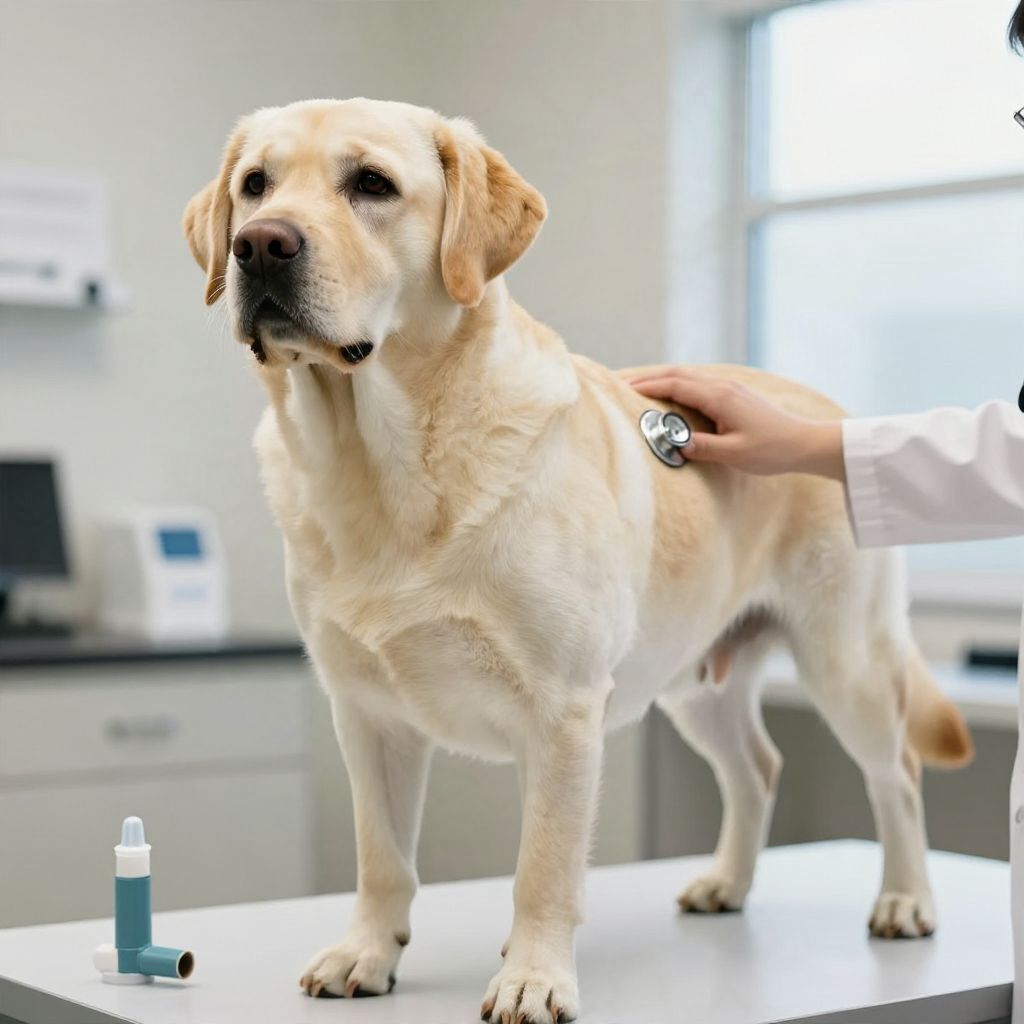
Can dogs have asthma? Yes, dogs can develop asthma-like airway disease, but it is less common and can look similar to other breathing problems. Because coughing or wheezing can also signal heart disease, infection, allergies, or a foreign object, it is important to take breathing changes seriously.
If your dog is struggling to breathe, treat it as a veterinary concern. Mild, occasional coughing may have many causes, but repeated wheezing, open-mouth breathing, or blue gums can become an emergency fast.
Can dogs have asthma?
Yes, dogs can have asthma-like inflammation and narrowing of the airways. The signs can resemble feline asthma, but in dogs the symptoms often overlap with bronchitis, allergies, kennel cough, pneumonia, heart disease, or something stuck in the airway. A veterinarian needs to sort out the cause before treatment.
What asthma in dogs can look like
Dogs with airway inflammation may cough, wheeze, or seem to “honk” after exercise or excitement. Some dogs breathe faster than usual, tire easily, or seem uncomfortable when lying down. Symptoms may come and go, which can make the problem easy to miss at first.
Common signs to watch for
- Dry or repeated coughing
- Wheezing or noisy breathing
- Labored breathing or flared nostrils
- Open-mouth breathing when not hot or exercising
- Reduced stamina during walks or play
- Restlessness, anxiety, or trouble settling
Some dogs also swallow repeatedly, gag, or appear to “clear their throat.” These signs do not confirm asthma, but they do mean your dog should be checked.
What causes asthma-like breathing problems in dogs?
In dogs, airway irritation can come from many triggers and conditions. Dust, smoke, perfumes, pollen, mold, and household sprays may worsen symptoms in sensitive dogs, but infections, parasites, obesity, and structural airway disease can also play a role. Your vet will look for the underlying cause, not just the cough.
Possible triggers and contributors
- Environmental irritants such as smoke, dust, or aerosol sprays
- Seasonal or indoor allergies
- Respiratory infections
- Heart disease or fluid in the lungs
- Parasites affecting the lungs
- Obesity, which can make breathing harder
- Excitement, exercise, or stress in some dogs
Breed, age, and body condition can influence risk, but no breed is guaranteed to develop or avoid breathing disease. Small dogs, brachycephalic dogs, and overweight dogs may be more prone to breathing trouble, yet any dog can have a serious respiratory problem.
When breathing trouble is an emergency
Seek urgent veterinary care if your dog is struggling to breathe, collapsing, or showing signs of poor oxygenation. Do not wait to “see if it passes” when breathing is clearly abnormal. Breathing emergencies can worsen quickly and need immediate attention.
Red-flag symptoms
- Blue, gray, or very pale gums
- Severe panting at rest that does not settle
- Open-mouth breathing with distress
- Collapse, weakness, or inability to stand
- Abdominal effort or exaggerated chest movement
- Sudden choking, gagging, or suspected foreign object
If your dog is having a crisis, keep them calm, avoid forcing food or water, and contact an emergency veterinarian right away. Stress and handling can make breathing harder.
How veterinarians evaluate a dog with asthma-like symptoms
Your vet may ask when the coughing started, what it sounds like, and whether it happens during exercise, at night, or around certain triggers. They may also listen to the chest, check oxygen levels, and recommend imaging or other tests to find the cause.
Tests your vet may recommend
- Physical exam and lung/heart auscultation
- Chest X-rays
- Bloodwork
- Heartworm testing, depending on prevention history and region
- Parasite screening if indicated
- Further airway testing in some cases
Do not assume a cough is “just allergies” or “just a cold.” Dogs can have overlapping problems, and the right treatment depends on the cause.
Safety and home care while you wait for the vet
Until your dog is examined, focus on reducing breathing stress. Keep the environment calm, cool, and free of irritants. Avoid vigorous exercise, and do not use human inhalers, cough medicines, or leftover prescriptions unless a veterinarian specifically tells you to.
Helpful steps at home
- Move your dog away from smoke, dust, and strong scents.
- Use a harness instead of a neck collar if coughing is triggered by leash pressure.
- Keep activity gentle and short.
- Monitor breathing at rest and note any changes.
- Write down triggers, timing, and symptom patterns for your vet.
If your dog seems worse after exercise, heat, or excitement, stop the activity and let them rest. A calm environment can help, but it is not a substitute for medical evaluation.
Feeding guide for dogs with breathing concerns
Food does not cure asthma, but weight control and sensible feeding can reduce strain on the lungs and chest. Overweight dogs often breathe harder, so a veterinarian-guided plan to reach a healthy body condition may help overall comfort and stamina.
Feeding tips that may help
- Measure meals rather than free-feeding
- Choose a complete and balanced diet appropriate for your dog’s age and size
- Limit high-calorie treats, especially if weight is a concern
- Use low-calorie training rewards when possible
- Ask your vet before changing diets if your dog has other health issues
There is no proven “asthma diet” for dogs. Be cautious with supplements, homemade remedies, or restrictive feeding plans unless your veterinarian recommends them for a specific reason.
What foods are safe, and what should you avoid?
For dogs with breathing problems, the main food concern is usually overall nutrition and weight, not a special list of asthma-fighting foods. Safe treats in small amounts are fine if they fit your dog’s diet, but they should not replace balanced meals.
Generally safe treat ideas in moderation
- Plain cooked lean meat with no seasoning
- Small pieces of dog-safe vegetables, such as carrots or green beans
- Part of your dog’s regular kibble used as training treats
Avoid these feeding mistakes
- Rich, salty, or heavily seasoned foods
- Table scraps that encourage weight gain
- Any food known to be unsafe for dogs
- Large treats that can be hard to chew or swallow during a coughing episode
If your dog coughs while eating or drinking, tell your vet. That can point to a swallowing problem, throat issue, or another condition that needs attention.
Can exercise make dog asthma worse?
Yes, exertion can bring on coughing or wheezing in some dogs. That does not mean your dog should stop moving altogether, but exercise may need to be shorter, calmer, and better timed. Your vet can help you decide what level is safe for your dog’s condition.
Safer exercise habits
- Walk during cooler parts of the day
- Use a harness instead of a collar
- Stop if coughing starts or breathing becomes noisy
- Avoid intense play in hot, humid weather
- Choose low-stress enrichment, such as sniffing games, if activity is limited
Some dogs do best with several short walks instead of one long outing. Others need a temporary break from exercise while the cause of their symptoms is investigated.
How to reduce triggers in the home
Simple environmental changes may help dogs with airway sensitivity. These steps are low-risk and can make breathing easier, especially if irritants are part of the problem. They are supportive measures, not a cure.
Trigger-reduction ideas
- Do not smoke near your dog
- Limit candles, incense, and strong air fresheners
- Vacuum and dust regularly
- Wash bedding often
- Keep mold and humidity under control
- Use caution with cleaning sprays and scented products
If your dog’s symptoms seem seasonal, note when they flare up. That pattern can help your veterinarian decide whether allergies or environmental triggers are involved.
Common mistakes to avoid
Breathing problems can look mild at first, so it is easy to delay care. The biggest mistake is assuming a cough is harmless when it may be signaling a more serious issue. Another common error is giving human medications without veterinary guidance.
- Do not use over-the-counter cough suppressants unless your vet approves them.
- Do not force exercise to “build lung strength” during active symptoms.
- Do not ignore recurring coughing spells.
- Do not assume wheezing is normal aging.
- Do not wait for blue gums or collapse before seeking help.
When to follow up with your veterinarian
Make a veterinary appointment if your dog has repeated coughing, wheezing, or breathing changes that last more than a day or two, or if the symptoms keep returning. Even if the signs are mild, recurring respiratory problems deserve a proper workup.
Bring notes about when the symptoms happen, what they sound like, and whether anything seems to trigger them. Videos of your dog coughing or breathing strangely can be very helpful.
Bottom line
Can dogs have asthma? They can have asthma-like airway disease, but the symptoms overlap with many other conditions, some of them urgent. If your dog is coughing, wheezing, or breathing hard, arrange a veterinary exam promptly, and seek emergency help immediately if breathing becomes difficult.
For more help understanding breathing changes, you may also find why is my dog breathing heavy useful, and this guide on can dogs get colds can help you compare respiratory signs.