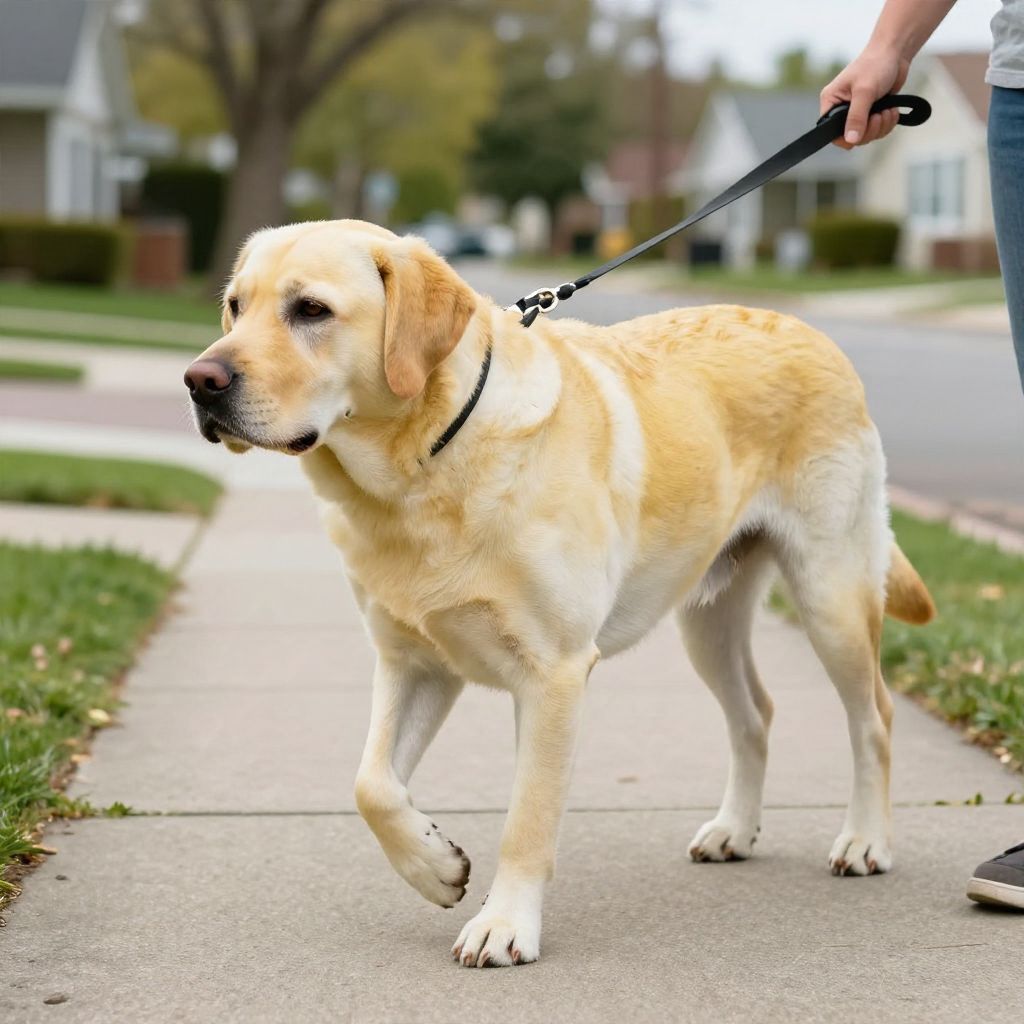
If your dog is limping on his back leg but not in pain, it can still mean something is wrong. Dogs often hide discomfort, and a limp can come from a minor strain, a knee problem, joint disease, paw injury, or a nerve issue.
Even when your dog seems comfortable, watch how he stands, walks, sits, and rises. A limp that lasts, worsens, or comes with swelling, weakness, or sudden inability to bear weight needs veterinary attention.
My Dog Is Limping On His Back Leg But Not In Pain — What Does It Mean?
A back-leg limp without obvious pain can still signal injury, instability, arthritis, a torn ligament, a paw problem, or a neurologic issue. Some dogs mask pain well, so any limp that persists more than a day, changes your dog’s movement, or follows exercise or trauma should be checked by a veterinarian.
Why a Dog May Limp Without Acting Hurt
Dogs do not always show pain the way people do. Some keep playing, wagging, or eating normally even when they are uncomfortable.
Common reasons include mild soft-tissue strain, a nail or paw-pad injury, early joint disease, a partial cruciate ligament injury, hip or kneecap issues, or a problem affecting balance or nerve function.
Possible causes to consider
- Paw or nail injury: A torn nail, cut pad, stuck thorn, or irritated toe can change how your dog places the foot.
- Sprain or strain: Overexertion, jumping, or rough play may lead to temporary lameness.
- Knee problems: Cruciate ligament injury or kneecap instability can cause intermittent limping.
- Hip or joint disease: Arthritis or developmental joint issues may cause stiffness and favoring one leg.
- Back or nerve issues: Weakness, dragging, or unsteady movement can look like a limp.
What You Can Check at Home Safely
You can do a calm, gentle check before calling your vet, but do not force movement or try to “test” the leg aggressively. Keep your dog quiet while you look for obvious problems.
- Watch your dog walk on a flat surface.
- Compare both back legs for swelling, heat, or obvious asymmetry.
- Look at the paw pads, nails, and between the toes for debris, cuts, or redness.
- Notice whether the limp is constant or only after rest, exercise, or stairs.
- Check whether your dog is still willing to sit, stand, and lie down normally.
If your dog resists touch, stiffens, yelps, or pulls away, stop the exam. That may mean the area is painful even if he has not shown it clearly before.
When a Limp Is an Emergency
Some signs mean your dog should be seen urgently, not monitored at home. Sudden or severe lameness can point to a serious injury or neurologic problem.
- Go to an urgent vet or emergency clinic now if your dog cannot bear weight on the leg.
- Seek urgent care if you see major swelling, a visible deformity, or a dangling limb.
- Get help quickly if your dog drags the leg, knuckles over, or seems weak rather than just lame.
- Do not wait if the limp follows a fall, car accident, fight, or other trauma.
- Call promptly if your dog seems lethargic, has a fever, cries out, or will not eat.
What to Do Right Now at Home
Until your veterinarian examines your dog, focus on rest and safety. The goal is to prevent the problem from getting worse.
- Restrict running, jumping, stairs, and rough play.
- Use leash walks only for potty breaks.
- Keep your dog on non-slip flooring if possible.
- Move food, water, and bedding so he does not need to climb or jump.
- Do not give human pain medication unless your veterinarian specifically prescribed it.
Even if your dog seems “fine,” activity can turn a mild strain into a bigger injury, especially if the issue involves a ligament or joint.
How Vets Usually Evaluate a Back-Leg Limp
Your veterinarian will look at the whole dog, not just the leg. That helps separate a paw issue from a knee, hip, spine, or nerve problem.
Depending on the findings, the exam may include gait observation, range-of-motion checks, palpation of the joints, and possibly imaging such as X-rays. Some dogs need further testing if the cause is not obvious.
Questions your vet may ask
- When did the limp start?
- Was there an injury, jump, or rough play session?
- Is the limp worse after rest or after exercise?
- Does your dog slip, wobble, or drag the paw?
- Has your dog had previous joint or back problems?
Why “Not in Pain” Can Be Misleading
Some dogs hide pain because of temperament, excitement, or habit. Others are stoic and continue normal routines despite discomfort.
A dog may still be in pain if you notice any of these subtle changes:
- Less enthusiasm for stairs, jumping, or long walks
- Slower rising from lying down
- Reluctance to turn sharply or sit squarely
- Shifting weight off the leg
- More licking of the paw, knee, or hip area
Age, Size, and Breed Differences Matter
The cause of limping can vary with your dog’s age and body type. A young, active dog may be more likely to have a sprain or knee instability, while an older dog may be dealing with arthritis or a chronic joint problem.
Some breeds are more commonly affected by certain orthopedic issues, but no breed is guaranteed to develop them. Large, athletic, or very active dogs may place more stress on joints, while smaller dogs can have kneecap problems that show up as intermittent skipping or limping.
What to keep in mind
- Puppies: Limping can involve growth-related joint issues or minor injuries from play.
- Adult dogs: Sports injuries, ligament damage, and paw injuries are common possibilities.
- Senior dogs: Arthritis, muscle loss, and neurologic disease become more likely.
Common Mistakes to Avoid
Well-meaning home care can sometimes delay proper treatment. If you are unsure, it is safer to call your vet.
- Do not force exercise to “work it out.”
- Do not massage or stretch a painful leg aggressively.
- Do not give leftover medications from another pet or person.
- Do not assume a limp is minor just because your dog still wants to play.
- Do not wait several days if the limp is recurring or getting worse.
When It Might Improve on Its Own
A very mild limp from brief overuse or a small paw irritation may improve with rest, but you should still monitor closely. If the limp is not clearly better within 24 to 48 hours, or if it returns when activity increases, schedule a veterinary visit.
Repeated limping is a clue that the underlying issue has not fully healed or that something more than a simple strain is involved.
Helpful Prevention Tips
You cannot prevent every limp, but you can reduce the risk of back-leg injuries and joint strain.
- Keep nails trimmed so footing stays stable.
- Use controlled exercise rather than sudden bursts of intense play.
- Help your dog maintain a healthy body condition.
- Use ramps or steps for cars and high furniture if jumping is hard on the joints.
- Choose well-fitted harnesses and safe, non-slip surfaces when possible.
What to Ask Your Veterinarian
If you are unsure how serious the limp is, bring notes or a short video of your dog walking. That can help your vet see what happens between visits.
- What is the most likely cause of the limp?
- Does my dog need X-rays or other tests?
- How much rest is appropriate?
- What signs mean I should return sooner?
- When can my dog safely resume normal activity?
Bottom Line
A dog limping on his back leg but not in pain still deserves attention, because many causes are not obvious at first. Rest your dog, check for visible paw problems, and contact your veterinarian if the limp lasts, worsens, or comes with weakness, swelling, or trouble bearing weight.
If you want more help understanding lameness and related symptoms, you may also find this guide on dog limping useful. If your dog is showing other concerning signs, such as breathing changes, see this article on heavy breathing in dogs.