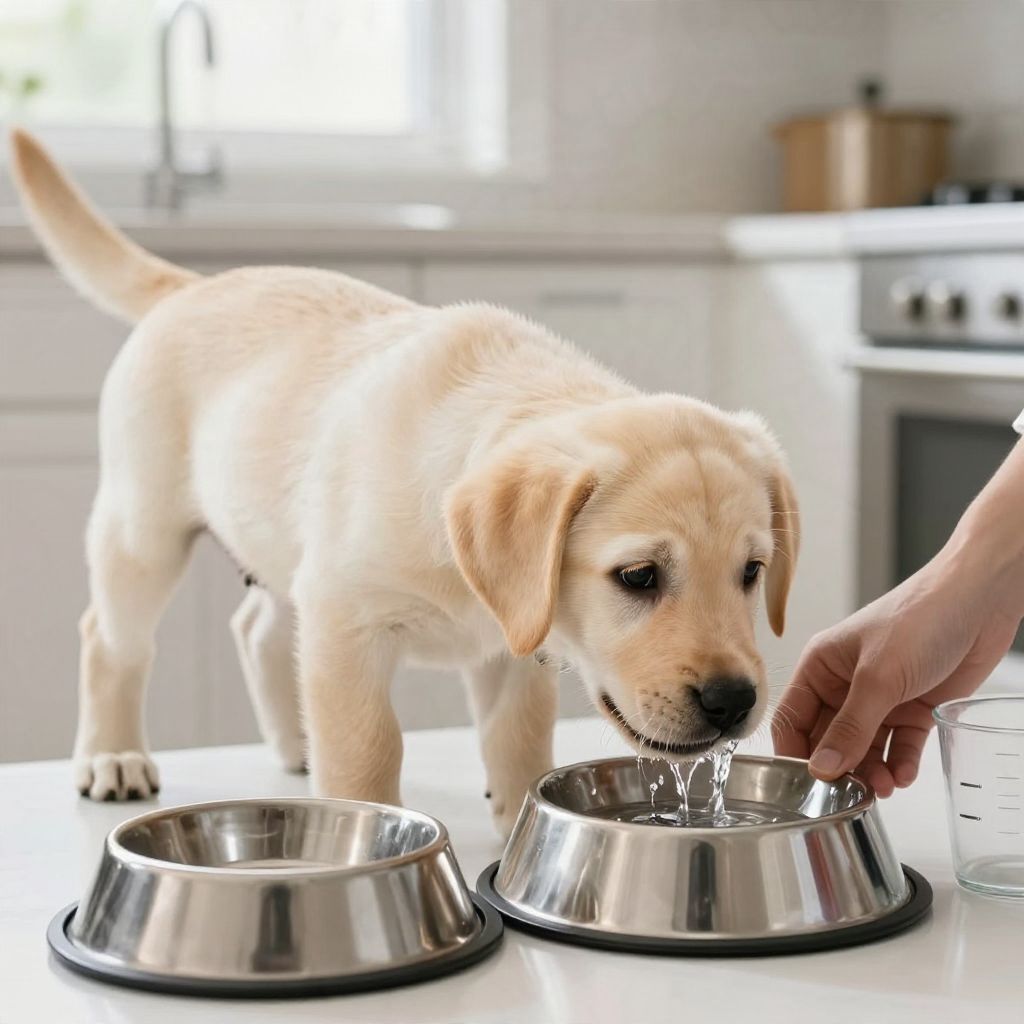
If you’re wondering how much water a puppy should drink, the short answer is: enough to stay well-hydrated, but not so much that it seems excessive for their age, size, diet, and activity level. Puppies usually need frequent access to fresh water throughout the day.
Because puppies vary a lot, the safest approach is to watch their habits, urine, energy, and appetite—not just the water bowl. A sudden change in drinking can be normal, but it can also signal a health problem that needs a vet’s attention.
How much water should a puppy drink?
A puppy should usually drink several small amounts of water across the day, with total intake often around 1 ounce of water per pound of body weight per day as a rough guide. Needs vary with age, size, food type, weather, exercise, and health, so use this only as a starting point.
What affects a puppy’s water needs?
There is no single perfect amount for every puppy. Some puppies drink more because they are active, eating dry food, teething, or living in a warm home, while others drink less because they are smaller, calmer, or get moisture from wet food.
Common factors that change drinking needs
- Age: Very young puppies may drink differently than older, more settled puppies.
- Body size: Larger puppies usually need more total water than smaller ones.
- Diet: Dry kibble usually leads to more drinking than canned or fresh wet food.
- Activity: Play, training, and exercise increase fluid needs.
- Weather: Warm or dry conditions can increase thirst.
- Health: Fever, vomiting, diarrhea, pain, kidney issues, diabetes, and some medications can affect thirst.
How can you tell if your puppy is drinking enough?
A well-hydrated puppy is usually bright, playful, and producing regular urine that is pale yellow. Their gums should look moist, and they should not seem weak, lethargic, or unusually thirsty all the time.
Signs your puppy may be getting enough water
- Regular urination without straining
- Moist gums and normal saliva
- Good energy and alertness
- Normal appetite for age
- Skin that does not seem unusually dry or sticky
Signs of possible dehydration
- Dry or tacky gums
- Sunken-looking eyes
- Lethargy or weakness
- Loss of appetite
- Dark yellow urine or very little urine
- Vomiting or diarrhea along with reduced drinking
Seek veterinary care promptly if your puppy seems dehydrated, especially if they are very young, vomiting, having diarrhea, or not keeping water down.
Can a puppy drink too much water?
Yes. While puppies need plenty of water, excessive drinking can be a warning sign. Drinking far more than usual, especially with increased urination, accidents, or constant thirst, may point to a medical issue that should be checked by a veterinarian.
When extra thirst is a red flag
- Sudden increase in drinking
- Drinking and urinating much more than normal
- Accidents in the house after being house-trained
- Vomiting, diarrhea, or poor appetite
- Weight loss, weakness, or a bloated appearance
If your puppy is gulping water and then vomiting, or seems unable to stop drinking, contact your vet. Do not try to guess the cause at home.
How often should you offer water to a puppy?
Most puppies should have water available throughout the day. In some training or house-training situations, you may manage access more carefully, but puppies should not be left without water for long periods, especially in warm weather or after play.
Practical routine for most puppies
- Keep fresh water available in a clean bowl.
- Offer water after play, training, meals, and naps.
- Watch drinking before bedtime if your puppy is still learning house manners.
- Refill the bowl often so it stays clean and appealing.
For house-training, many owners find it helpful to learn how often puppies pee so they can match water access with bathroom breaks and avoid accidents.
Should you limit water for house training?
You should not severely restrict water to speed up house training. Puppies need regular hydration, and withholding water can be unsafe. Instead, use consistent potty breaks, supervision, crate training done humanely, and a predictable routine.
Better house-training approach
- Take your puppy out after waking, eating, playing, and drinking.
- Reward outdoor potty success calmly and immediately.
- Clean accidents thoroughly to reduce repeat soiling.
- Keep a simple log if accidents are frequent.
If your puppy seems to need to urinate very often or cannot hold urine at all, ask your veterinarian whether a medical issue could be involved.
How do food type and feeding schedule affect water intake?
Puppies eating dry kibble often drink more than puppies eating wet food because canned food contains more moisture. A puppy on mixed feeding may fall somewhere in between, and that is usually normal.
What to expect with different diets
- Dry food: More drinking is common.
- Wet food: Less drinking may be normal because the food contributes water.
- Treat-heavy diets: Can be less balanced overall and may affect normal eating and drinking patterns.
Keep in mind that food changes can temporarily change thirst. If the change is dramatic or lasts more than a short adjustment period, check with your vet.
How much water should a puppy drink after exercise or play?
After active play, training, or a walk, your puppy may drink more than usual. That is normal, but offer water in small, calm opportunities rather than letting a very excited puppy gulp a huge amount all at once.
Helpful post-exercise tips
- Offer a few sips, then pause.
- Let your puppy settle before offering more.
- Provide shade and rest after warm-weather activity.
- Watch for heavy panting, weakness, or collapse.
Emergency warning: If your puppy is overheated, weak, vomiting, or collapses after exercise, seek urgent veterinary care immediately.
What if your puppy won’t drink enough?
A puppy that is not drinking enough may be distracted, stressed, nauseated, or unwell. Mild short-term changes can happen, but a puppy that refuses water for a significant period, especially with other symptoms, needs veterinary advice.
Possible reasons a puppy drinks less
- Stress from a new home or routine
- Recent vaccination or mild temporary discomfort
- Nausea or stomach upset
- Dirty or unfamiliar water bowl
- Illness causing reduced appetite and thirst
Try offering fresh water in a clean bowl and in a quiet location. If your puppy still won’t drink, or seems tired, painful, or unwell, contact your veterinarian promptly.
What if your puppy drinks too much?
Occasional extra drinking after play or warm weather can be normal, but persistent excessive thirst is not something to ignore. It can be linked to medical conditions that need diagnosis and treatment from a veterinarian.
Track these details for your vet
- When the increased drinking started
- How often your puppy urinates
- Any vomiting, diarrhea, coughing, or lethargy
- Recent diet changes or medications
- Any weight change or appetite change
These details help your vet decide whether testing is needed.
Common mistakes to avoid
Many water-related problems come from well-meaning but unhelpful habits. The goal is to support healthy hydration while noticing changes early.
- Do not restrict water for long periods to prevent accidents.
- Do not assume all extra drinking is normal.
- Do not ignore vomiting, diarrhea, or lethargy.
- Do not use punishment if your puppy has accidents after drinking.
- Do not leave a bowl dirty for long stretches.
When should you call the vet?
Call your veterinarian if your puppy’s drinking changes suddenly, if you notice signs of dehydration, or if your puppy seems to be drinking much more or much less than usual for more than a brief period. Puppies can become sick quickly, so it is better to ask early.
Get urgent help right away if your puppy has
- Collapse or severe weakness
- Repeated vomiting
- Severe diarrhea or blood in stool
- Can’t keep water down
- Very dry gums and obvious dehydration
- Distended abdomen with distress
- Known or suspected toxin exposure
Simple guidelines you can use at home
To answer how much water a puppy should drink in everyday life, focus on access, observation, and routine rather than exact numbers alone. A healthy puppy should have fresh water available, drink regularly, and stay bright and active.
- Offer clean water throughout the day.
- Watch for normal urination and healthy energy.
- Expect more drinking after play, heat, or dry food.
- Notice sudden changes in thirst or urination.
- Call your vet if anything seems off.
If you want to keep learning about puppy hydration and bathroom habits, you may also find how long dogs can go without water and how often puppies pee helpful for building a safe routine.
In short, your puppy should drink enough to stay comfortable, active, and well-hydrated, with fresh water available and close attention to changes. If drinking seems unusually high or low, or your puppy seems unwell, contact your veterinarian for guidance.