
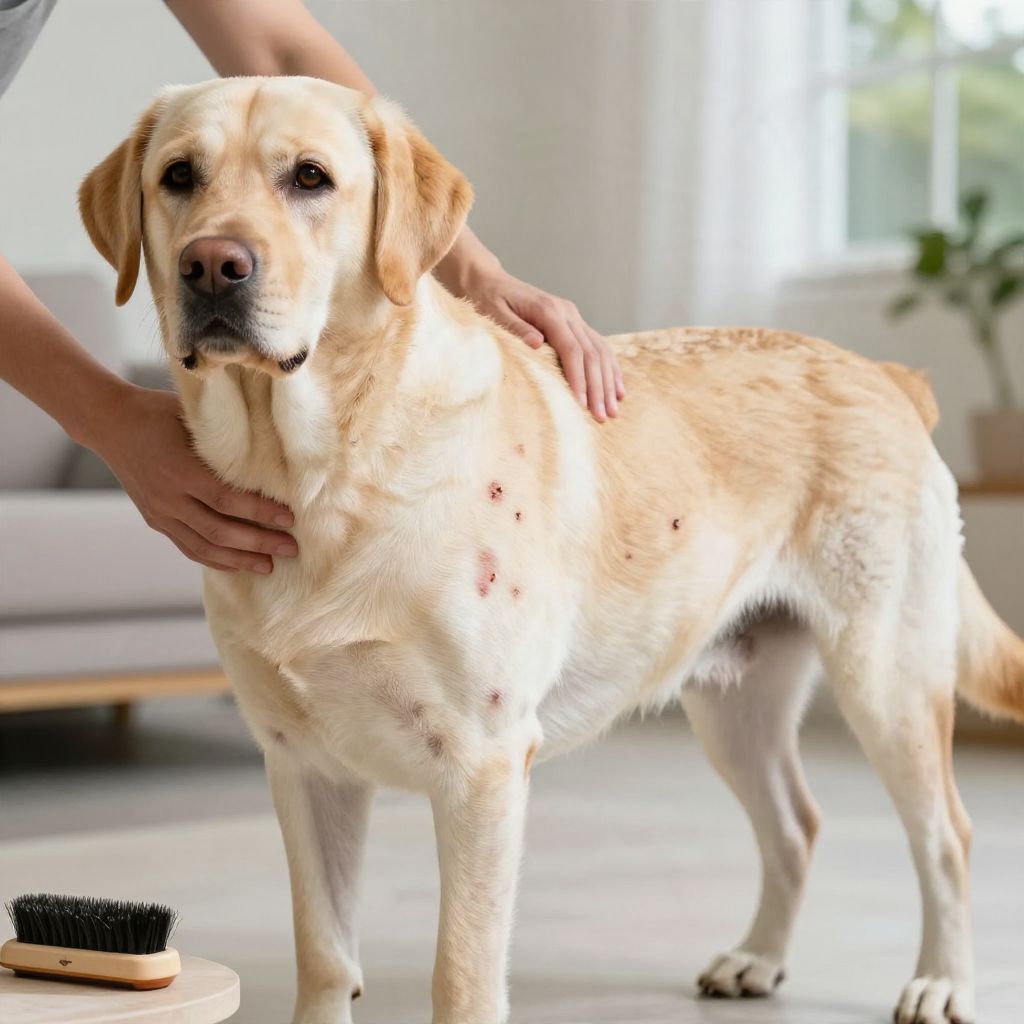
What do flea bites look like on dogs? They often appear as small, itchy red bumps, usually around the belly, groin, armpits, tail base, or inner thighs. Some dogs also develop hair loss, scabs, or dark “flea dirt” specks in the coat.
The exact appearance can vary with your dog’s skin, coat type, and sensitivity. A few dogs react strongly to a single bite, while others show only mild signs, so it helps to look for patterns, not just one spot.
What do flea bites look like on dogs?
Flea bites on dogs usually look like tiny red bumps or irritated patches, often in clusters on thin-skinned areas such as the belly, inner thighs, groin, armpits, and tail base. You may also see scratching, chewing, scabs, or black specks of flea dirt in the fur.
Common signs that point to flea bites
Flea bites can be easy to miss, especially in thick-coated dogs. The skin changes are often more obvious than the bites themselves.
- Small red bumps that may look like a rash
- Itchy, irritated skin with frequent scratching or biting
- Scabs or crusts from repeated scratching
- Hair thinning or bald patches from licking and chewing
- Black specks in the coat that may be flea dirt
- Redness around the tail base, belly, or inner legs
What flea bites may look like on different dogs
Some dogs show only a few small bumps, while others develop a much stronger skin reaction. Dogs with flea allergy dermatitis can itch intensely from very little flea exposure, so the skin may look more inflamed than the number of bites suggests.
In short-coated dogs, you may notice the bumps and redness more easily. In long-coated or double-coated dogs, you may need to part the fur and look closely at the skin.
Where flea bites usually show up
Fleas tend to bite areas they can reach easily and where the skin is thinner. That is why the pattern matters as much as the bump itself.
- Belly and lower chest
- Groin and inner thighs
- Armpits
- Tail base and rump
- Neck and behind the ears
If you see irritation mostly along the back near the tail, fleas are a common possibility. If the rash is elsewhere, other causes such as mites, allergies, or skin infection may also be involved.
How to tell flea bites from other skin problems
Flea bites can resemble other itchy skin conditions, so you should not assume every red bump is from fleas. A careful look at the pattern and your dog’s behavior can help, but a veterinarian may need to examine the skin to confirm the cause.
Flea bites vs. mosquito bites
Mosquito bites may appear as isolated bumps, often on less covered areas such as the face, ears, or belly. Flea bites are more often clustered and accompanied by ongoing itching, especially near the tail base.
Flea bites vs. mites
Mite-related skin problems can cause intense itching, hair loss, and crusting, sometimes with a different pattern than flea bites. If your dog is very uncomfortable or the skin is worsening quickly, it is worth checking for mites and other causes. You can also read more about what dog mites look like.
Flea bites vs. allergies
Environmental or food allergies often cause more widespread itching, ear problems, paw licking, or chronic skin inflammation. Flea allergy can overlap with these issues, which is why a vet visit is helpful if the itching keeps coming back.
What flea dirt looks like
Flea dirt is one of the clearest clues that fleas are present. It looks like tiny black or dark brown pepper-like specks in the fur, especially near the tail base, belly, or along the back.
If you place the specks on a damp white paper towel, flea dirt may turn reddish-brown because it contains digested blood. That does not prove every case, but it is a useful sign.
What to do if you think your dog has flea bites
If you suspect flea bites, focus on confirming the problem and reducing further exposure. Treating only the skin without addressing fleas usually leads to repeated itching.
- Check the coat and skin with a flea comb, especially around the tail base and belly.
- Look for flea dirt and live fleas in the comb or on a white towel.
- Contact your veterinarian if your dog is very itchy, has open sores, or the skin looks infected.
- Use a vet-recommended flea control plan for your dog and any other pets in the home.
- Clean the environment by washing bedding and vacuuming carpets, furniture, and floor edges.
Because fleas spend much of their life cycle in the environment, treating only the dog may not be enough. Your vet can help you choose a safe, effective prevention plan for your dog’s age, health, and lifestyle.
When flea bites need veterinary care
Many flea bites are uncomfortable but not dangerous on their own. However, the skin can become infected or the itching can become severe enough to require medical attention.
Seek veterinary care promptly if you notice any of the following:
- Open sores, bleeding, or raw skin
- Yellow crusts, pus, bad odor, or swelling
- Constant scratching, chewing, or distress
- Hair loss that is spreading
- Lethargy, pale gums, weakness, or poor appetite
- Puppies, senior dogs, or dogs with other health problems that seem especially affected
Get urgent help if your dog seems very weak, collapses, has trouble breathing, or has severe swelling. Those signs are not typical for simple flea bites and need immediate veterinary attention.
Why some dogs react more strongly than others
Not every dog responds to flea bites the same way. Age, coat type, skin sensitivity, overall health, and allergy history can all affect how obvious the symptoms look.
- Puppies may become uncomfortable quickly and can be more vulnerable to heavy flea burdens.
- Senior dogs may have thinner skin or other medical issues that make irritation harder to manage.
- Dogs with allergies often itch more intensely from fewer bites.
- Thick-coated dogs may hide fleas and skin changes until the problem is advanced.
Because of these differences, the same flea exposure can look mild in one dog and severe in another.
Common mistakes to avoid
When you see itchy skin, it is tempting to try quick fixes. Some of those can delay proper treatment or make the problem worse.
- Do not assume every rash is fleas without checking for other causes.
- Do not use flea products meant for cats or other species on your dog.
- Do not apply random home remedies to broken or irritated skin.
- Do not forget the home environment, where fleas can keep cycling back.
- Do not wait if your dog is very uncomfortable or the skin looks infected.
How to help your dog feel better while you address fleas
Comfort matters, but skin care should support—not replace—flea control. Gentle management can reduce irritation while you work with your veterinarian.
- Brush or comb the coat gently to remove debris and help you monitor the skin.
- Wash bedding and blankets regularly.
- Vacuum areas where your dog rests, including under furniture.
- Keep your dog from excessive licking or chewing if possible.
- Follow your veterinarian’s guidance if the skin needs medication or a medicated shampoo.
If your dog’s skin is already raw, avoid scrubbing or bathing too often without veterinary advice, since that can increase irritation.
How to prevent flea bites from coming back
Prevention works best when it is consistent. Flea control is usually a year-round job, even if you do not see fleas every day.
- Use a veterinarian-recommended flea preventive for your dog.
- Treat all pets in the home when advised by your vet.
- Keep bedding clean and vacuum regularly.
- Check your dog after outdoor time, grooming, or contact with other animals.
- Schedule follow-up care if the itching returns.
Preventive products vary by dog size, age, medical history, and household needs, so it is best to choose them with veterinary guidance rather than guessing.
Bottom line
What do flea bites look like on dogs? Usually they appear as small red, itchy bumps, often with scratching, scabs, hair loss, or flea dirt around the belly, groin, armpits, or tail base. If the itching is severe, the skin looks infected, or your dog seems unwell, contact your veterinarian promptly.
If you want to compare flea signs with other common skin problems, it may also help to review how to remove ticks from dogs and other dog skin care resources so you can spot the difference early.