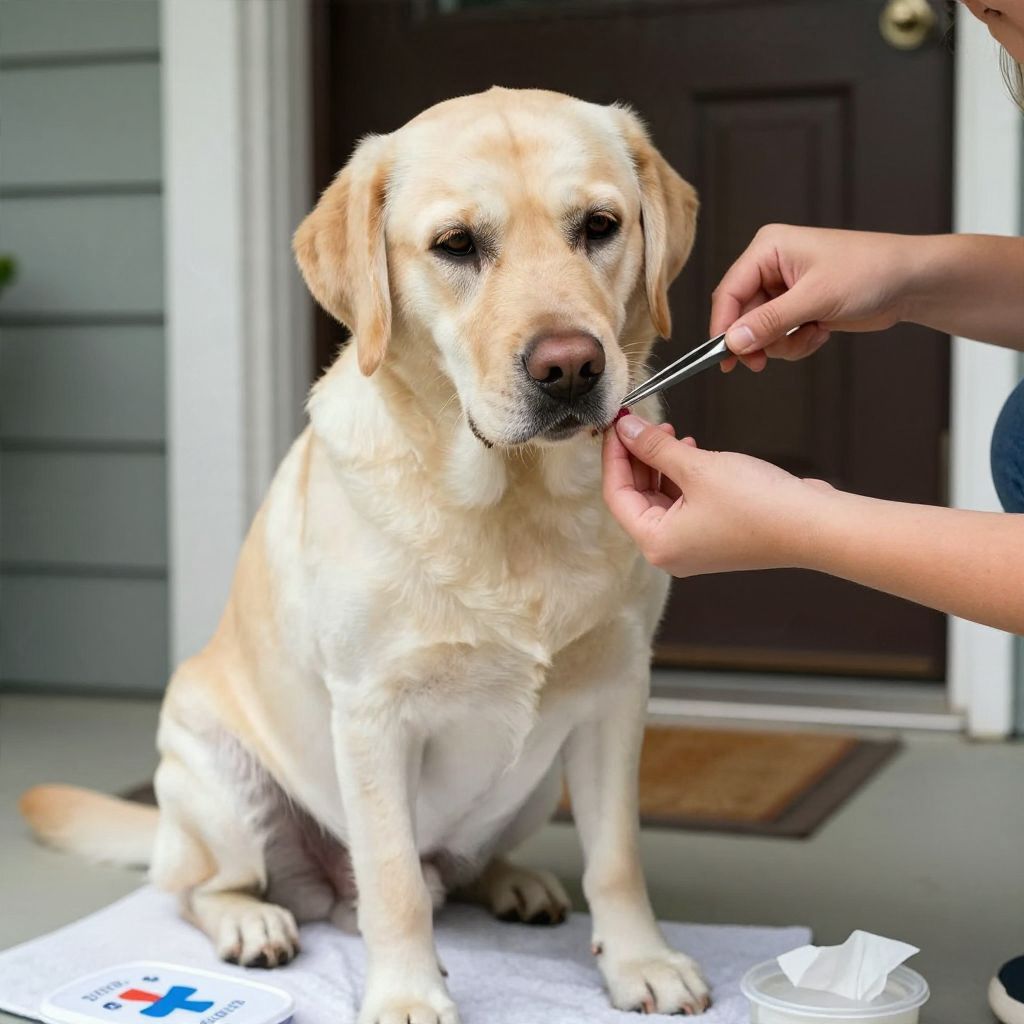
How do you remove ticks from dogs safely? The goal is to get the tick out completely, reduce the chance of infection, and watch for illness afterward. The process is simple, but using the right tool and technique matters.
If you find a tick, stay calm and remove it as soon as possible with fine-tipped tweezers or a tick-removal tool. Grasp the tick close to your dog’s skin, pull straight out with steady pressure, then clean the area and monitor your dog for symptoms.
How To Remove Ticks From Dogs?
Use fine-tipped tweezers or a tick-removal tool to grasp the tick as close to the skin as possible, then pull straight up with steady, even pressure. Do not twist, crush, burn, or coat the tick with home remedies. After removal, clean the bite area and watch for redness, swelling, or illness.
What you need before you start
Having the right supplies ready makes the job faster and safer. You do not need anything fancy, but you do need good lighting and a steady hand.
- Fine-tipped tweezers or a tick-removal tool
- Disposable gloves, if available
- Antiseptic or mild soap and water for cleaning the skin
- A small container or sealed bag if you want to save the tick for identification
- Treats to help your dog stay calm
If your dog is wiggly, anxious, or painful to touch, ask another person to help hold them gently. Some dogs tolerate grooming well, while others need more patience and breaks.
Step-by-step tick removal
- Separate the fur so you can see the tick and the skin around it clearly.
- Grip the tick close to the skin with tweezers or a tick tool. Aim for the mouthparts, not the swollen body.
- Pull straight out with slow, steady pressure. Avoid jerking or twisting.
- Check the skin to make sure the tick is gone. A tiny dark speck may remain if mouthparts break off.
- Clean the area with soap and water or a pet-safe antiseptic recommended by your veterinarian.
- Wash your hands and disinfect the tool after use.
Do not squeeze the tick’s body while removing it. Crushing it can increase the chance of exposing your dog to infectious material.
What not to do when removing a tick
Some old home methods are unsafe or ineffective. They can irritate the skin and may make removal harder.
- Do not use petroleum jelly, nail polish, alcohol, or heat to “make it back out.”
- Do not burn the tick with a match or lighter.
- Do not twist aggressively if you are using tweezers.
- Do not dig deeply into the skin if a small piece seems stuck.
If the tick is firmly attached in a hard-to-see area, such as between toes, inside the ears, or near the eyelids, it may be safer to have a veterinarian remove it.
What if the tick head breaks off?
Sometimes the tick’s mouthparts remain in the skin. This can cause mild local irritation, but it does not always mean an emergency. Clean the area and avoid picking at it.
Contact your veterinarian if the site becomes increasingly red, swollen, painful, or starts draining. If you are unsure whether the entire tick was removed, a vet can check the area and advise you.
When to call a veterinarian right away
Most tick bites do not cause immediate trouble, but some dogs can become ill from tick-borne disease or develop complications. Seek veterinary care promptly if you notice any of the following:
- Fever, lethargy, or sudden weakness
- Limping or joint pain
- Loss of appetite
- Vomiting or diarrhea after a tick bite
- Pale gums, collapse, or trouble breathing
- Facial swelling or hives, which may suggest an allergic reaction
- Redness or swelling that worsens over 24 to 48 hours
Emergency note: If your dog collapses, has trouble breathing, or seems severely unwell, treat it as an urgent veterinary issue.
How to check your dog for more ticks
After removing one tick, inspect the rest of your dog carefully. Ticks often hide where fur is dense or skin is thin.
- Around and inside the ears
- Under the collar
- Between the toes
- Under the armpits
- Around the groin and tail base
- Along the neck and chest
Run your fingers slowly through the coat. A tick can feel like a small firm bump, especially before it becomes engorged.
How to clean and monitor the bite site
After removal, keep the area clean and observe it for a few days. Mild redness can happen, but it should improve rather than worsen.
- Gently clean the skin once or twice a day if needed
- Prevent your dog from scratching or licking the spot excessively
- Watch for swelling, discharge, or a growing scab
- Note the date you found the tick in case symptoms appear later
If your dog scratches the area a lot, a cone or other protective option may be useful. Your veterinarian can help you choose the safest approach for your dog’s size and temperament.
Should you save the tick?
Saving the tick can be helpful if your veterinarian wants to identify it later. Place it in a sealed bag or small container and label the date and where you found it.
You do not need to keep every tick, but it can be useful if your dog later develops signs of illness. Identification may help your vet assess exposure risk based on your location and the type of tick.
Why tick removal matters
Ticks can transmit diseases, and the risk generally rises the longer a tick stays attached. Quick removal lowers risk, though it does not eliminate it completely.
That is why it is important to monitor your dog after a bite, especially if you live in an area where ticks are common or if your dog spends time in tall grass, woods, or brush.
How to reduce the chance of future tick bites
Prevention is easier than repeated removal. The best approach depends on your dog’s lifestyle, age, health, and where you live.
- Use a veterinarian-recommended tick preventive product
- Check your dog after hikes, park visits, or time in tall grass
- Keep grass trimmed in your yard when possible
- Avoid letting your dog roam in heavily tick-infested areas
- Groom regularly so you can spot parasites early
Ask your veterinarian which prevention option is appropriate for your dog. Some products are not suitable for puppies, dogs with certain health conditions, or dogs already taking other medications.
Common mistakes dog owners make
Small mistakes can make tick removal harder or increase irritation. Knowing what to avoid helps you act confidently.
- Waiting too long to remove the tick
- Using bare fingers instead of a proper tool
- Pulling too fast and leaving parts behind
- Ignoring later signs of illness
- Skipping prevention after a tick is found
If your dog is very young, elderly, frail, or has a medical condition, be extra cautious. These dogs may need a veterinarian’s help sooner if they show any change in behavior or health after a tick bite.
When a vet visit is the best choice
Even if you remove the tick successfully, a vet visit may still be wise if the bite was on a sensitive area, the tick was attached for a long time, or your dog seems unwell. A veterinarian can examine the skin and advise you on monitoring.
This is especially important if your dog has a history of immune problems, is taking medications that affect healing, or has had tick-borne illness before.
For other dog health concerns that can overlap with parasite issues, you may also find how to treat mange in dogs at home useful for understanding skin irritation, and it is also worth knowing when not to make a dog vomit if your dog has swallowed something unsafe.
The safest way to remove ticks from dogs is to use the right tool, pull straight out with steady pressure, clean the bite site, and watch closely for symptoms afterward. If your dog seems sick, the tick was hard to remove, or the bite area worsens, contact your veterinarian promptly.