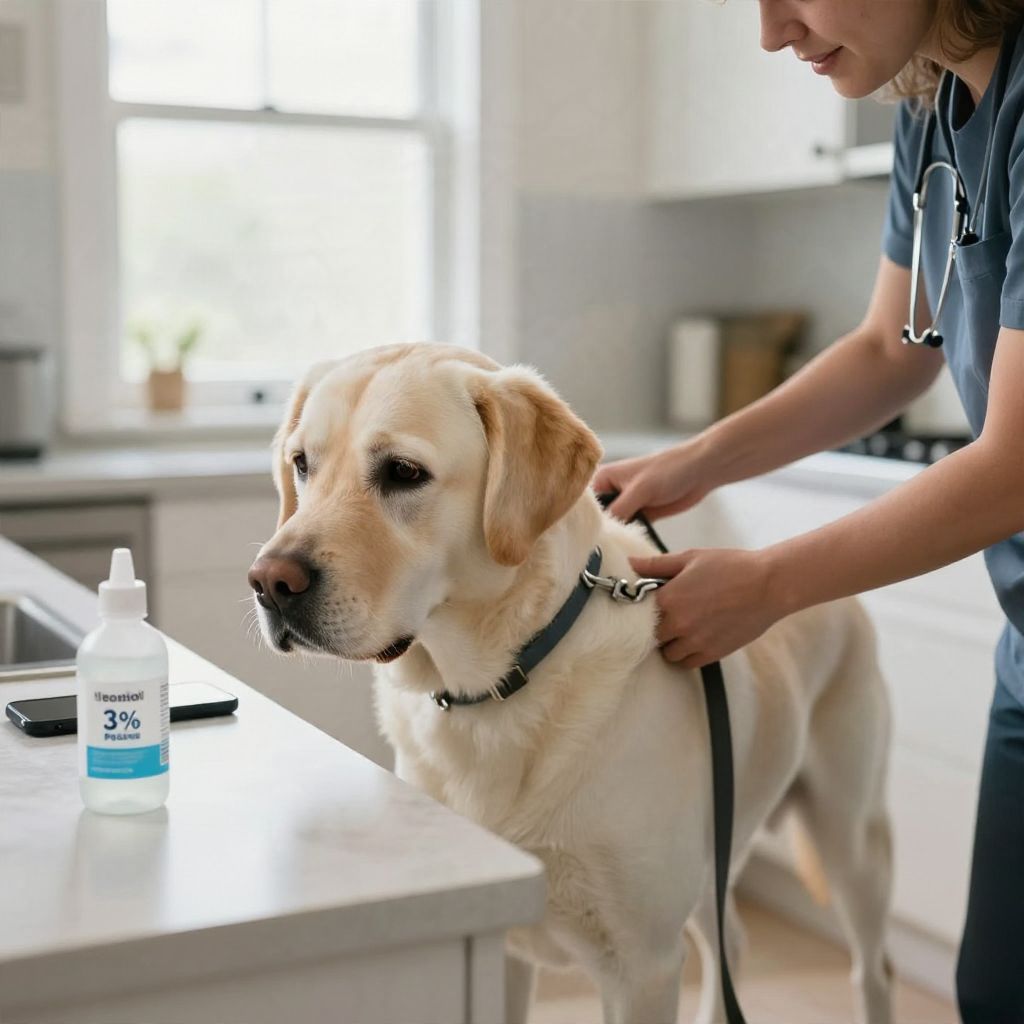
If you’re wondering how to make a dog vomit, the safest answer is usually: don’t try it at home unless a veterinarian or poison helpline specifically tells you to. In many cases, inducing vomiting can make things worse, especially with caustic substances, sharp objects, or if your dog is sleepy or having trouble breathing.
What you should do depends on what your dog ate, when it happened, and how your dog is acting now. Quick action matters, but the wrong action can be dangerous, so use the steps below to decide what to do next.
How To Make A Dog Vomit?
Do not try to make your dog vomit unless a veterinarian or pet poison expert tells you to do so. Some ingestions are safer to manage by vomiting, but others can cause choking, burns, or more damage coming back up. Call your vet or a poison helpline first and follow their instructions exactly.
What to do first if your dog ate something dangerous
Before you think about inducing vomiting, focus on the basics: what was eaten, how much, and how long ago. That information helps a veterinarian decide whether vomiting is appropriate or whether your dog needs immediate treatment instead.
- Remove any remaining access to the item.
- Check the packaging, label, or ingredient list if available.
- Note the time of ingestion as closely as you can.
- Call your veterinarian, an emergency clinic, or a pet poison resource right away.
- Do not give food, milk, salt, oil, or home remedies unless instructed.
Information to have ready when you call
- Your dog’s weight, age, and breed mix if known
- The exact product or food involved
- How much may have been eaten
- When it happened
- Your dog’s current symptoms
When vomiting should not be induced
There are many situations where making a dog vomit is unsafe. In those cases, your veterinarian may recommend a different treatment such as monitoring, activated charcoal, imaging, fluids, or surgery.
- Caustic substances such as bleach, drain cleaner, or strong acids/alkalis
- Sharp objects like needles, bones, fishhooks, or glass
- Foaming or petroleum products that can be inhaled into the lungs
- Unknown substances when you cannot identify what was eaten
- Dogs that are weak, very sleepy, seizuring, or having trouble breathing
- Dogs with swallowing problems or repeated vomiting already
- Brachycephalic dogs with short noses, who may have a higher aspiration risk
Breed alone does not determine risk, but body shape, size, age, and medical history can matter. A small puppy, a senior dog, or a dog with heart, airway, or neurologic disease may need a different approach than a healthy adult dog.
Why home methods are risky
You may see unsafe advice online about salt, hydrogen peroxide, mustard, syrup of ipecac, or sticking fingers down a dog’s throat. These methods can cause serious harm and should not be used without veterinary direction.
- Salt can cause dangerous sodium poisoning.
- Hydrogen peroxide can irritate the stomach and is not appropriate for every dog or every situation.
- Ipecac is not a routine or safe home option for dogs.
- Forced gagging can injure the mouth or lead to aspiration.
Even when vomiting happens, the dog may still need treatment afterward. Some toxins are absorbed quickly, and some objects can cause damage on the way back up.
What veterinarians consider before recommending vomiting
A veterinarian weighs the substance, the time since ingestion, and your dog’s condition. The goal is to reduce harm, not simply to empty the stomach at any cost.
Factors that affect the decision
- Whether the item is likely to be absorbed quickly
- Whether the substance is corrosive or sharp
- Your dog’s alertness and ability to protect the airway
- How much was eaten
- Your dog’s size, age, and health status
- Whether your dog has already vomited
For some exposures, the safest plan is not vomiting but urgent veterinary care. For others, time is critical and a vet may want you to come in immediately rather than attempt anything at home.
Signs your dog needs urgent veterinary care now
Do not wait for a callback if your dog has severe symptoms. Go to an emergency clinic immediately if you notice any of the following:
- Difficulty breathing or blue/pale gums
- Collapse, extreme weakness, or inability to stand
- Seizures or tremors
- Repeated vomiting, especially with blood
- Swollen, painful abdomen or retching without producing vomit
- Drooling, pawing at the mouth, or obvious pain
- Confusion, severe agitation, or unresponsiveness
- Known ingestion of a caustic chemical, sharp object, or medication overdose
If your dog is acting normal after a questionable ingestion, that is still not a reason to guess. Some toxins and foreign bodies cause delayed signs.
What to do while you’re waiting for veterinary advice
Keep your dog calm and prevent further eating. Movement, stress, or giving random foods can complicate the situation.
- Confine your dog in a quiet area.
- Remove access to more of the substance.
- Keep pets and children away from the item.
- Bring the packaging or a photo of the label with you if you go to the clinic.
- Follow the vet’s instructions exactly, even if they differ from online advice.
What happens at the clinic if vomiting is appropriate
If your veterinarian decides vomiting is safe, they can use controlled methods and monitor your dog closely. This is much safer than trying to trigger vomiting on your own because the team can respond if your dog aspirates or has a reaction.
Possible next steps after vomiting
- Examining the vomit for evidence of the substance
- Giving activated charcoal in some cases
- Checking for dehydration, pain, or ongoing toxicity
- Using X-rays or ultrasound if a foreign body is suspected
- Providing fluids, anti-nausea care, or hospitalization when needed
Not every dog needs the same follow-up. A toy breed puppy that swallowed a small object may need different monitoring than a large adult dog that ate a medication or a toxic food.
Common mistakes dog owners make
When you’re scared, it’s easy to act fast. These mistakes can reduce your dog’s chances of a good outcome:
- Waiting too long to call for help
- Trying multiple home remedies
- Assuming a small amount is harmless
- Inducing vomiting after the dog is already lethargic
- Forgetting to mention all possible ingredients or medications
- Giving food in hopes of “diluting” a toxin
Some dogs are also more likely to panic or resist handling, especially if they are frightened, in pain, or not well socialized. In those cases, trying to force a home procedure can increase stress and injury risk.
How to prevent future emergencies
Prevention is the best long-term answer to the question of how to make a dog vomit, because the safest plan is often not needing to at all.
- Store medications in closed cabinets, not on counters.
- Keep chocolate, grapes, xylitol products, and alcohol out of reach.
- Use secure trash cans with lids.
- Pick up toys, socks, bones, and other swallowable items.
- Supervise dogs that chew, counter-surf, or raid bags.
- Teach a reliable “leave it” and reward it generously.
For puppies, management matters even more because they explore with their mouths. For senior dogs, arthritis, vision changes, or cognitive decline can make scavenging and accidental ingestion more likely.
When it may be a false alarm
Sometimes a dog vomits once from excitement, eating too fast, motion sickness, or a mild stomach upset. That is different from a poisoning or foreign-body emergency, but you still want to watch closely if the vomiting repeats or your dog seems unwell.
If your dog is otherwise bright, drinking normally, and not showing red-flag symptoms, your veterinarian may advise observation. Still, never assume a single vomit means everything is fine after a known exposure.
Bottom line
If you’re asking how to make a dog vomit, the safest answer is to call a veterinarian or pet poison expert first. Do not use home remedies unless directed, and seek urgent care right away if your dog is weak, breathing hard, seizuring, or may have swallowed a caustic or sharp item.
For more help understanding vomiting causes and next steps, you may also find why dogs throw up and what to do if your dog is throwing up useful.