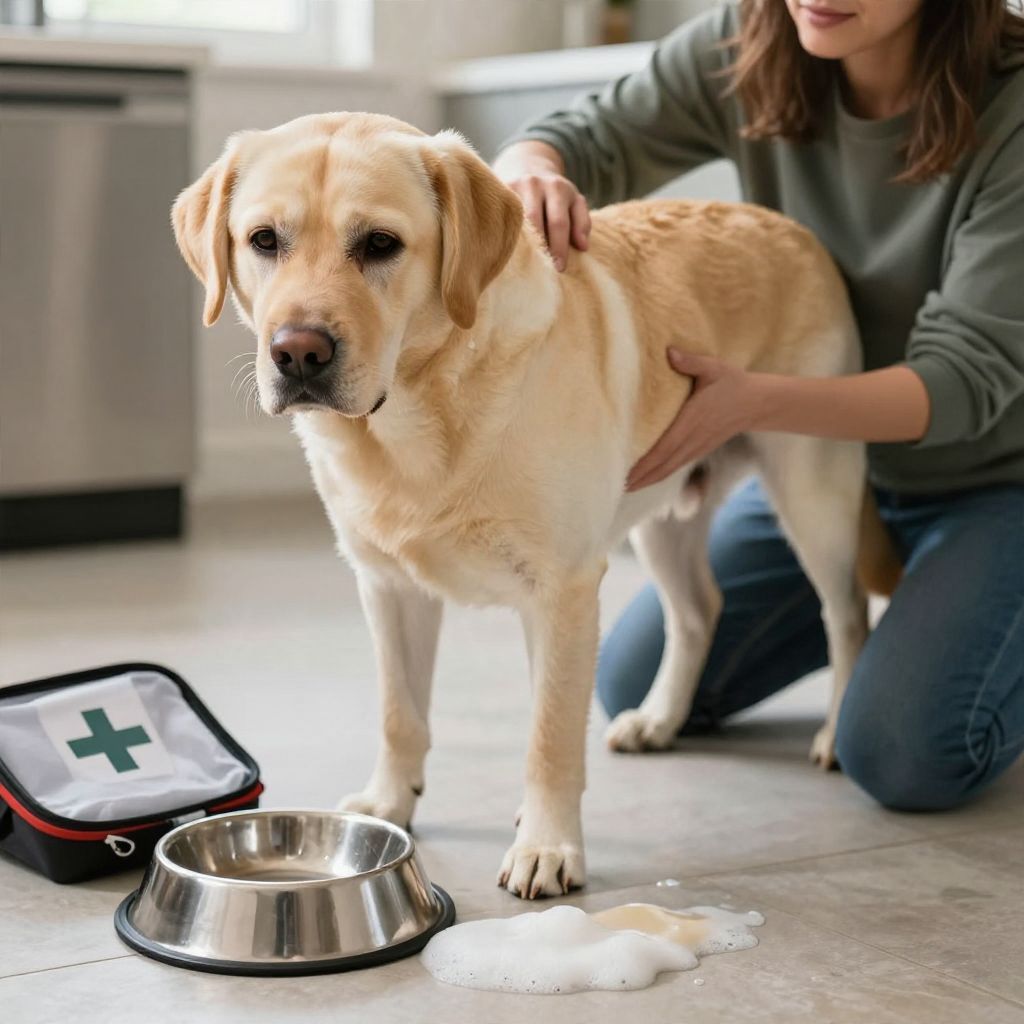
My dog is throwing up, and that can be scary—especially if it happens more than once or your dog seems unwell. Vomiting can come from something mild, like eating too fast, or from a problem that needs prompt veterinary care.
The most important step is to watch for warning signs, keep your dog safe, and contact a veterinarian when the vomiting is frequent, severe, or paired with other symptoms. Avoid guessing at the cause if your dog may have eaten something dangerous.
My dog is throwing up: what should I do first?
If your dog throws up once and otherwise seems normal, monitor closely, offer water in small amounts, and withhold food only if your veterinarian has previously advised that approach for your dog. If vomiting repeats, your dog cannot keep water down, or you see blood, lethargy, pain, or bloating, contact a veterinarian right away.
Why dogs vomit
Vomiting is a symptom, not a diagnosis. It can happen for many reasons, including dietary indiscretion, sudden diet change, motion sickness, intestinal parasites, infections, pancreatitis, toxin exposure, foreign objects, kidney or liver disease, and other medical problems.
Some dogs are more likely to vomit from certain triggers based on age, size, breed tendencies, or health history. For example, puppies may vomit from parasites or infections more easily, while older dogs may have more chronic medical causes. Still, each dog is individual, so symptoms should be judged by the whole picture.
Common, less urgent causes
- Eating too quickly
- Sudden food changes
- Scavenging trash, grass, or table scraps
- Mild stomach upset after stress or travel
- Motion sickness
More serious causes
- Foreign body or intestinal blockage
- Toxin or medication exposure
- Pancreatitis
- Severe infection
- Kidney, liver, or endocrine disease
When vomiting is an emergency
Seek urgent veterinary care if your dog is vomiting and has any of the following: a swollen or painful belly, repeated unproductive retching, collapse, trouble breathing, pale gums, severe weakness, blood in vomit, black/tarry stool, or a known toxin exposure. These signs can indicate a life-threatening problem.
Also treat these situations as urgent:
- Your dog is a puppy, senior, very small dog, or has a chronic illness and is vomiting repeatedly
- Your dog cannot keep water down
- Vomiting lasts more than a day or happens many times in a short period
- Your dog may have swallowed a toy, bone, string, sock, corn cob, or other object
- Your dog seems painful, disoriented, or unusually quiet
What you can safely do at home
For a single mild episode, keep things calm and simple. Offer fresh water in small, frequent amounts so your dog does not gulp and vomit again. If your dog is bright, comfortable, and not vomiting repeatedly, you can observe closely for changes.
Helpful steps include:
- Remove access to trash, compost, human food, and chew items that could be swallowed.
- Watch for diarrhea, drooling, coughing, abdominal pain, or repeated vomiting.
- Note what the vomit looks like: food, foam, bile, blood, or foreign material.
- Think about recent changes in diet, treats, medications, or stress.
- Call your veterinarian if you are unsure whether the episode is mild or serious.
Do not force food, water, or medication if your dog is actively vomiting or seems distressed. Home care should never delay veterinary attention when red-flag symptoms are present.
What not to do
It is easy to make vomiting worse by trying too many things at once. Avoid unsafe or unproven “fixes” unless your veterinarian specifically recommends them for your dog.
- Do not give human medications unless a veterinarian tells you to do so.
- Do not use essential oils, alcohol, or other home remedies.
- Do not assume vomiting is “just a bug” if it keeps happening.
- Do not wait at home if your dog may have eaten a toxin or object.
How age and size can affect the situation
Puppies can dehydrate quickly and may need prompt care even after a short illness. Small dogs may also become weak faster if they cannot keep food or water down. Senior dogs may have underlying disease that makes vomiting more concerning.
Large dogs can be at greater risk for dangerous abdominal swelling if vomiting is paired with a distended belly and retching without producing anything. Because the risks differ by individual dog, it is safest to call your veterinarian when you are unsure.
Food, treats, and vomiting
Food-related stomach upset is common, but not all vomiting is caused by diet. A sudden switch in kibble, rich table scraps, greasy foods, or too many treats can upset the stomach. Some dogs also vomit after eating too fast, especially if they are enthusiastic eaters.
If your dog vomits after meals more than once, your veterinarian may suggest evaluating the diet, feeding routine, and any recent changes. Keep in mind that a bland diet is not a cure for every cause of vomiting, and it is not appropriate for every dog.
Feeding habits that may help prevent repeat episodes
- Feed measured meals instead of free-feeding if overeating is a problem
- Use a slow-feeder bowl if your dog gulps food
- Make diet changes gradually, not all at once
- Keep trash, compost, and unsafe foods out of reach
- Limit rich treats and table scraps
Vomiting vs. regurgitation
People often confuse vomiting with regurgitation, but they are not the same. Vomiting usually involves nausea, abdominal effort, and partially digested material. Regurgitation is more passive and may happen soon after eating, with food coming back up without much warning.
This distinction matters because different problems can cause each one. If you are not sure which is happening, a veterinarian can help you sort it out.
Why repeated vomiting needs a vet exam
Repeated vomiting can lead to dehydration and can also signal a serious underlying issue. A veterinarian may recommend an exam, fecal testing, bloodwork, imaging, or other diagnostics depending on your dog’s age, history, and symptoms.
Do not rely on appearance alone. A dog can seem “mostly fine” while still having a blockage, pancreatitis, or another condition that needs treatment.
How to prepare for the vet visit
When you call, be ready to describe the vomiting clearly. The more detail you can provide, the easier it is for the veterinary team to triage the situation.
- How many times your dog vomited
- What the vomit looked like
- When it started
- Any diarrhea, lethargy, pain, or appetite changes
- Possible access to toxins, toys, bones, trash, or foreign objects
- Any recent diet changes or new medications
When to call even if it seems mild
Call your veterinarian if vomiting is new and your dog has a medical condition such as diabetes, kidney disease, liver disease, or a history of pancreatitis. You should also call if your dog is on medication, because vomiting can sometimes be a side effect or a sign that the medicine is not being tolerated.
If the vomiting is intermittent and keeps returning over days or weeks, that is also worth a veterinary workup even if your dog seems normal between episodes.
Simple prevention tips
You cannot prevent every episode, but you can reduce common risks. Good supervision, a stable diet, and quick attention to unusual symptoms go a long way.
- Keep garbage, spoiled food, and dangerous objects away from your dog
- Use puzzle feeders or slow feeders if your dog eats too quickly
- Introduce new foods gradually
- Keep up with parasite prevention and routine veterinary care
- Watch closely after scavenging, travel, or a stressful event
Bottom line
If your dog is throwing up, start by checking for red flags, limiting access to hazards, and monitoring closely. A single mild episode may pass, but repeated vomiting, blood, pain, weakness, bloating, or toxin exposure means you should contact a veterinarian promptly.
If you want more background, you may also find why dogs throw up and what to give a dog with an upset stomach helpful for understanding common causes and next steps.