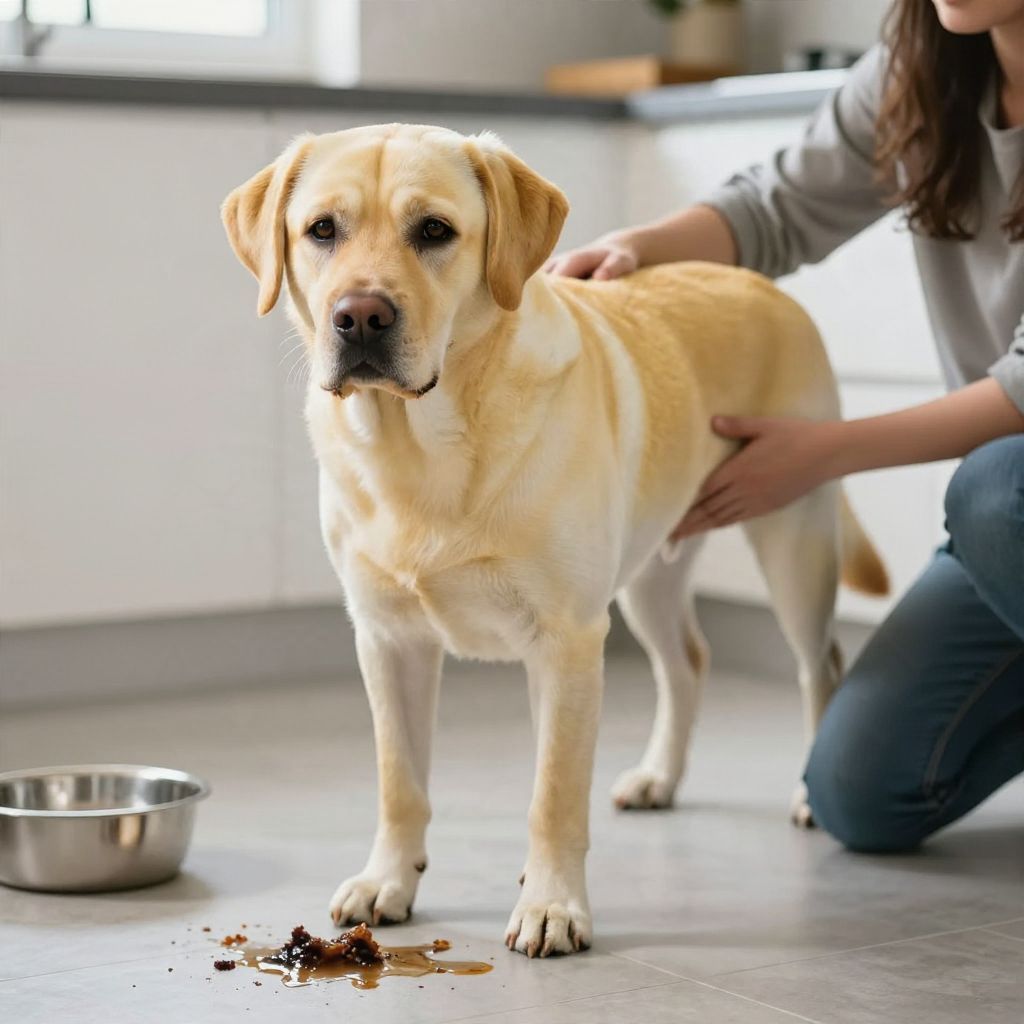
Why do dogs throw up? It can happen for simple reasons like eating too fast, motion sickness, or a sudden diet change, but vomiting can also signal illness, poisoning, pain, or a blockage. The key is to notice what the vomit looks like, how often it happens, and how your dog is acting overall.
Occasional vomiting may be mild, but repeated vomiting, blood, lethargy, belly pain, or trouble keeping water down needs prompt veterinary attention. Because dogs can worsen quickly, especially puppies, seniors, and small dogs, it’s important to know what is normal and what is not.
Why do dogs throw up?
Dogs throw up when something irritates the stomach, intestines, or nervous system, or when a more serious problem affects digestion or the whole body. Common causes include dietary indiscretion, infections, parasites, pancreatitis, toxin exposure, motion sickness, and foreign-body blockage. The cause varies by age, diet, breed tendencies, and health history.
Common reasons dogs vomit
Eating too fast or too much
Some dogs bring up food shortly after meals because they gulp it down, eat a large portion, or exercise too soon after eating. This is more likely in dogs that are highly food-motivated or in multi-dog homes where meals are rushed.
- Try smaller, more frequent meals.
- Use a slow feeder or puzzle feeder if your dog eats quickly.
- Keep calm rest time after meals, especially before vigorous play.
Diet changes or food intolerance
A sudden switch in food can upset a dog’s stomach. Some dogs also react poorly to certain ingredients, rich table foods, or treats, though food intolerance is not the same as a true allergy.
- Change foods gradually over several days when possible.
- Limit rich scraps, greasy foods, and unfamiliar treats.
- Talk with your veterinarian if vomiting keeps happening after meals.
Eating something inappropriate
Dogs often vomit after scavenging trash, chewing fabric, toys, bones, plants, or other foreign material. This can be more than an upset stomach; swallowed objects may cause a dangerous blockage.
Urgent care is needed if your dog keeps vomiting, cannot keep water down, has a swollen abdomen, seems painful, or you suspect they swallowed something they should not have.
Motion sickness or stress
Some dogs vomit in the car, during travel, or when anxious. Puppies may outgrow motion sickness, but some adult dogs continue to struggle, especially with long rides or stressful events.
- Keep car rides calm and predictable.
- Offer a secure, well-ventilated travel setup.
- Ask your veterinarian about travel options if motion sickness is frequent.
Parasites and infections
Intestinal parasites, viral infections, and bacterial illnesses can all cause vomiting. Puppies, dogs with outdoor exposure, and dogs that drink from unsafe water sources may be at higher risk.
If vomiting comes with diarrhea, fever, weakness, or poor appetite, your veterinarian may recommend testing and targeted treatment.
Pancreatitis and other inflammatory conditions
Pancreatitis is inflammation of the pancreas and can cause repeated vomiting, belly pain, hunched posture, and loss of appetite. Rich or fatty foods may trigger it in some dogs, but it can happen for other reasons too.
This is not something to watch and wait on at home if your dog seems painful or ill.
Toxins and medications
Vomiting can follow exposure to toxic foods, plants, chemicals, human medications, or spoiled food. Some dogs are also sensitive to certain prescribed or over-the-counter medications.
If you think your dog ate something toxic, contact a veterinarian or pet poison resource right away. Do not induce vomiting unless a professional specifically tells you to do so.
What does the vomit look like, and why does it matter?
The appearance of vomit can help you describe the problem to your veterinarian, but it does not replace an exam. Color, texture, and timing all matter.
- Undigested food soon after eating: may suggest eating too fast, regurgitation, or a problem higher in the digestive tract.
- Yellow or foamy vomit: can happen when the stomach is empty or irritated.
- Blood or coffee-ground material: can signal bleeding and needs prompt veterinary care.
- Green material: may reflect grass or bile, but green vomit can also occur with more serious problems.
- Repeated small amounts: may point to nausea, obstruction, or another ongoing issue.
If you can safely do so, note when your dog vomited, what it looked like, and whether your dog ate, drank, or had diarrhea before or after.
When vomiting is an emergency
Some vomiting cases need urgent veterinary care rather than home monitoring. Do not wait if your dog has any of the following:
- Repeated vomiting over several hours
- Blood in the vomit or black, tarry stool
- A swollen, hard, or painful abdomen
- Weakness, collapse, or severe lethargy
- Labored breathing
- Suspected poisoning or foreign-body ingestion
- Signs of dehydration, such as dry gums or extreme thirst with continued vomiting
- Vomiting plus fever, severe diarrhea, or obvious pain
- A puppy, senior dog, or medically fragile dog that cannot keep water down
Seek immediate veterinary help if your dog is retching without producing vomit, especially with a distended abdomen. That can be a life-threatening emergency.
What you can do at home for mild, one-time vomiting
If your dog vomits once, then seems normal, alert, and able to keep water down, you can monitor closely while avoiding anything that may irritate the stomach further. If vomiting returns, stop home care and call your veterinarian.
- Remove access to trash, toys, bones, and other chewables.
- Offer small amounts of fresh water, not a large bowl all at once.
- Watch for more vomiting, diarrhea, pain, or unusual tiredness.
- Feed only if your veterinarian has advised it or if your dog has clearly settled and is acting normal.
- Resume normal feeding cautiously if your dog remains well, or ask your veterinarian what is appropriate for your dog’s situation.
Do not give human anti-nausea medicine, pain relievers, or home remedies unless a veterinarian has specifically directed you to do so.
What not to do when your dog throws up
Well-meaning mistakes can make vomiting worse or delay treatment. Avoid these common errors:
- Do not force food or water if your dog is actively vomiting.
- Do not give human medications without veterinary guidance.
- Do not assume grass-eating explains repeated vomiting.
- Do not wait out ongoing vomiting in puppies or small dogs.
- Do not ignore vomiting after possible toxin or foreign-object exposure.
How age and size can affect vomiting risk
Age, body size, and overall health can change how concerned you should be. Puppies can dehydrate quickly and may have parasites, infections, or swallowed objects. Senior dogs may vomit because of organ disease, dental pain, cancer, or medication side effects.
Small dogs may become weak faster if they cannot keep food or water down, while large dogs can be at higher risk for severe abdominal problems if they are bloated or retching. Individual history matters more than breed labels alone.
How veterinarians figure out the cause
Your veterinarian will use your dog’s history, exam findings, and sometimes testing to narrow down the cause. Be ready to describe when vomiting started, how often it happens, what it looks like, and whether your dog may have eaten something unusual.
Depending on the case, your veterinarian may recommend fecal testing, bloodwork, imaging, or other diagnostics. This helps distinguish a simple upset stomach from problems like obstruction, pancreatitis, kidney disease, liver disease, or infection.
How to help prevent future vomiting
You cannot prevent every episode, but you can reduce common triggers and catch problems earlier.
- Feed a consistent, appropriate diet.
- Make food changes gradually.
- Keep garbage, compost, and dangerous items secured.
- Supervise chews and toys that could be swallowed.
- Use parasite prevention and routine veterinary care.
- Address travel anxiety or motion sickness with your veterinarian’s help.
- Keep a note of patterns if vomiting happens repeatedly.
When to call your veterinarian even if it seems mild
Call your veterinarian if vomiting keeps happening, if your dog has a sensitive stomach that seems to be getting worse, or if the problem follows a diet change, new treat, or medication. Recurrent vomiting is not something to dismiss as “just a dog thing.”
It is also wise to call if your dog has other symptoms, such as diarrhea, weight loss, poor appetite, excessive drinking, or changes in energy. These can point to an underlying medical issue that needs attention.
Bottom line
Dogs throw up for many reasons, from mild stomach upset to emergencies like poisoning or blockage. If it happens once and your dog quickly returns to normal, monitor closely. If vomiting repeats, includes blood, or comes with pain, weakness, or a swollen belly, contact a veterinarian right away.
If you want more practical dog-care guidance, you may also find what you can give a dog for diarrhea helpful, along with general breed and care information at Online Dog Breeds.