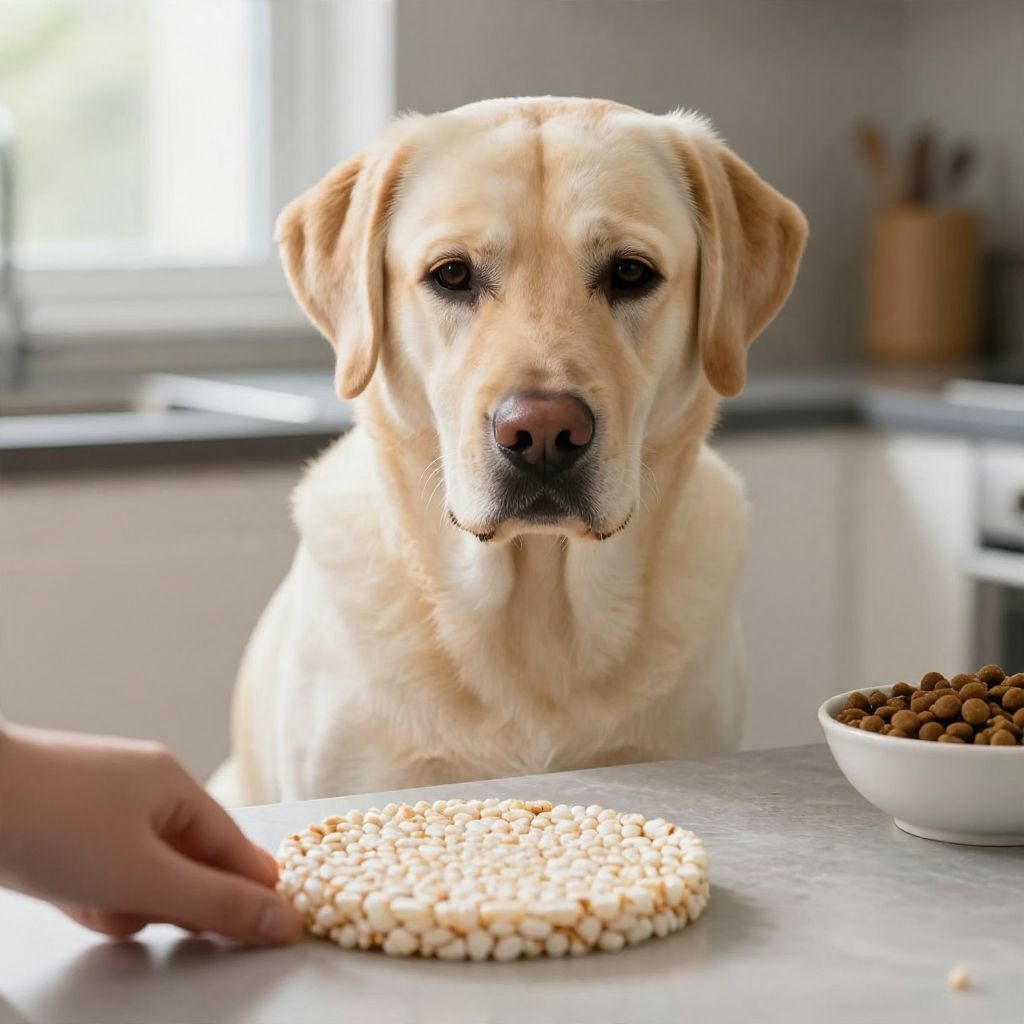
Can dogs eat rice cakes? In many cases, plain rice cakes are not toxic to dogs, but they are also not especially nutritious. The main concerns are added salt, flavorings, sweeteners, and the risk of choking or stomach upset if your dog eats too much.
If you want to share a small piece, choose a plain, unsalted rice cake and keep the portion tiny. Dogs with diabetes, weight issues, food sensitivities, or swallowing problems may need to avoid them or have them only with a veterinarian’s guidance.
Can Dogs Eat Rice Cakes?
Yes, dogs can usually eat a small amount of plain, unsalted rice cake as an occasional treat. Rice cakes should not replace a balanced dog food diet, and flavored, salted, or sweetened varieties are less safe. Offer only a small piece, especially to small dogs or dogs that gulp food quickly.
Are Rice Cakes Safe for Dogs?
Plain rice cakes are generally low-risk in small amounts because they are made mostly from puffed rice. The problem is that “plain” matters a lot: many store-bought rice cakes contain salt, seasonings, sugar, chocolate coatings, or other ingredients that are not appropriate for dogs.
Even a plain rice cake can be a poor treat choice for some dogs if it encourages overeating or if your dog has a medical condition that requires tighter diet control. When in doubt, ask your veterinarian before offering human snacks.
Safer forms
- Plain, unsalted rice cakes with no flavoring or toppings.
- Small broken pieces rather than a whole cake for tiny dogs.
- Only occasional treats, not daily snacks.
Less safe forms
- Flavored rice cakes with onion, garlic, cheese seasoning, or spice blends.
- Rice cakes with chocolate, yogurt coating, xylitol, or other sweeteners.
- Very salty varieties or rice cakes topped with peanut butter that may contain xylitol.
What Risks Do Rice Cakes Pose?
Rice cakes are light and airy, but that does not make them risk-free. The biggest concerns are choking, digestive upset, extra calories, and hidden ingredients that can be harmful to dogs.
1. Choking or gagging
Some dogs try to swallow a rice cake in large chunks, which can cause gagging or choking. This is more likely in puppies, enthusiastic eaters, and dogs that do not chew well.
2. Upset stomach
Too much rice cake can lead to vomiting, gas, soft stool, or diarrhea. Dogs with sensitive stomachs may react even to a small amount, especially if the rice cake has added flavorings or fat.
3. Weight gain
Rice cakes may seem harmless, but treats still add calories. If your dog is already overweight or prone to weight gain, frequent rice cakes can work against your feeding plan.
4. Blood sugar concerns
Because rice cakes are mostly refined carbohydrate, they are not ideal for dogs that need careful blood sugar management. If your dog has diabetes or another metabolic condition, check with your veterinarian before offering any human snack.
5. Dangerous toppings or ingredients
Many risks come from what is on the rice cake, not the rice cake itself. Toppings and seasonings can introduce salt, fat, spices, or toxic sweeteners.
How Much Rice Cake Can a Dog Have?
There is no universal amount that fits every dog. Size, age, activity level, stomach sensitivity, and overall diet all matter. For most healthy dogs, a small piece of plain rice cake is enough to test tolerance without overdoing it.
- Tiny dogs: a small bite or two.
- Medium dogs: a few small pieces.
- Large dogs: a modest portion, not multiple cakes.
Start with less than you think your dog wants. If your dog tolerates it well, you still should keep rice cakes as an occasional treat rather than a regular snack.
Which Dogs Should Avoid Rice Cakes?
Some dogs are better off skipping rice cakes altogether. Individual health needs matter more than a one-size-fits-all answer.
- Dogs with diabetes or other blood sugar concerns.
- Overweight dogs or dogs on a weight-loss plan.
- Dogs with food sensitivities or recurring digestive upset.
- Puppies that are still learning to chew safely.
- Senior dogs with dental problems, swallowing issues, or special diets.
- Dogs with pancreatitis history if the rice cake has fatty toppings or added ingredients.
If your dog has a medical condition, ask your veterinarian before offering human food treats, even simple ones.
How to Feed Rice Cakes to Dogs Safely
If you decide to share a rice cake, keep it simple and controlled. The goal is to reduce choking risk and avoid unnecessary ingredients.
- Choose a plain, unsalted rice cake with no flavoring or coating.
- Check the ingredient list for sweeteners, spices, onion, garlic, or chocolate.
- Break it into small pieces, especially for small dogs.
- Offer only a tiny amount the first time.
- Watch your dog for coughing, gagging, vomiting, or loose stool afterward.
If your dog tends to gulp food, sit with them while they eat and avoid giving a whole rice cake. For dogs that are very food-driven, training treats designed for dogs are often a better choice.
What Ingredients on Rice Cakes Are Dangerous for Dogs?
Some rice cakes are made with ingredients that can be harmful or at least unsuitable for dogs. Always read the label before sharing.
- Xylitol or other sugar substitutes: potentially dangerous.
- Chocolate: unsafe for dogs.
- Onion or garlic powder: not safe for dogs.
- High salt: can worsen thirst and may be risky for some dogs.
- Heavy seasoning or spicy coatings: can irritate the stomach.
- Nut butters with xylitol: avoid unless you confirm the product is xylitol-free.
If a rice cake is flavored, coated, or “dessert-style,” it is usually best to skip it and choose a dog-safe treat instead.
What If Your Dog Ate a Whole Rice Cake or Several?
Most healthy dogs that eat a plain rice cake will be okay, but monitor them for digestive upset. The situation is more concerning if the rice cake had unsafe ingredients or if your dog is very small, very young, or has a medical condition.
Watch for:
- Repeated vomiting
- Diarrhea that is severe or ongoing
- Coughing, choking, or trouble swallowing
- Lethargy or unusual weakness
- Abdominal pain or a bloated belly
- Shaking, collapse, or any sudden behavior change after eating a flavored product
Seek urgent veterinary care immediately if your dog is choking, having trouble breathing, collapses, has a swollen abdomen, or may have eaten a rice cake containing xylitol, chocolate, or another toxic ingredient.
Better Treat Options Than Rice Cakes
Rice cakes are not the worst snack, but they are not the most useful one either. Many dogs do better with treats that are lower-risk and more nutritionally appropriate.
- Small pieces of your dog’s regular kibble
- Vet-approved training treats
- Plain cooked vegetables such as green beans or carrot pieces, if your dog tolerates them
- Small amounts of plain cooked lean meat, if allowed in your dog’s diet
Keep treats to a small part of your dog’s daily calories so you do not unbalance their main diet.
Frequently Asked Questions About Dogs and Rice Cakes
Can puppies eat rice cakes?
They can, but it is usually not the best choice. Puppies are more likely to gulp food, and their stomachs can be more sensitive. If you offer any, keep the portion very small and plain.
Can dogs eat flavored rice cakes?
It is safer not to. Flavored rice cakes often contain salt, sugar, spices, or ingredients that are not dog-friendly. Plain is the only version worth considering, and even then only in moderation.
Can rice cakes help with training?
Usually not very well. They crumble easily and do not offer much nutritional value. Small, tasty training treats made for dogs are often more practical and less messy.
Are brown rice cakes better than white rice cakes?
Not necessarily for dogs. Both are still mostly carbohydrate and should be treated as occasional snacks. The ingredient list matters more than whether the rice is brown or white.
Conclusion
So, can dogs eat rice cakes? Yes, plain and unsalted rice cakes are usually safe in small amounts, but they are not an ideal regular treat. Keep portions tiny, avoid flavored or coated varieties, and skip them entirely if your dog has health concerns or a sensitive stomach. If you want more dog-food safety guidance, you may also find this rice cake guide and this corn cob safety article helpful.