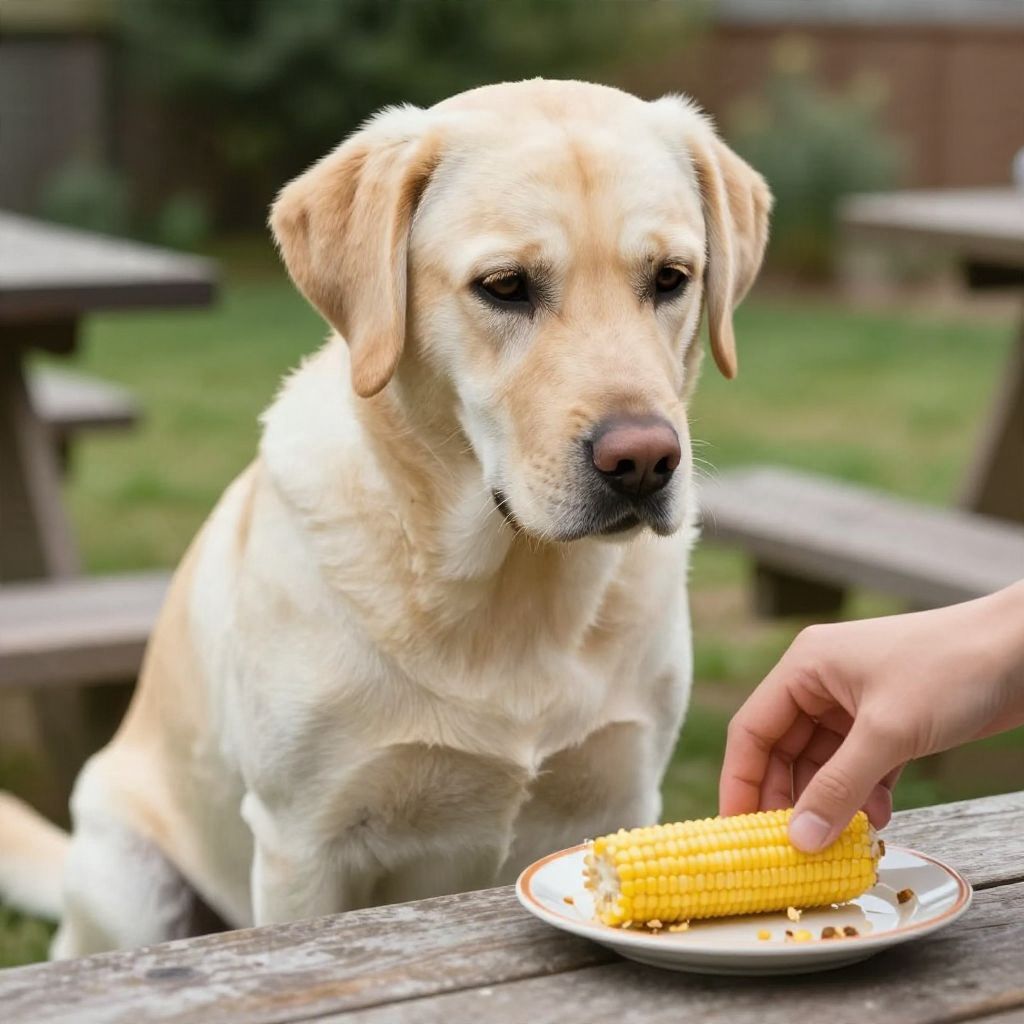
Can dogs eat corn cobs? No—corn cobs are not safe for dogs to chew or swallow. The cob itself is a common choking and intestinal blockage hazard, even if the corn kernels are plain and cooked.
If your dog grabbed a cob, treat it seriously. Some dogs pass small pieces, but many need urgent veterinary care if they swallow part of it or show signs of obstruction.
Can Dogs Eat Corn Cobs?
No. Corn cobs can splinter, lodge in the throat, or cause a dangerous blockage in the stomach or intestines. Even dogs that seem fine right after eating one can develop symptoms hours later, so it is safest to keep all cobs away from your dog.
Why Corn Cobs Are Dangerous for Dogs
Corn kernels are the edible part; the cob is the problem. Dogs may swallow large chunks because the cob can seem like a toy or chew item, especially if it still smells like food.
Main risks
- Choking if a piece gets stuck in the throat.
- Intestinal blockage if the cob or a chunk cannot pass through the digestive tract.
- Vomiting and dehydration from irritation or obstruction.
- Emergency surgery in severe blockage cases.
Blockage risk is not the same for every dog. Smaller dogs may be at higher risk from even small pieces, but larger dogs can also swallow enough to cause serious trouble. Puppies, fast eaters, and dogs with a history of scavenging may be especially likely to gulp food items whole.
What to Do If Your Dog Ate a Corn Cob
If your dog swallowed any part of a corn cob, contact your veterinarian or an emergency clinic right away. Do not wait for symptoms if you know a piece was eaten, because early treatment can be safer than waiting for a complete blockage to develop.
- Remove any remaining cob pieces from reach.
- Check whether your dog is breathing normally and can swallow.
- Call your vet, especially if you know how much was eaten and when.
- Follow the clinic’s instructions exactly.
Do not try to make your dog vomit unless a veterinarian specifically tells you to do so. For some objects, vomiting can make the problem worse or increase the risk of choking.
Emergency Warning Signs to Watch For
Seek urgent veterinary care if you notice any of the following after your dog may have eaten a corn cob:
- Repeated vomiting or retching
- Loss of appetite or refusing water
- Abdominal pain, swelling, or a tense belly
- Lethargy, weakness, or restlessness
- Straining to poop or no bowel movements
- Drooling, gagging, or trouble swallowing
- Coughing, wheezing, or breathing difficulty
These signs can indicate a blockage or choking emergency. If your dog collapses, cannot breathe, or has a swollen abdomen with vomiting, go to an emergency veterinarian immediately.
Can Dogs Eat Corn Kernels Instead?
Plain corn kernels are not the same as a corn cob. In many dogs, small amounts of plain cooked corn kernels are generally okay as an occasional treat, but they should never replace a balanced dog food diet.
Safer ways to offer corn
- Use plain, cooked kernels only.
- Serve them in small amounts.
- Avoid butter, salt, seasoning, and sauces.
- Do not feed corn on the cob.
Some dogs may not tolerate corn well, especially if they have sensitive stomachs or food allergies. If your dog has recurring itching, ear issues, vomiting, or loose stools after certain foods, ask your veterinarian before offering corn again.
What About Corn Cobs as Chews or Toys?
Never give corn cobs as chew toys. They are not durable, safe chews, and they can break into pieces that are hard to digest. Even supervised chewing is risky because a dog can swallow a chunk in seconds.
If your dog likes to chew, choose items designed for dogs and matched to your dog’s size, chewing style, and dental health. A veterinarian or qualified trainer can help you pick safer options if your dog is a strong or destructive chewer.
How to Prevent Corn Cob Accidents
Prevention matters because many cob incidents happen during barbecues, picnics, or family meals when food is left within reach.
- Dispose of cobs in a secure trash can with a lid.
- Keep plates and picnic tables out of reach.
- Ask guests not to feed your dog from the table.
- Use a leash or crate during cookouts if your dog scavenges.
- Teach a reliable leave it cue using reward-based training.
Training helps, but management is still important. Even well-trained dogs can make a split-second grab when food smells appealing.
Special Considerations for Puppies, Seniors, and Dogs With Health Issues
Puppies are often more likely to explore with their mouths, so they may be at higher risk of grabbing and swallowing unsafe items. Senior dogs may have slower digestion or other health conditions that make a blockage more serious.
Dogs with a history of gastrointestinal disease, prior abdominal surgery, or reduced mobility may need extra caution. If your dog has diabetes, pancreatitis, or another medical problem, ask your vet before introducing any new treat, including corn kernels.
Common Mistakes to Avoid
- Assuming a small bite is harmless.
- Waiting for symptoms before calling the vet.
- Giving a cob to “see what happens.”
- Trying home remedies to move the object through.
- Leaving cobs in accessible trash or on counters.
If you are unsure whether your dog swallowed part of a cob, err on the side of caution. A quick call to your veterinarian is better than waiting until vomiting or pain begins.
When to Call the Vet Even If Your Dog Seems Fine
Call your veterinarian if your dog may have eaten a corn cob, even if there are no symptoms yet. Some blockages start with mild signs that can worsen later, and your vet may recommend monitoring, an exam, or imaging based on the situation.
Be ready to share your dog’s approximate size, when the incident happened, and whether the cob was whole or broken. That information helps the clinic judge the urgency.
Bottom Line
Can dogs eat corn cobs? No—corn cobs are unsafe and can cause choking or a life-threatening intestinal blockage. If your dog ate any part of one, contact your veterinarian promptly and watch closely for vomiting, pain, or trouble passing stool.
If you want to keep learning about dog food safety, you may also find it helpful to read about can dogs eat raw fish and can dogs eat avocado.