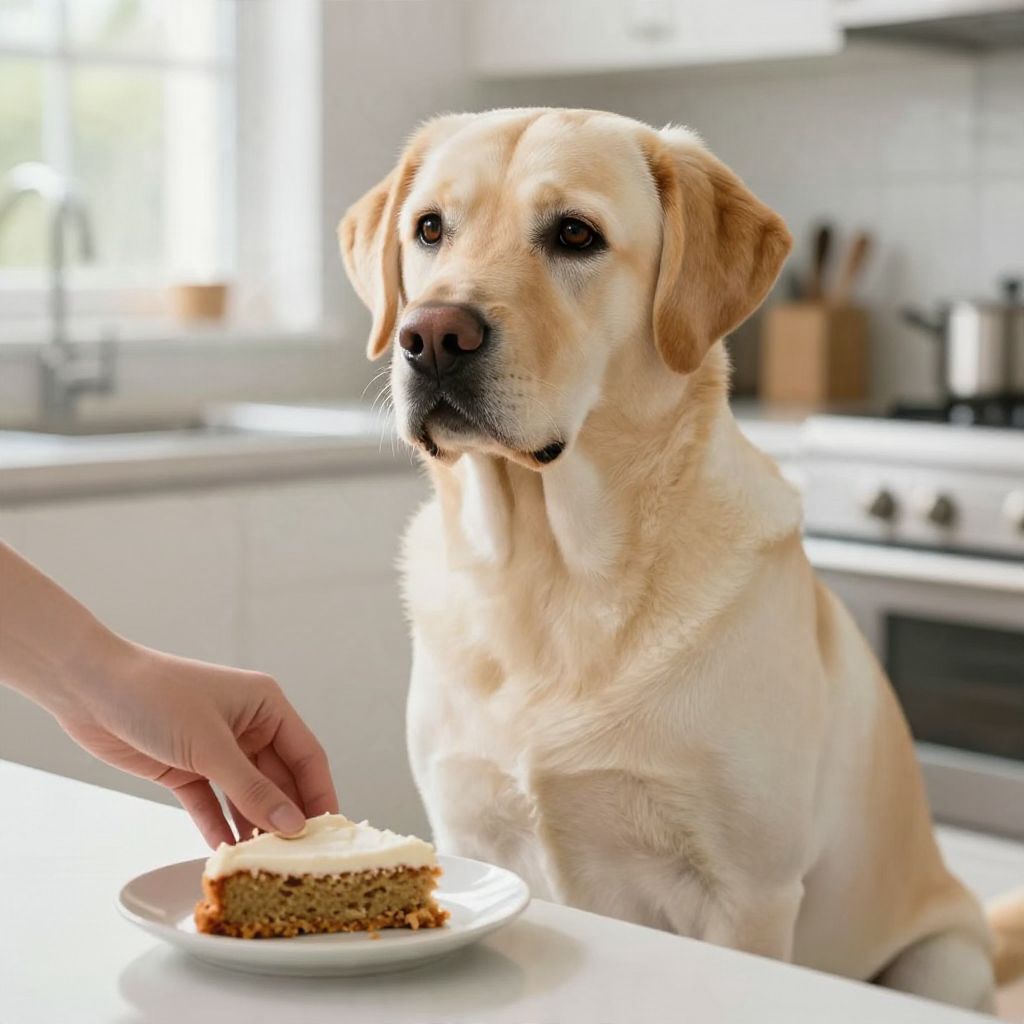
Can dogs eat cake? In most cases, cake is not a good treat for dogs, and some cakes can be dangerous. The main concerns are sugar, fat, and ingredients like chocolate, xylitol, raisins, macadamia nuts, or alcohol.
If your dog ate a small plain piece, they may be fine, but richer cakes or anything with toxic ingredients need prompt attention. The safest approach is to keep cake as a human-only food and offer dog-safe treats instead.
Can Dogs Eat Cake?
Dogs should not regularly eat cake. A tiny bite of plain cake is usually not an emergency, but many cakes contain ingredients that can upset digestion or cause poisoning. The risk depends on the recipe, your dog’s size, and any health issues such as pancreatitis or diabetes.
Why Cake Can Be a Problem for Dogs
Cake is usually high in sugar and fat, which can cause stomach upset and may trigger more serious problems in sensitive dogs. Some dogs are also more likely to react badly to rich foods, especially puppies, seniors, and dogs with a history of digestive trouble.
Common concerns in cake
- Sugar: Can cause vomiting, diarrhea, and weight gain over time.
- Butter, cream, and frosting: Often very rich and may lead to stomach upset.
- Chocolate: Potentially toxic to dogs.
- Xylitol: A sugar substitute that can be dangerous even in small amounts.
- Raisins, currants, and grapes: Unsafe for dogs.
- Macadamia nuts: Can cause illness.
- Alcohol or coffee flavoring: Unsafe ingredients.
Which Cakes Are Most Dangerous?
Any cake with toxic ingredients is unsafe, even if it looks harmless. Chocolate cake, carrot cake with raisins, cakes made with xylitol, and desserts with alcohol or coffee flavoring are especially concerning. Frostings and fillings can also hide risky ingredients.
High-risk ingredients to watch for
- Chocolate or cocoa powder
- Xylitol or “sugar-free” sweeteners
- Raisins, currants, or grapes
- Macadamia nuts
- Raw yeast dough
- Alcohol, rum, or liqueur
- Large amounts of cream cheese, buttercream, or ganache
What Happens If a Dog Eats Cake?
Many dogs that eat a small amount of plain cake may only get mild stomach upset. Others can have vomiting, diarrhea, gas, or abdominal discomfort. If the cake contained a toxic ingredient, the signs can be more serious and may appear quickly or be delayed.
Possible symptoms after eating cake
- Vomiting
- Diarrhea
- Lethargy
- Restlessness
- Drooling
- Loss of appetite
- Abdominal pain or bloating
- Tremors, weakness, or collapse in severe poisoning cases
When Cake Becomes an Emergency
Seek urgent veterinary help if your dog ate cake containing chocolate, xylitol, raisins, macadamia nuts, alcohol, or a large amount of rich frosting. Also get help right away if your dog is having trouble breathing, collapsing, shaking, or cannot keep water down.
Call a veterinarian immediately if you notice
- Repeated vomiting
- Severe diarrhea or blood in vomit or stool
- Swollen or painful abdomen
- Shaking, tremors, or weakness
- Seizures
- Collapse or extreme lethargy
- Signs of choking or trouble swallowing
Does the Type of Dog Matter?
Yes. A dog’s body size, age, and health can change how risky cake is. A small dog may be affected by a much smaller amount than a larger dog, and dogs with diabetes, obesity, pancreatitis, or food sensitivities may react more strongly to rich or sugary foods.
Dogs that need extra caution
- Puppies: More vulnerable to stomach upset and toxic ingredients.
- Small dogs: Less body weight means less margin for error.
- Senior dogs: May have slower digestion or chronic health problems.
- Dogs with diabetes: Sugar can complicate blood glucose control.
- Dogs prone to pancreatitis: Fatty cakes and frostings can be risky.
- Dogs with sensitive stomachs: Even plain cake may cause vomiting or diarrhea.
What to Do If Your Dog Ate Cake
First, stay calm and check the ingredient list if you can. The most important step is identifying whether the cake included anything toxic. If it did, contact your veterinarian or an animal poison helpline right away rather than waiting for symptoms.
- Remove the cake so your dog cannot eat more.
- Check for chocolate, xylitol, raisins, nuts, alcohol, or coffee ingredients.
- Estimate how much was eaten and your dog’s approximate size.
- Call your veterinarian if the cake had any risky ingredient or if your dog seems unwell.
- Monitor for vomiting, diarrhea, unusual behavior, or weakness.
Do not do these things
- Do not try to make your dog vomit unless a veterinarian specifically tells you to.
- Do not give human medications for stomach upset.
- Do not assume frosting or “just a little bite” is harmless if the ingredients are unknown.
Is Plain Cake Ever Safe for Dogs?
Plain cake without toxic ingredients is less dangerous than decorated or flavored cake, but it is still not a healthy dog treat. It may be acceptable only as a very small, occasional taste for a healthy dog, and even then it should never replace balanced dog food or safer treats.
If you choose to share a tiny bite
- Offer only a very small piece.
- Make sure it contains no chocolate, xylitol, raisins, nuts, or alcohol.
- Avoid frosting, fillings, and toppings.
- Stop if your dog has a sensitive stomach or a medical condition.
Better Alternatives to Cake for Dogs
If you want to celebrate with your dog, choose treats made for dogs or simple whole foods that are safe for them. These options are usually easier to digest and less likely to cause problems than cake.
- Small dog treats designed for your dog’s size
- Plain cooked pumpkin
- Small pieces of apple without seeds
- Blueberries
- Plain cooked sweet potato
- Frozen dog-safe treats made without added sugar
How to Keep Cake Away From Dogs
Prevention matters because many cake-related emergencies happen when dogs help themselves from counters, tables, or trash. Good management is especially important during birthdays, holidays, and parties when food is left out.
- Keep cake out of reach on counters and tables.
- Store leftovers in sealed containers.
- Dispose of scraps and wrappers promptly.
- Remind guests not to feed your dog dessert.
- Use crate time, a separate room, or leash control during gatherings if needed.
When to Ask Your Veterinarian for Advice
Contact your veterinarian if your dog ate cake and you are unsure about the ingredients, the amount, or whether your dog is at higher risk because of age or health. It is also wise to call if your dog has ongoing vomiting, diarrhea, or refuses food after eating cake.
Bottom Line
Can dogs eat cake? It is best to avoid it. A small plain bite may not hurt a healthy dog, but cake often contains sugar, fat, and ingredients that can make dogs sick or even cause poisoning. If your dog ate cake, check the ingredients and call your veterinarian promptly if anything toxic was involved.
If you want to keep learning about dog food safety, you may also find more guidance on dogs and cake and this related article on why corn cobs are dangerous for dogs helpful.