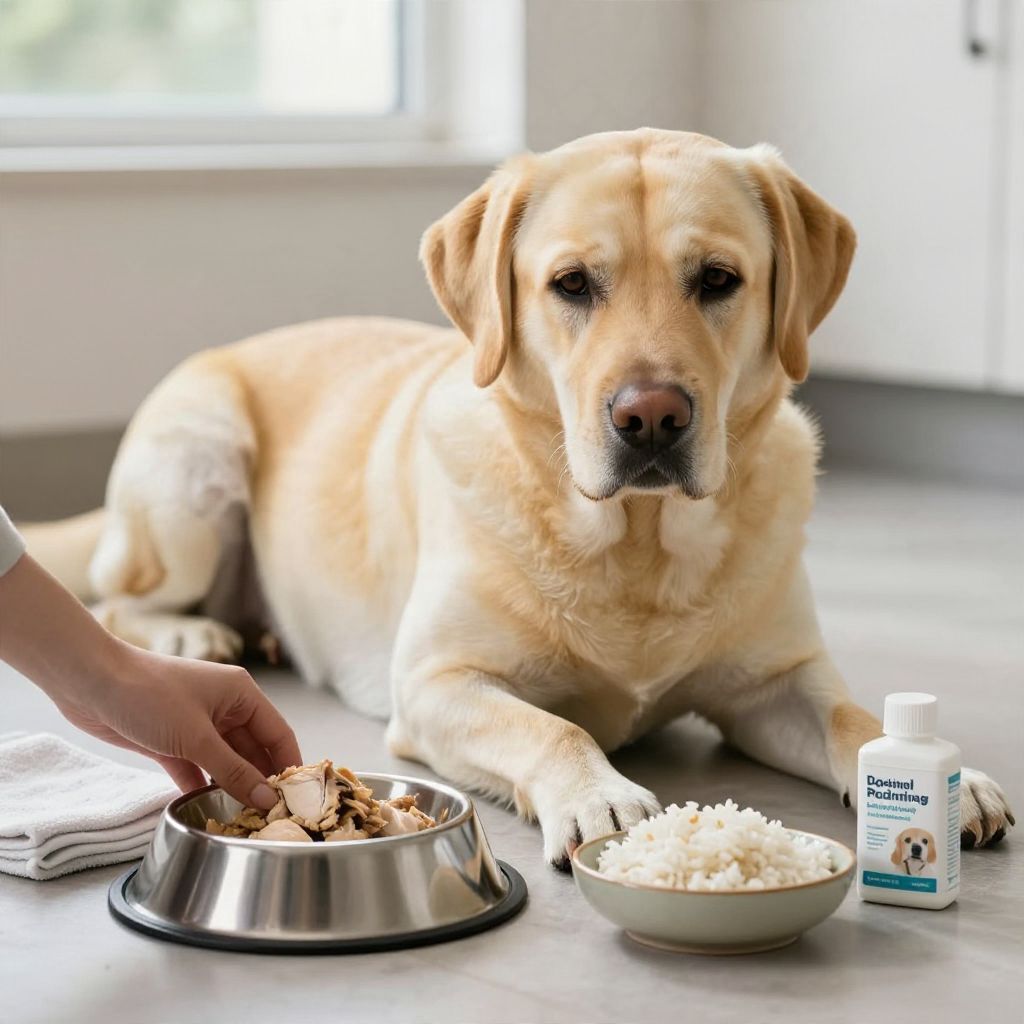
What can you give a dog for diarrhea? In many mild cases, the safest first steps are temporary food rest, fresh water, and a bland, veterinarian-approved diet once vomiting has stopped. But diarrhea can also signal parasites, infection, dietary upset, toxin exposure, or a more serious illness.
You should watch closely for dehydration, blood in the stool, repeated vomiting, weakness, pain, or diarrhea that lasts more than a day or two. Puppies, senior dogs, and dogs with health conditions need faster veterinary attention.
What can you give a dog for diarrhea?
For mild diarrhea, you can usually give your dog small amounts of water, a short break from rich treats, and a bland diet such as plain boiled chicken and white rice if your veterinarian says it is appropriate. Do not give human anti-diarrheal medicines, and call your vet if symptoms are severe, persistent, or paired with vomiting, blood, or lethargy.
First steps when your dog has diarrhea
The goal is to reduce gut irritation while preventing dehydration. Many dogs with a simple stomach upset improve with careful home support, but you should not assume every case is minor.
- Offer fresh water at all times. Encourage small, frequent drinks rather than letting your dog gulp a large amount.
- Pause rich foods and treats. Fatty table scraps, chews, and sudden diet changes can worsen diarrhea.
- Keep meals small and simple. If your dog is otherwise bright and not vomiting, a bland meal plan may help.
- Monitor the stool. Note whether it is watery, soft, bloody, black, or mixed with mucus.
- Watch behavior closely. Appetite, energy level, and signs of abdominal discomfort matter as much as the stool itself.
Safe things you may give a dog with mild diarrhea
What helps depends on your dog’s age, size, usual diet, and whether any other symptoms are present. A puppy, toy breed, senior dog, or dog with diabetes, kidney disease, or a sensitive stomach may need a different plan than a healthy adult.
Water and hydration support
Diarrhea can dehydrate dogs quickly, especially small dogs and puppies. Fresh water is the most important thing you can offer.
- Provide clean water in a familiar bowl.
- Offer small, frequent drinks if your dog is reluctant to drink.
- If your dog will not drink, seems weak, or keeps losing fluid, contact a veterinarian promptly.
A bland diet, if your veterinarian agrees
A temporary bland diet is often used for mild digestive upset. It should be short-term and should not replace a balanced dog food for long.
- Plain boiled chicken or turkey without skin, seasoning, onion, or garlic.
- Plain white rice or another simple, easily digestible carbohydrate.
- Plain canned pumpkin in small amounts may help some dogs, but it is not a cure-all.
Introduce bland food in small portions and stop if vomiting starts or diarrhea worsens. Some dogs do better with a veterinary gastrointestinal diet instead of home-cooked food.
Veterinary probiotics or digestive support
Some dogs benefit from probiotic products made for dogs, especially when diarrhea is mild and the cause is a temporary gut imbalance. Choose products designed for pets and ask your veterinarian which option fits your dog’s situation.
What not to give a dog for diarrhea
Many human remedies are not safe for dogs, and some can make the problem worse or create a medical emergency. When in doubt, do not medicate your dog without veterinary guidance.
- Do not give human anti-diarrheal medicine unless a veterinarian specifically tells you to.
- Do not give pain relievers such as ibuprofen or acetaminophen.
- Do not give greasy, spicy, or heavily seasoned foods.
- Do not use milk or dairy to “settle” the stomach if your dog is sensitive to lactose.
- Do not force food if your dog is vomiting, very lethargic, or painful.
When diarrhea is an emergency
Some signs mean your dog needs urgent veterinary care, not home treatment. These red flags can point to dehydration, intestinal blockage, poisoning, infection, or internal bleeding.
- Repeated vomiting or inability to keep water down
- Blood in the stool or black, tarry stool
- Severe lethargy, collapse, or weakness
- Swollen belly, obvious pain, or repeated unproductive retching
- Diarrhea after eating something toxic or foreign
- Signs of dehydration such as dry gums, sunken eyes, or extreme thirst
- Diarrhea in a puppy, especially if it is frequent or accompanied by poor appetite
If your dog is very young, very old, pregnant, or already medically fragile, contact a veterinarian sooner rather than later. These dogs can become dehydrated or unstable more quickly.
How long should you try home care?
For a healthy adult dog with mild diarrhea and no other symptoms, brief home monitoring may be reasonable. If the diarrhea is not improving within 24 to 48 hours, or if it keeps returning, your dog should be examined.
You should also call your vet sooner if your dog has:
- Frequent episodes in a short time
- Loss of appetite lasting more than a meal or two
- Fever, vomiting, or marked gas and discomfort
- Recent diet change, scavenging, or exposure to garbage
- Recent boarding, dog park exposure, or contact with sick dogs
Common causes of diarrhea in dogs
Knowing the likely cause helps you and your veterinarian choose the right treatment. Diarrhea is a symptom, not a diagnosis.
Diet-related upset
Sudden food changes, rich treats, table scraps, scavenging, and chewing on unusual items can all irritate the digestive tract. Some dogs are also more sensitive to certain ingredients than others.
Parasites and infections
Worms, protozoa, bacteria, and viral illnesses can cause diarrhea. Puppies and dogs with incomplete parasite prevention are at higher risk, but any dog can be affected.
Stress and routine changes
Travel, boarding, moving, loud events, or changes in household routine can upset some dogs’ stomachs. Stress-related diarrhea should still be taken seriously if it is severe or persistent.
Underlying medical problems
Inflammatory bowel disease, pancreatitis, liver disease, kidney disease, endocrine disorders, and some cancers can all cause ongoing diarrhea. Recurrent episodes deserve veterinary evaluation rather than repeated home treatment.
How to feed a dog recovering from diarrhea
Once your dog is improving and keeping food down, transition back to the regular diet gradually. A sudden return to normal meals can trigger another flare-up.
- Start with small portions of the bland diet.
- Feed several small meals instead of one large meal.
- Mix the bland food with the regular diet over a few days if your vet says it is okay.
- Stop the bland diet once stools are normal and your dog is acting well.
If your dog has a history of digestive sensitivity, ask your veterinarian whether a prescription gastrointestinal diet or a long-term diet change would be more appropriate than repeated bland feeding.
Special considerations for puppies, seniors, and small dogs
Age and body size matter when deciding what to give a dog for diarrhea. A tiny dog can dehydrate faster than a larger one, and puppies have less reserve if they stop eating or drinking.
Puppies
Puppies with diarrhea need prompt attention because parasites, viruses, and dehydration can become serious quickly. Do not wait if the puppy is also vomiting, weak, or refusing food.
Senior dogs
Older dogs may have other health conditions or medications that complicate diarrhea. They may also recover more slowly and need earlier testing.
Small dogs
Small dogs can lose fluid quickly and may be more affected by even brief illness. Watch them closely and seek veterinary help sooner if they seem tired or stop drinking.
What your veterinarian may recommend
If home care is not enough, your veterinarian may recommend an exam, stool testing, parasite treatment, dietary therapy, fluids, or other targeted care based on the cause. The right treatment depends on the underlying problem, not just the symptom.
Do not be surprised if your vet asks about recent diet changes, scavenging, boarding, travel, deworming history, and whether the diarrhea is watery, bloody, or intermittent. Those details help narrow down the cause.
How to prevent future episodes
You cannot prevent every stomach upset, but you can lower the risk by keeping your dog’s diet and routine consistent and by avoiding common triggers.
- Change foods gradually over several days.
- Keep garbage, compost, and toxic foods out of reach.
- Use parasite prevention and regular deworming as recommended by your vet.
- Limit rich treats and unfamiliar table food.
- Supervise dogs that like to scavenge or chew inappropriate items.
When to call the vet even if the diarrhea seems mild
It is worth calling if you are unsure what to give your dog, especially if your dog has a medical condition or takes regular medication. A quick phone conversation can help you avoid unsafe home treatment.
Call your veterinarian if the diarrhea is recurring, your dog is not acting normally, or you suspect a food intolerance, parasite, or toxin exposure. If you want more practical dog-care guidance, you may also find it helpful to read related advice on everyday canine health and feeding habits.
The safest answer to what can you give a dog for diarrhea is simple: water, rest, and a veterinarian-approved bland diet for mild cases, plus prompt veterinary care when warning signs appear. If your dog is vomiting, weak, dehydrated, or passing blood, contact a vet right away.