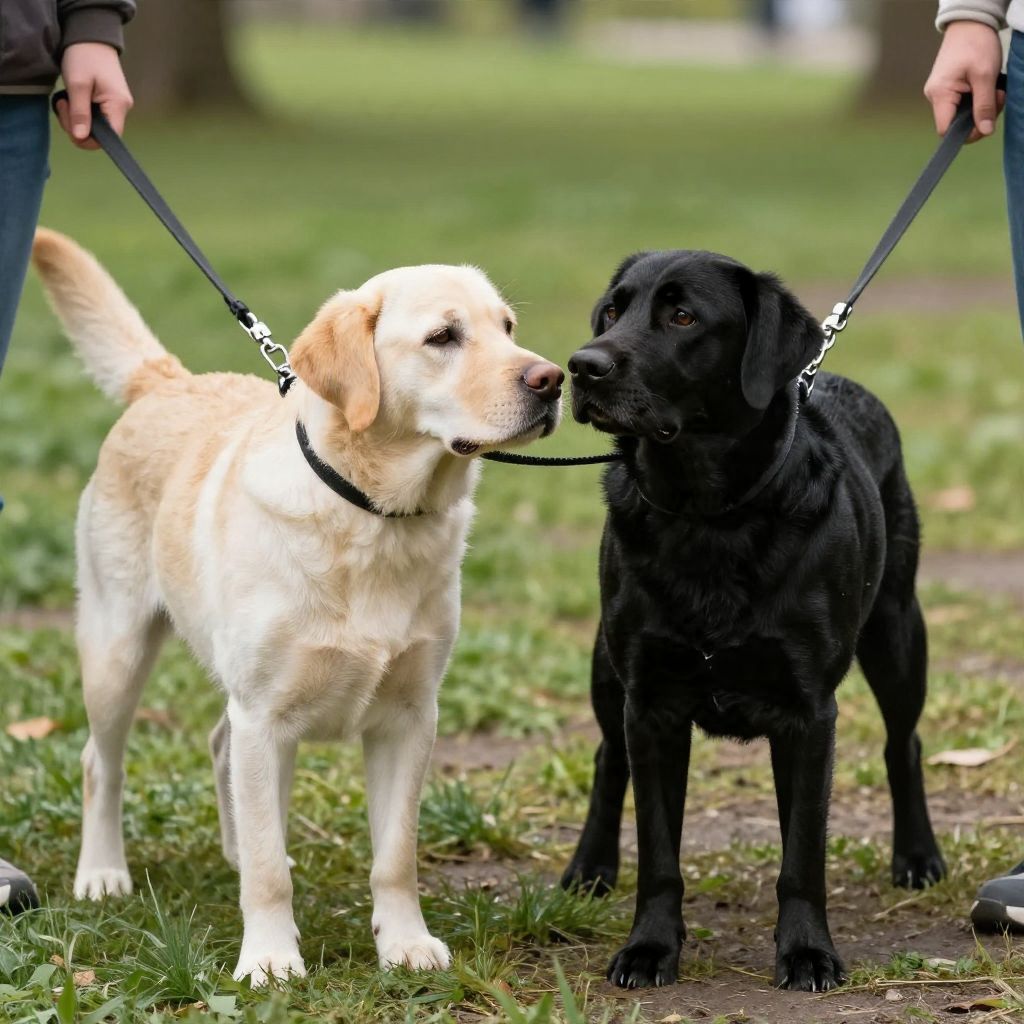
Dogs sniff butts because it is one of their main ways of gathering information about other dogs. The scent around the rear end can reveal identity, sex, reproductive status, diet, health, and emotional state.
It is normal canine communication, though it can become rude, overwhelming, or risky in certain situations. Understanding why it happens helps you know when to let dogs sort things out and when to step in calmly.
Why do dogs sniff butts?
Dogs sniff butts to collect detailed scent information from anal glands and nearby skin. This behavior helps them recognize one another, assess social cues, and decide how to interact. It is usually normal, but excessive, obsessive, or sudden sniffing can sometimes point to stress, poor social skills, or a health issue.
What dogs learn from sniffing
A dog’s nose is far more informative than ours. The area around the rear end carries scent from glands and body secretions that can tell a dog a lot in a very short time.
Common information dogs may gather
- Identity and familiarity
- Sex and reproductive status
- General health and stress level
- Recent diet or environmental scent exposure
- Social confidence and mood
This is why butt sniffing is often the first step in a dog greeting. It is less about being rude and more about reading a biological “profile.”
Is butt sniffing normal dog behavior?
Yes, in most cases it is completely normal. Dogs use scent much the way people use a handshake and conversation combined. A brief sniff during greetings, play, or introductions is expected canine behavior.
What matters is the context. A quick sniff followed by relaxed body language is usually fine, while persistent hovering, tension, snapping, or one dog trying to escape means the interaction should be interrupted.
When butt sniffing becomes a problem
Not every sniffing session is harmless. Some dogs overdo it because they are under-socialized, anxious, overly excited, or unsure how to greet politely. Others may be reacting to a medical smell or discomfort.
Signs it may be too much
- One dog repeatedly follows and sniffs without giving space
- The other dog stiffens, tucks the tail, moves away, or growls
- Sniffing escalates into mounting, chasing, or snapping
- Your dog seems unable to disengage from the behavior
- The behavior starts suddenly or seems unusually intense
If your dog cannot stop, seems distressed, or is making other dogs uncomfortable, it is time to manage the interaction rather than let it continue.
How to respond when dogs sniff butts
Most of the time, the best response is to stay calm and observe. Give dogs a chance to greet naturally, but be ready to interrupt if body language becomes tense or one dog is not consenting to the interaction.
Practical ways to manage greetings
- Let dogs meet in a neutral, open area when possible.
- Keep leashes loose enough to avoid tension, but short enough to maintain control if needed.
- Watch for relaxed movement, soft faces, and brief sniffing followed by disengagement.
- Interrupt politely if one dog is overwhelmed or the greeting becomes too intense.
- Reward calm behavior with praise, treats, or a chance to move away.
For many dogs, short, supervised introductions work better than forcing prolonged nose-to-rear contact.
What to do if your dog is the one doing all the sniffing
If your dog is the persistent sniffer, the goal is not to punish the behavior. Instead, teach better greeting skills and give your dog more appropriate outlets for curiosity.
Helpful training and management steps
- Practice a reliable “come” or “leave it” cue in low-distraction settings first.
- Reward your dog for checking in with you during greetings.
- Use short, structured introductions instead of free-for-all greetings.
- Give your dog exercise and enrichment before social situations if excitement is a trigger.
- Work with a certified trainer if your dog struggles to disengage or becomes socially pushy.
Reward-based training is the safest way to improve manners without increasing stress or confusion.
What if your dog hates being sniffed?
Some dogs dislike butt sniffing and prefer more space. That can be normal, especially if they are shy, older, in pain, recently adopted, or simply not social with other dogs.
How to protect a dog that wants space
- Use distance and slow introductions
- Choose calm, compatible playmates
- Watch for avoidance signals such as lip licking, turning away, or hiding behind you
- End the interaction before your dog feels trapped
If your dog frequently reacts defensively, consult a trainer or veterinary behaviorist. Fear-based reactions often improve when you reduce pressure and build positive experiences gradually.
Can butt sniffing mean a health problem?
Sometimes, yes. Dogs may sniff a particular dog more intensely if they detect unusual odors from skin, urine, feces, anal glands, or infection. That does not mean the sniffing dog has diagnosed a problem, but it can be a clue that something is off.
Health-related reasons to pay attention
- Anal gland issues or irritation
- Skin infection or inflammation around the rear end
- Diarrhea, fecal leakage, or soiling
- Urinary accidents or incontinence
- Hormonal or reproductive changes
If another dog suddenly fixates on your dog’s rear end and your dog also has scooting, licking, odor, redness, or discomfort, schedule a veterinary exam.
Red flags that need veterinary attention
Most butt sniffing is harmless, but certain signs should not be ignored. A health issue may be present if the behavior is paired with pain, changes in elimination, or visible irritation.
Call your veterinarian promptly if you notice
- Blood, pus, swelling, or strong odor around the anus
- Straining to defecate or frequent scooting
- Sudden licking, biting, or guarding of the rear end
- Diarrhea, constipation, or accidents in the house
- Unexpected behavior changes along with odor or discomfort
Seek urgent veterinary care if your dog cannot pass stool or urine, has severe pain, significant bleeding, a prolapsed tissue, or seems weak, lethargic, or collapses.
Does age, breed, or personality matter?
Yes, but individual temperament matters more than breed labels. Puppies may sniff clumsily because they are still learning social rules. Adolescents may be overexcited. Adult dogs usually become more efficient and polite with practice, while seniors may tolerate less close contact if they are sore or anxious.
Some dogs are naturally more social or more scent-driven than others, but no breed is guaranteed to behave a certain way. Past experiences, training, and health often explain more than breed alone.
Common mistakes owners make
Well-meaning owners sometimes misunderstand normal sniffing and respond in ways that make things worse. The goal is to guide behavior, not shame it.
- Forcing greetings when one dog wants to leave
- Using punishment for a normal canine behavior
- Ignoring stiff posture, growling, or avoidance
- Allowing repeated rough greetings that overwhelm shy dogs
- Assuming every intense sniff is “just play”
Good supervision helps you prevent conflict before it starts.
How to tell normal from concerning behavior
Normal butt sniffing is brief, calm, and followed by relaxed disengagement. Concerning sniffing is repetitive, tense, or paired with other warning signs.
Normal
- Brief sniffing
- Loose body posture
- Easy movement away afterward
- Mutual interest between dogs
Concerning
- One-sided pursuit
- Stiffness, freezing, or avoidance
- Snapping, growling, or hiding
- Sudden change in frequency or intensity
What you can do to improve dog greetings
If your dog’s greeting style is awkward or intense, structured practice can help. Short, positive sessions are usually more effective than long, uncontrolled encounters.
- Start with calm, predictable environments.
- Use treats to reinforce looking at you and settling.
- Keep greetings brief and end them while both dogs are still relaxed.
- Give your dog breaks to sniff the environment instead of only other dogs.
- Increase difficulty slowly as your dog improves.
If your dog has a history of fear, reactivity, or poor social skills, a qualified trainer can help you build a safer plan.
Bottom line
Dogs sniff butts because scent is a major part of how they communicate and learn about each other. In most cases, it is normal and harmless. Step in only when the behavior becomes intense, one-sided, or linked to pain, irritation, or other health concerns.
If you want to better understand your dog’s social behavior, you may also find helpful reading on dog behavior and common dog health concerns.