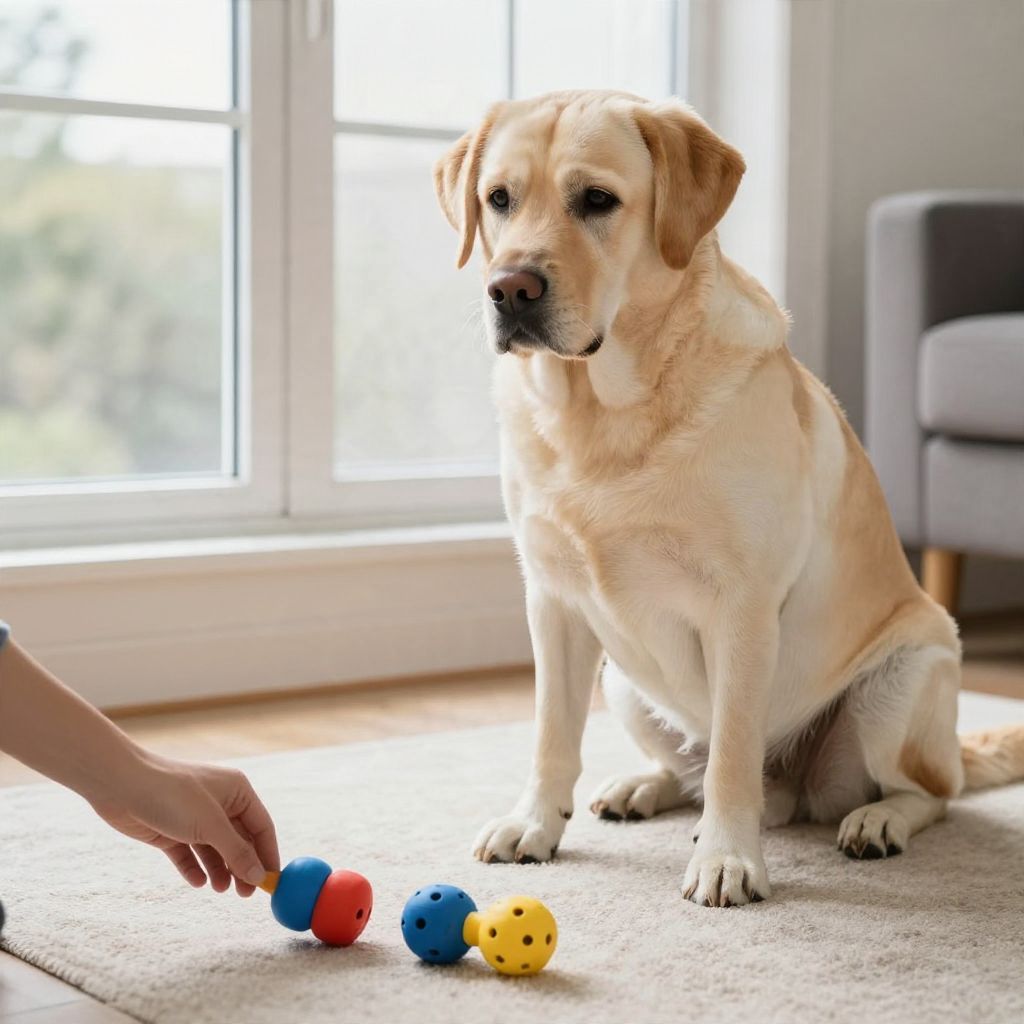
Can dogs see colors? Yes, but not the full rainbow humans see. Dogs mainly perceive blues and yellows, while reds and greens can look muted or grayish.
This matters for toys, training gear, and safety cues. Choosing colors your dog can actually distinguish can make fetch, recall practice, and enrichment easier and more effective.
Can Dogs See Colors?
Dogs can see colors, but their vision is limited compared with human vision. They are best at seeing shades of blue and yellow, while reds and greens are much harder for them to distinguish. In practical terms, dogs live in a more limited color world, not a black-and-white one.
How Dog Color Vision Works
Color vision depends on cone cells in the eye. Humans have more cone types than dogs do, so people can perceive a wider range of colors. Dogs also rely more on motion, brightness, and contrast than on fine color detail.
That means a dog may notice a ball because it moves or stands out against the background, even if the color itself is not vivid to them. This is one reason a bright toy for you may not be the easiest toy for your dog to spot.
What Colors Do Dogs Usually See Best?
- Blue: Often the easiest color for dogs to distinguish.
- Yellow: Usually visible and fairly easy to notice.
- Gray or dull tones: May appear when colors are outside a dog’s stronger range.
- Red and green: Often look similar, muted, or difficult to tell apart.
Why This Matters for Everyday Dog Care
Knowing that dogs see colors differently can help you make better choices for play, training, and safety. It is especially useful when you want your dog to find an object quickly or understand a visual cue in different lighting conditions.
Color is only one part of what your dog uses to interpret the world. Scent, movement, and contrast are often more important, so a dog may still succeed even when color alone is not helpful.
Toys and Fetch Games
If you want your dog to spot toys more easily, choose items that stand out against the ground or grass. Blue toys often work well outdoors, especially on green lawns.
- Use blue or yellow toys for better visibility.
- Avoid relying on red toys in grass if your dog has trouble finding them.
- Pick toys with strong contrast, not just bright human-friendly colors.
- Test the toy in the actual play area before assuming it will be easy to see.
Training Cues and Equipment
Color can help with organization, but it should not be your only communication tool. Dogs learn best from consistent training, clear body language, and reward-based repetition.
- Use color to label items if it helps you stay consistent.
- Pair visual cues with verbal cues and hand signals.
- Choose high-contrast gear for visibility during walks or outdoor training.
- Do not assume your dog understands a color-based cue just because you do.
Does Breed Change How Dogs See Colors?
Most dogs share the same general type of color vision, so breed usually does not create dramatic differences in what colors they can see. However, individual eyesight can vary with age, eye health, and inherited conditions. Some dogs may also have better or worse visual performance depending on their overall vision.
If you notice a breed with a reputation for strong working ability, that does not mean every individual dog sees or learns the same way. A dog’s environment, training history, and health matter just as much as breed labels.
Age, Health, and Vision Changes
Color vision is only part of the picture. A puppy, adult dog, and senior dog may all see differently because of eye development, vision changes, or medical problems. If your dog suddenly seems clumsy, hesitant, or unusually startled, vision should be part of the conversation with your veterinarian.
Puppies
Puppies are still learning how to use their senses and coordinate movement. Their vision improves as they mature, so very young puppies may be less visually confident than adults.
Senior Dogs
Older dogs may develop cloudy lenses, reduced contrast sensitivity, or other age-related eye changes. Even if color perception is not the main issue, a senior dog may struggle more in dim light or unfamiliar spaces.
Eye Disease or Injury
Eye problems can affect how well a dog sees color, light, and movement. Conditions such as cataracts, retinal disease, glaucoma, corneal injury, and inflammation can all reduce visual ability.
Seek veterinary care promptly if you notice squinting, redness, discharge, cloudiness, pawing at the eyes, bumping into objects, or sudden vision loss.
How to Choose Colors Your Dog Can Actually Use
If you want your dog to find toys, targets, or training tools more easily, think about contrast first and color second. A blue object on grass is usually easier to spot than a red one on grass, but background and lighting matter too.
- Pick a toy color that contrasts with the surface.
- Test it in bright light and low light.
- Watch whether your dog tracks the toy by sight or mostly by smell and movement.
- Adjust the color if your dog seems to lose interest or cannot locate it easily.
Good Visual Choices for Common Settings
- Grass: Blue or yellow toys often stand out better.
- Sand or dirt: Blue, yellow, or high-contrast patterned items may work well.
- Snow: Darker or brightly contrasting toys are often easier to see.
- Indoor floors: Choose colors that contrast with rugs, tile, or wood.
Common Mistakes Dog Owners Make
One common mistake is assuming that a bright color to you is automatically bright to your dog. Another is blaming “disobedience” when the real issue is that the dog cannot easily see the object or cue.
- Using red toys in green grass and expecting easy retrieval.
- Depending on color alone for training cues.
- Ignoring lighting, shadows, and background clutter.
- Overlooking vision problems when a dog seems hesitant or confused.
When Color Vision Concerns Need a Vet Visit
Dogs do not usually need a special appointment just to answer the question “Can dogs see colors?” But you should contact a veterinarian if your dog’s vision seems to change or if you suspect an eye problem.
Get urgent veterinary help if your dog has sudden blindness, a painful-looking eye, a bulging eye, severe redness, trauma to the eye, or appears disoriented and unable to navigate safely.
Even slower changes deserve attention if they affect daily life. A dog who hesitates on stairs, misjudges jumps, or becomes anxious in dim light may need an eye exam.
How to Support a Dog With Limited Vision
If your dog has reduced vision, you can still help them stay comfortable and confident. Many dogs adapt well when their environment is predictable and their routines are consistent.
- Keep furniture and pathways stable when possible.
- Use verbal cues and scent markers to support navigation.
- Avoid moving obstacles suddenly in the home.
- Use toys with sound, scent, or strong contrast.
- Introduce new spaces slowly and calmly.
Reward-based training is especially useful for dogs with vision changes. Clear routines and gentle guidance are usually more effective than trying to “force” confidence.
What Color Vision Means for Training and Enrichment
Understanding dog color vision can improve enrichment without making training complicated. You do not need specialized equipment; you just need to think about what your dog can notice most easily.
For example, a blue target mat, a yellow toy, or a high-contrast marker can be easier for many dogs to see than a red item in a similar background. Still, scent games, puzzle feeders, and movement-based play are excellent options because dogs rely heavily on more than color.
Bottom Line
Yes, dogs can see colors, but not the same range humans do. They usually see blues and yellows best, while reds and greens are less distinct. If you choose toys, training tools, and safety cues with contrast in mind, you can make life easier for your dog.
If you want to learn more, see colors dogs can see and what colors dogs see best. If your dog’s vision seems to be changing, schedule a veterinary exam rather than guessing.