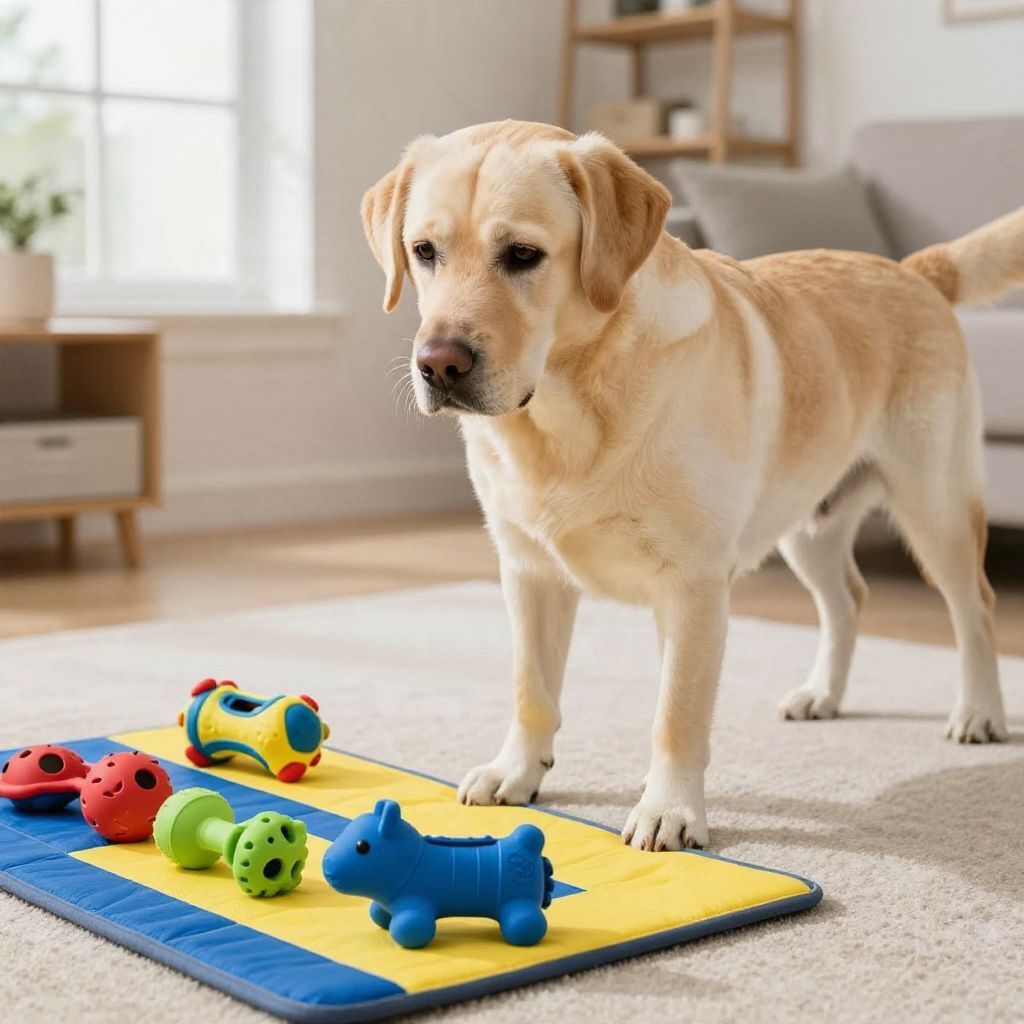
What colors do dogs see best? Dogs see blue and yellow most clearly, while reds and greens tend to look muted or grayish. Their vision is not black-and-white, but it is more limited than human color vision.
If you want to choose toys, training tools, or enrichment items your dog can actually notice, color can help. The best options are usually blue or yellow, but lighting, background contrast, and your dog’s individual vision also matter.
What colors do dogs see best?
Dogs see blue and yellow best because their eyes are built with fewer color receptors than human eyes. They usually distinguish blues, yellows, and some gray tones more easily than red, orange, or green, which may appear dull, brownish, or similar to each other.
How dog vision works
Dogs have dichromatic vision, which means they rely on two main types of color receptors instead of three. That gives them a smaller color range than people, but they often make up for it with strong motion detection and good low-light vision.
In practical terms, your dog may not care whether a toy is “pretty” to you. What matters more is whether the object stands out against the background and is easy to track with the eyes and nose.
Colors dogs usually notice more easily
- Blue — often the easiest color for dogs to see.
- Yellow — also highly visible to many dogs.
- White and gray — can stand out depending on the background.
Colors dogs usually see poorly
- Red — may look dark, brownish, or gray.
- Orange — often blends in with reds and browns.
- Green — can be hard to separate from other muted shades.
What this means when buying dog toys
If you are shopping for fetch toys, puzzle toys, or training rewards, choose colors that contrast with your dog’s surroundings. A blue toy on green grass is often easier to spot than a red toy in the same setting.
Color is only one part of toy choice. Texture, size, durability, and safety matter just as much, especially for puppies, strong chewers, and senior dogs.
Best toy color choices by setting
- On grass: blue or yellow toys often stand out best.
- On pavement or indoors: bright blue, yellow, or white may be easier to see.
- In water: high-contrast toys can help, but floating ability and visibility both matter.
Other toy features to look for
- Large enough to avoid choking hazards
- Made from safe, durable materials
- Easy to clean
- Appropriate for your dog’s chew strength
- Not small enough to swallow or break apart
Why contrast matters as much as color
A dog may still miss a blue toy if it blends into a blue blanket or a yellow toy on dry straw. High contrast helps your dog identify the object faster, especially during fetch, scent games, and outdoor training.
If your dog struggles to find toys, try changing the background instead of just changing the color. A simple switch to a darker mat, lighter lawn area, or cleaner play space can make a big difference.
Do all dogs see colors the same way?
Not exactly. Most dogs share the same basic type of color vision, but individual differences can affect how well they see. Age, eye health, cataracts, retinal disease, and other vision problems can change what your dog notices.
Breed alone does not guarantee better or worse color vision. While some dogs may have inherited eye conditions more often than others, your individual dog’s vision depends on health and anatomy, not just breed label.
When vision may be different from normal
- Your dog bumps into furniture or doorways
- They hesitate in dim light or on stairs
- They seem unable to find toys they used to track well
- One or both eyes look cloudy, red, or irritated
- They startle more easily or seem disoriented
If you notice these signs, schedule a veterinary exam. Vision changes can be gradual, but sudden changes should be treated as urgent.
Signs your dog may have a vision problem
Sometimes what looks like “not seeing colors well” is actually a broader eye or neurologic issue. Watch for changes in how your dog moves through familiar spaces, especially if the change happens quickly.
- Frequent missteps or collisions
- Reluctance to go outside at night
- Difficulty locating treats or toys
- Uneven pupils or eye cloudiness
- Squinting, pawing at the eyes, or discharge
Seek urgent veterinary care if your dog has sudden blindness, a painful eye, a swollen eye, a visible injury, or a sudden change in behavior along with vision loss. Eye emergencies should not wait.
How to use color in training and enrichment
Color can make training easier, but it should support good training rather than replace it. Use rewards, clear cues, and simple setups so your dog can succeed without frustration.
- Choose a toy or target in blue or yellow.
- Use it in a low-distraction area first.
- Check whether your dog can find it quickly.
- Move to more challenging backgrounds only after success.
- Keep sessions short and positive.
If your dog is new to fetch or scent games, start with a toy that is easy to see and easy to carry. For puppies, keep sessions brief and safe so they do not chew or swallow pieces.
Helpful training uses for color
- Fetch toys
- Target mats or training platforms
- Agility markers
- Food-dispensing toys
- Outdoor recall games
Common mistakes when choosing dog toys by color
Many owners pick toys based on what looks bright to human eyes. That does not always match what a dog can see best.
- Choosing red toys for green grass and expecting easy visibility
- Buying tiny toys that are hard to spot and unsafe to chew
- Ignoring texture, size, and durability
- Assuming a toy is visible just because it is neon
- Overlooking eye health when a dog suddenly has trouble tracking objects
Another common mistake is assuming color alone will fix a dog’s interest. If your dog ignores a toy, the issue may be lack of training, poor fit, low motivation, or a vision problem rather than the color itself.
What if your dog still loses toys easily?
If your dog has trouble finding toys even when you choose blue or yellow, simplify the game. Use larger objects, shorter distances, and less cluttered spaces. You can also add scent by rubbing the toy with a treat or using a toy your dog already likes.
For older dogs, a sudden decline in toy-finding ability may point to aging eyes, cognitive changes, or hearing loss. A veterinarian can help determine whether the issue is normal aging or something that needs treatment.
Do puppies and senior dogs need different toy choices?
Yes, sometimes. Puppies are still learning coordination and may benefit from larger, softer, easy-to-see toys. Senior dogs may need brighter contrast, gentler materials, and shorter play sessions if vision, joints, or stamina are changing.
That said, every dog is individual. A young dog with an eye condition may need the same adjustments as an older dog, while a healthy senior may still enjoy fast games if they are safe and comfortable.
When to ask your veterinarian for help
Talk to your veterinarian if you notice a change in how your dog sees, moves, or interacts with toys. A routine eye exam may be enough in mild cases, but sudden or painful changes need prompt attention.
Ask for help sooner if your dog has diabetes, eye trauma, chronic eye discharge, or a history of eye disease. These conditions can affect vision and may require ongoing monitoring.
Bottom line: what colors do dogs see best?
Dogs generally see blue and yellow best, while red, orange, and green are harder for them to distinguish. For toys and training gear, choose high-contrast blue or yellow items, but remember that size, safety, and background contrast matter too.
If you want to learn more about canine color vision, you may also find these guides useful: colors dogs can see and what colors dogs cannot see.