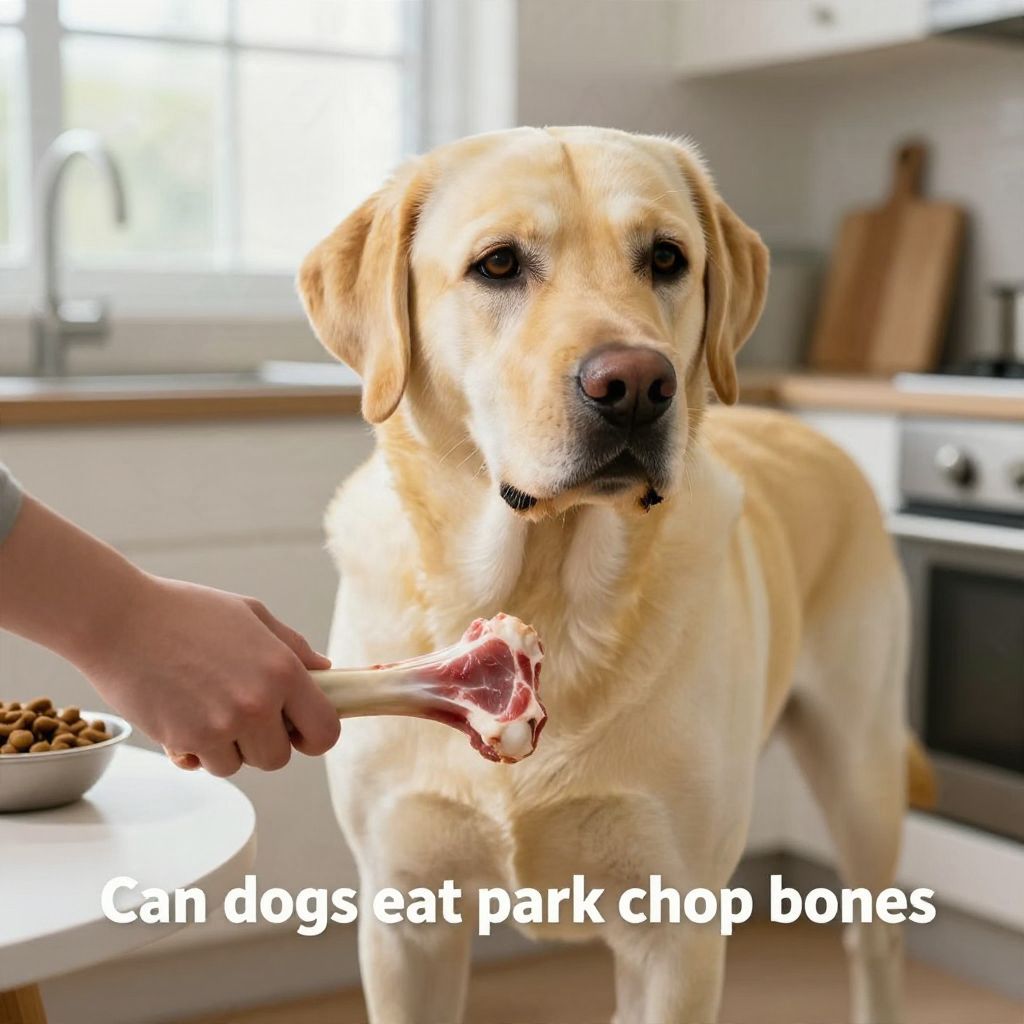
Can dogs eat pork chop bones? In most cases, no—pork chop bones are risky for dogs, especially when cooked. They can splinter, chip teeth, or cause choking and internal injury. Even raw bones can carry bacteria and still break into dangerous pieces.
If your dog already ate one, monitor closely and contact your veterinarian right away if you notice vomiting, drooling, pain, trouble swallowing, coughing, or any sign of distress. Quick action matters if a bone gets stuck or causes injury.
Can Dogs Eat Pork Chop Bones?
Dogs should not eat pork chop bones, especially cooked ones. Cooked pork bones become brittle and can splinter into sharp fragments that may choke your dog, damage the mouth, or injure the stomach and intestines. Raw pork bones are less likely to splinter but still carry risks and are not a safe routine treat.
Why Pork Chop Bones Are Risky for Dogs
Pork chop bones may look harmless, but they can create several problems at once. The danger depends on how the bone was prepared, your dog’s chewing style, and your dog’s size and health.
1. Splintering and mouth injuries
Cooked bones can break into sharp shards. These pieces may cut the gums, tongue, throat, or the lining of the digestive tract.
2. Choking or blockage
A bone can lodge in the throat, become stuck in the esophagus, or form a blockage in the stomach or intestines. Smaller dogs may be at higher risk simply because the pieces are easier to swallow whole, but larger dogs can also get into trouble.
3. Broken teeth
Hard bones can crack teeth, especially if your dog is a strong chewer or likes to grind down on hard objects. Dental fractures are painful and often need veterinary treatment.
4. Digestive upset
Even if the bone passes, it may cause vomiting, constipation, abdominal pain, or bloody stool. Some dogs also react badly to the fatty meat left on the bone, which can upset the stomach.
5. Bacterial contamination
Raw pork can carry harmful bacteria. That risk matters for your dog and for people in the home who handle the bone or contaminated surfaces.
What If the Pork Chop Bone Was Cooked?
Cooked pork chop bones are the most concerning type. Heat makes bones dry and brittle, so they are more likely to splinter into sharp fragments. If your dog has one, do not encourage chewing it further or try to pull it out of the mouth if your dog may bite.
Instead, calmly take away any remaining pieces only if it is safe to do so, then watch for symptoms and contact your veterinarian for advice. If your dog is coughing, choking, or struggling to breathe, seek urgent veterinary care immediately.
What If the Pork Chop Bone Was Raw?
Raw bones are sometimes discussed as a chew option, but they are still not risk-free. They can carry bacteria, cause tooth fractures, and still break into pieces that are unsafe to swallow. Some dogs may tolerate raw bones better than cooked ones, but that does not make them a dependable choice.
If you are considering raw bones as part of your dog’s diet or enrichment routine, ask your veterinarian first. This is especially important for puppies, senior dogs, dogs with dental disease, dogs with a history of swallowing objects, and dogs with immune or digestive problems.
Signs Your Dog May Be Having Trouble After Eating a Pork Chop Bone
Watch your dog closely for the next several hours and, in some cases, for a few days. Symptoms can appear right away or later if a fragment causes irritation or blockage.
- Choking, gagging, or repeated coughing
- Excessive drooling
- Pawing at the mouth
- Vomiting or repeated retching
- Loss of appetite
- Difficulty swallowing
- Abdominal pain or a hunched posture
- Constipation or straining to defecate
- Blood in vomit or stool
- Lethargy or unusual restlessness
Emergency signs: trouble breathing, collapse, a swollen abdomen, repeated vomiting, severe pain, or inability to swallow are urgent reasons to seek veterinary care right away.
What to Do If Your Dog Ate a Pork Chop Bone
The right response depends on whether the bone was cooked or raw, how much your dog ate, and whether your dog is showing symptoms. Do not try risky home remedies or induce vomiting unless a veterinarian specifically tells you to do so.
- Stay calm and remove any remaining bone if it is safe.
- Check your dog’s mouth only if your dog is relaxed and you can do so safely.
- Do not give more food unless your veterinarian advises it.
- Call your veterinarian or an emergency clinic for guidance.
- Monitor for vomiting, choking, pain, constipation, or behavior changes.
If your dog swallowed a large bone or sharp fragments, your vet may recommend an exam, imaging, or observation based on the situation. Quick evaluation is especially important if your dog is small, brachycephalic, elderly, or has a history of gastrointestinal issues.
Which Dogs May Be at Higher Risk?
Any dog can be harmed by a pork chop bone, but some dogs may be more vulnerable depending on their age, size, chewing style, and medical history.
Puppies
Puppies are curious and often swallow things too quickly. Their teeth and digestive systems are also more sensitive, so bones are a poor choice for them.
Small dogs
Smaller dogs may be more likely to choke on pieces or have trouble passing fragments through the digestive tract.
Strong chewers
Dogs that crush hard objects can break teeth or shatter bones into sharp pieces. A determined chewer is not necessarily a “safer” chewer.
Dogs with health concerns
Dogs with dental disease, pancreatitis history, swallowing problems, or a sensitive stomach may be more likely to have complications. If your dog has any ongoing medical issue, ask your vet before offering any bone or chew.
Safer Alternatives to Pork Chop Bones
If you want to give your dog something to chew, choose options designed for canine safety rather than table scraps. The best choice depends on your dog’s chewing strength, age, and digestive tolerance.
- Veterinary-approved dental chews
- Rubber chew toys sized appropriately for your dog
- Stuffed puzzle toys with dog-safe fillings
- Frozen enrichment toys, if your dog tolerates them well
- Chews recommended by your veterinarian for your dog’s needs
Always supervise new chews. Replace anything that starts to break apart, and choose a size that cannot be swallowed whole.
Common Mistakes to Avoid
People often mean well when they offer a leftover bone, but a few habits can increase the risk of injury.
- Giving cooked pork chop bones as treats
- Leaving a dog alone with a bone
- Assuming a large dog is automatically safe with a hard bone
- Ignoring vomiting, drooling, or refusal to eat after bone chewing
- Trying to “wait it out” when a dog seems painful or distressed
Even if your dog seems fine at first, a problem can still develop later. That is why observation and prompt veterinary advice matter.
When to Call the Vet
Call your veterinarian if your dog ate a pork chop bone and you are unsure what to do, especially if the bone was cooked or the amount eaten was large. You should also call if your dog has mild symptoms that do not quickly improve.
Seek urgent care immediately if your dog is choking, cannot swallow, is breathing abnormally, has repeated vomiting, seems severely painful, or becomes weak or collapsed. These are not situations to monitor at home.
The Bottom Line
Can dogs eat pork chop bones? The safest answer is no. Cooked pork chop bones are especially dangerous, and even raw bones can cause choking, dental fractures, bacterial exposure, or intestinal injury. If your dog has already eaten one, watch closely and contact your veterinarian for guidance.
If you want to learn more about bone safety, you may also find these guides helpful: can dogs eat raw pork and can dogs have chicken bones.