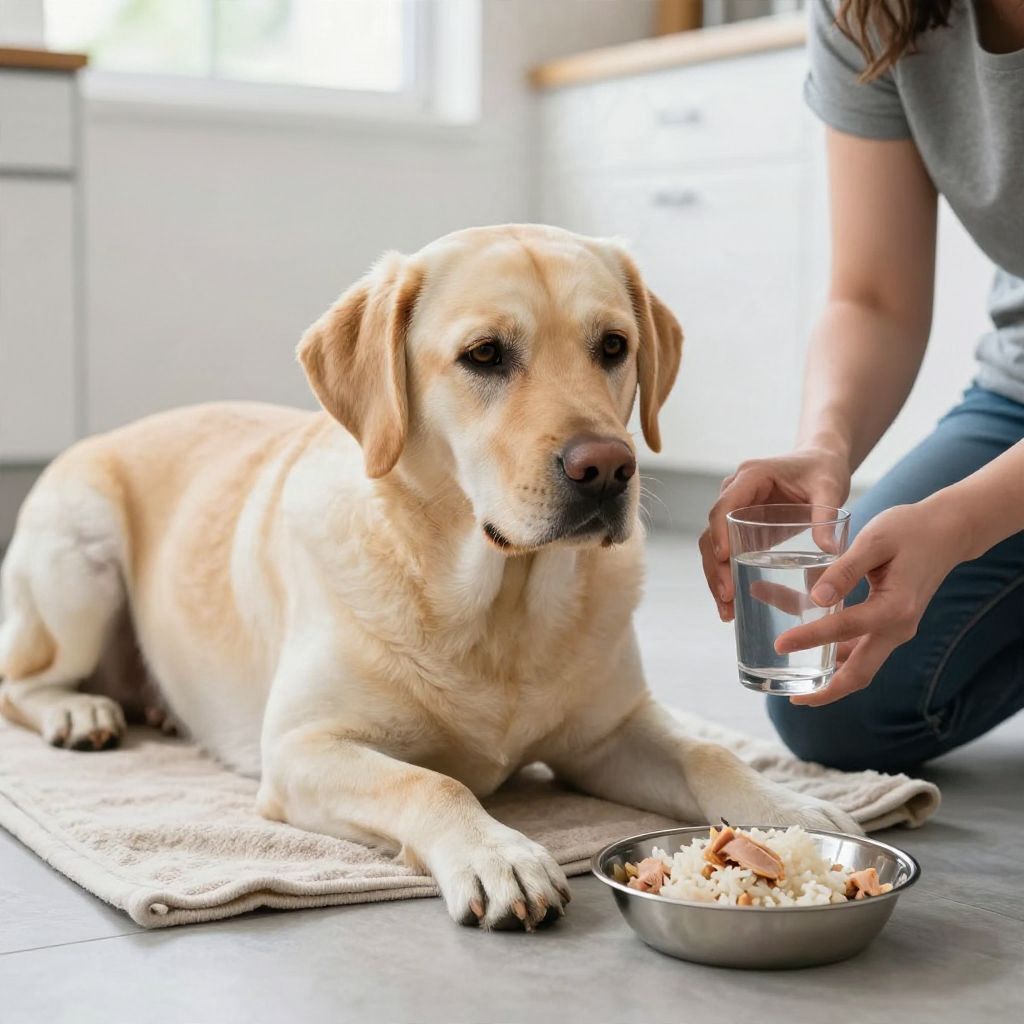
What to give a dog with an upset stomach depends on the cause, how severe the signs are, and your dog’s age and health. Mild cases often improve with rest, bland food, and careful monitoring, but vomiting, diarrhea, pain, or lethargy can signal something more serious.
If your dog is still bright and drinking, a short period of rest and a bland, vet-approved diet may help. But if symptoms are severe, persistent, or your dog may have eaten something toxic, contact a veterinarian right away.
What To Give A Dog With An Upset Stomach?
For a mild upset stomach, offer small amounts of water and a bland, easily digested food such as plain boiled chicken and white rice, or a veterinary gastrointestinal diet if your vet recommends it. Feed small portions, keep activity low, and seek veterinary advice if vomiting, diarrhea, or discomfort continues.
First: Check Whether This Is Mild or an Emergency
Not every stomach upset can be managed at home. Some signs mean your dog needs prompt veterinary care, not just bland food.
Call a veterinarian urgently if you see:
- Repeated vomiting or retching
- Bloody vomit or bloody diarrhea
- A swollen, hard, or painful belly
- Extreme lethargy, collapse, or weakness
- Signs of dehydration, such as dry gums or sunken eyes
- Refusal to drink, or inability to keep water down
- Known or possible toxin exposure, including human medications, chocolate, grapes, xylitol, onions, or rodent poison
- A puppy, senior dog, or dog with diabetes, kidney disease, pancreatitis, or another chronic condition that is vomiting or has diarrhea
These signs can point to obstruction, poisoning, pancreatitis, infection, or another problem that needs veterinary treatment. Do not wait for “home remedies” to work if your dog is getting worse.
Safe Things You Can Give a Dog With a Mild Upset Stomach
When the problem seems mild and your dog is otherwise alert, the goal is to reduce irritation and prevent dehydration. Keep changes simple.
1. Small amounts of water
Fresh water should always be available. If your dog gulps and vomits, offer only small, frequent sips rather than a large bowl at once.
Some dogs do better with ice chips or very small amounts of water offered every few minutes. If your dog cannot keep water down, contact your vet.
2. A bland diet
A bland diet is often used for short-term digestive upset. Common options include:
- Plain boiled chicken or turkey with no skin, bones, oil, or seasoning
- Plain white rice
- Plain boiled potato or pumpkin in small amounts, if your veterinarian says it is appropriate
- A veterinary gastrointestinal prescription diet, if recommended
Feed small portions instead of one large meal. If your dog keeps the food down, you can usually offer several small meals through the day rather than returning immediately to the regular diet.
3. Rest and a calm environment
Keep exercise light and avoid rough play, long walks, or stressful outings until your dog feels better. Some dogs with nausea or cramping simply need quiet rest.
What Not To Give a Dog With an Upset Stomach
Many human foods and home treatments can make stomach problems worse. Avoid guessing, especially if your dog is vomiting or has diarrhea.
- Fatty foods, such as bacon, greasy leftovers, or rich table scraps
- Spicy, salty, or heavily seasoned foods
- Milk and creamy foods, which may worsen diarrhea in some dogs
- Onions, garlic, grapes, raisins, chocolate, xylitol, and alcohol
- Human pain relievers or anti-nausea medicines unless your veterinarian specifically prescribes them
- Random supplements or herbs without veterinary guidance
Do not force food into a dog who is actively vomiting, seems painful, or is refusing food completely. Also avoid “fasting” a puppy, toy breed, diabetic dog, or another medically fragile dog without veterinary advice.
How to Feed a Dog With an Upset Stomach
Feeding strategy matters as much as the food itself. Sudden changes or large meals can trigger more nausea.
- Pause rich treats and table food.
- Offer water in small amounts.
- If vomiting has stopped and your vet has not advised otherwise, offer a small bland meal.
- Wait and watch for 4 to 6 hours, or as directed by your veterinarian.
- If the food stays down, continue with small meals for a day or two.
When your dog improves, transition back to the regular diet gradually over several days. A sudden switch can bring the stomach upset back.
Why Dogs Get Upset Stomachs
An upset stomach is a symptom, not a diagnosis. The cause may be minor or serious, and the right response depends on the full picture.
Common causes include:
- Dietary indiscretion, such as eating garbage or spoiled food
- Sudden diet changes
- Stress or motion sickness
- Parasites
- Viral or bacterial infections
- Food intolerance or sensitivity
- Pancreatitis
- Foreign body ingestion, such as toys, socks, or bones
- Toxin exposure
Some dogs are more sensitive than others. Age, breed tendencies, body size, medical history, and what your dog ate all affect how worried you should be.
When Bland Food Is Not Enough
Home care is only appropriate when symptoms are mild and improving. If your dog still seems unwell, a vet exam can help identify the cause and prevent complications.
Make a veterinary appointment soon if:
- Vomiting or diarrhea lasts more than a day
- Your dog keeps having episodes after eating
- There is mucus, blood, or black stool
- Your dog seems painful, bloated, or hunched
- Your dog is losing weight or has a poor appetite
- The problem keeps coming back
Recurring stomach upset may need stool testing, diet changes, parasite treatment, or other diagnostics. A vet can also tell you whether a prescription digestive diet is appropriate.
Special Considerations for Puppies, Seniors, and Dogs With Health Conditions
Some dogs need faster veterinary attention because they can become dehydrated or unstable more quickly than healthy adults.
Puppies
Puppies can go downhill fast with vomiting or diarrhea. They are also more likely to have parasites, infections, or problems from eating unsafe objects.
If a puppy has stomach upset, contact a veterinarian sooner rather than later, especially if the puppy is weak, not drinking, or not vaccinated yet.
Senior dogs
Older dogs may have kidney disease, liver disease, cancer, arthritis medications, or other issues that complicate stomach upset. Don’t assume it is “just age.”
Dogs with chronic illness
Dogs with diabetes, Addison’s disease, kidney disease, pancreatitis, or inflammatory bowel disease may need a specific plan from their veterinarian. A bland diet alone may not be enough.
How to Tell If Your Dog Is Dehydrated
Vomiting and diarrhea can quickly lead to fluid loss. Dehydration is a major reason to seek veterinary care.
- Dry or sticky gums
- Less interest in water
- Sunken eyes
- Weakness or unusual tiredness
- Skin that does not spring back quickly when gently lifted
If you suspect dehydration, especially with ongoing vomiting or diarrhea, contact your vet. Severe dehydration may require fluids and other treatment.
Common Mistakes to Avoid
Well-meaning home care can sometimes make things worse. Keep the plan simple and safe.
- Giving rich foods “to tempt the appetite”
- Switching between multiple foods in one day
- Using human medicines without veterinary approval
- Ignoring repeated vomiting because your dog seems briefly better
- Assuming diarrhea is harmless if your dog is still active
- Delaying care after possible toxin or foreign-body ingestion
If your dog may have swallowed a toy, sock, bone, corn cob, or other object, do not try to solve it at home. Obstructions can become life-threatening.
Practical At-Home Monitoring Tips
If your veterinarian says home care is reasonable, keep a close eye on your dog for the next 12 to 24 hours.
- Track vomiting episodes and stool changes
- Watch for appetite, thirst, and energy level
- Check for belly pain, bloating, or repeated lip-licking
- Keep other pets from sharing food or trash
- Save a sample of vomit or stool if your vet asks for it
Small improvements are encouraging, but worsening signs should override any hope that the issue will pass on its own.
Conclusion
What to give a dog with an upset stomach is usually a simple, bland diet and small amounts of water, but only when the signs are mild and your dog is otherwise stable. If vomiting, diarrhea, pain, weakness, or dehydration is present, contact a veterinarian promptly.
If you want more guidance on digestive upset, you may also find this helpful: what you can give a dog for diarrhea.