
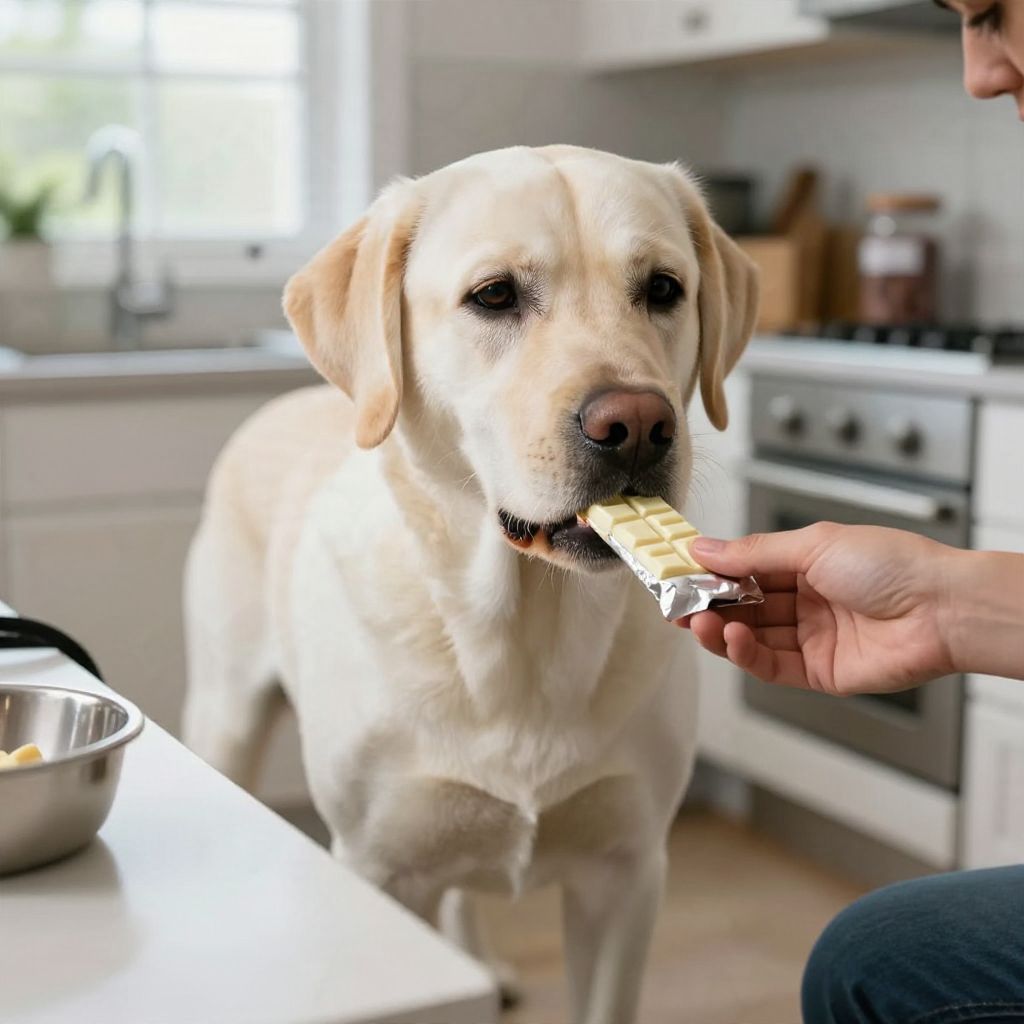
Is white chocolate bad for dogs? Yes, it can be, even though it is less dangerous than dark or milk chocolate. White chocolate still contains cocoa butter, sugar, and often milk solids, so it is not a safe dog treat and can upset your dog’s stomach.
If your dog ate white chocolate, the risk depends on how much was eaten, your dog’s size, and whether the chocolate also contained ingredients like raisins, nuts, or xylitol. When in doubt, call your veterinarian or a pet poison helpline right away.
Is White Chocolate Bad For Dogs?
White chocolate is not a healthy or recommended food for dogs. It usually has very little theobromine, the main toxic compound in chocolate, but it can still cause vomiting, diarrhea, belly pain, and other problems. Small dogs, puppies, and dogs with health issues may be affected more easily.
Why White Chocolate Can Still Be a Problem
Many people assume white chocolate is harmless because it contains less cocoa than other chocolate types. That is partly true, but “less toxic” does not mean “safe.”
What is in white chocolate?
- Cocoa butter, which comes from cocoa beans
- Sugar, often in high amounts
- Milk solids in many products
- Sometimes flavorings, fillings, or mix-ins that may be unsafe for dogs
The main concern with white chocolate alone is usually stomach upset from fat and sugar. Some dogs are also sensitive to dairy, which can make digestive signs worse.
Why the ingredients matter
White chocolate bars, truffles, cookies, and candies often contain extra ingredients that are more concerning than the white chocolate itself. A product may include nuts, coffee, alcohol, raisins, or artificial sweeteners such as xylitol, which can be dangerous to dogs.
What Happens If a Dog Eats White Chocolate?
After eating white chocolate, some dogs may have no obvious signs, while others develop vomiting, loose stool, restlessness, or abdominal discomfort. The reaction depends on the amount eaten, your dog’s size, and whether the product contained other risky ingredients.
Common signs to watch for
- Vomiting
- Diarrhea
- Drooling
- Stomach pain or bloating
- Reduced appetite
- Restlessness or unusual behavior
These signs can happen with many food indiscretions, so they do not prove chocolate poisoning. Still, they are worth taking seriously, especially if your dog ate a large amount or seems unwell.
Emergency warning signs
- Tremors or shaking
- Seizures
- Rapid heartbeat
- Extreme agitation
- Weakness or collapse
- Repeated vomiting
- Trouble breathing
If your dog has any of these signs, seek urgent veterinary care immediately.
Does the Amount Matter?
Yes. A tiny lick from a dropped candy is very different from a dog eating a whole candy bar or several cookies. Your dog’s body weight, age, and overall health also matter, so there is no one-size-fits-all answer.
Smaller dogs generally have less room for error because a modest amount of rich food can upset them more easily. Puppies may also be more sensitive because their digestive systems are still developing. Senior dogs and dogs with pancreatitis, diabetes, or sensitive stomachs may have a harder time handling fatty or sugary foods.
What You Should Do If Your Dog Ate White Chocolate
Act calmly and gather details before you call for help. The exact product and amount are useful for your veterinarian, especially if the chocolate was part of a mixed dessert.
- Remove any remaining chocolate or wrapper.
- Check the package for ingredients, especially xylitol, raisins, macadamia nuts, coffee, or alcohol.
- Estimate how much your dog ate and when it happened.
- Call your veterinarian for guidance.
- If your vet is unavailable, contact a pet poison helpline or an emergency clinic.
Do not try to make your dog vomit unless a veterinarian specifically instructs you to do so. Inducing vomiting is not always safe and can make some situations worse.
When White Chocolate Is More Concerning Than It Seems
White chocolate may look less risky than dark chocolate, but it can still become a bigger concern in certain situations. The product, your dog’s health, and what else was in the food all matter.
Higher-risk situations
- Your dog is very small
- Your dog is a puppy or senior
- Your dog has a history of pancreatitis
- Your dog has diabetes or another metabolic condition
- The treat was very fatty, creamy, or filled with extras
- The product may contain xylitol or another toxic ingredient
Even if white chocolate itself is not the main toxin, the overall treat can still cause a serious problem. Rich desserts are a common trigger for digestive upset and, in some dogs, pancreatitis.
Can Dogs Eat White Chocolate “Just a Little”?
It is best not to offer white chocolate on purpose, even in tiny amounts. Dogs do not need chocolate for nutrition, and there are better ways to reward them with safe treats.
If you want to share a special snack, choose dog-safe options instead of human candy. A small piece of plain cooked meat, a few dog biscuits, or a vet-approved treat is a safer choice.
Safer Treat Alternatives for Dogs
If you are trying to avoid chocolate-related accidents, keep dog-safe treats on hand and store sweets out of reach. This is especially helpful around holidays, parties, and gift baskets.
- Commercial dog treats made for your dog’s size and diet
- Small pieces of plain cooked chicken or turkey, without seasoning
- Plain pumpkin in moderation, if your veterinarian says it fits your dog’s diet
- Crunchy vegetables such as carrot or cucumber, if your dog tolerates them
Any treat should still fit into your dog’s daily calorie needs. Too many snacks can lead to weight gain or digestive upset, even when the food is safe.
How to Prevent White Chocolate Accidents
Prevention matters because dogs are often quick to snatch dropped food, open bags, or unattended desserts. A few simple habits can lower the risk.
- Keep candy, baking supplies, and desserts in closed containers
- Put handbags, gift boxes, and shopping bags out of reach
- Remind guests not to feed your dog table scraps
- Use secure trash cans with lids
- Teach a reliable “leave it” cue using reward-based training
Training helps, but management is still important. Even well-trained dogs can be tempted by the smell of chocolate or cream-filled sweets.
When to Call the Veterinarian
Call your veterinarian if your dog ate white chocolate and you are unsure whether the amount was harmless. It is especially important to get advice if your dog is small, has a medical condition, or is showing any digestive signs.
Seek urgent help right away if your dog has tremors, seizures, collapse, breathing trouble, or repeated vomiting. These are not symptoms to watch and wait on at home.
Bottom Line
White chocolate is not a safe treat for dogs. While it is usually less dangerous than darker chocolate, it can still cause stomach upset and may be risky if the product contains other toxic ingredients. If your dog ate some, contact your veterinarian for guidance and watch closely for warning signs.
If you want more dog-care help, you may also find what you can give a dog for diarrhea useful, especially if your dog’s stomach is upset after eating something rich. You can also browse general dog-care topics at Online Dog Breeds.