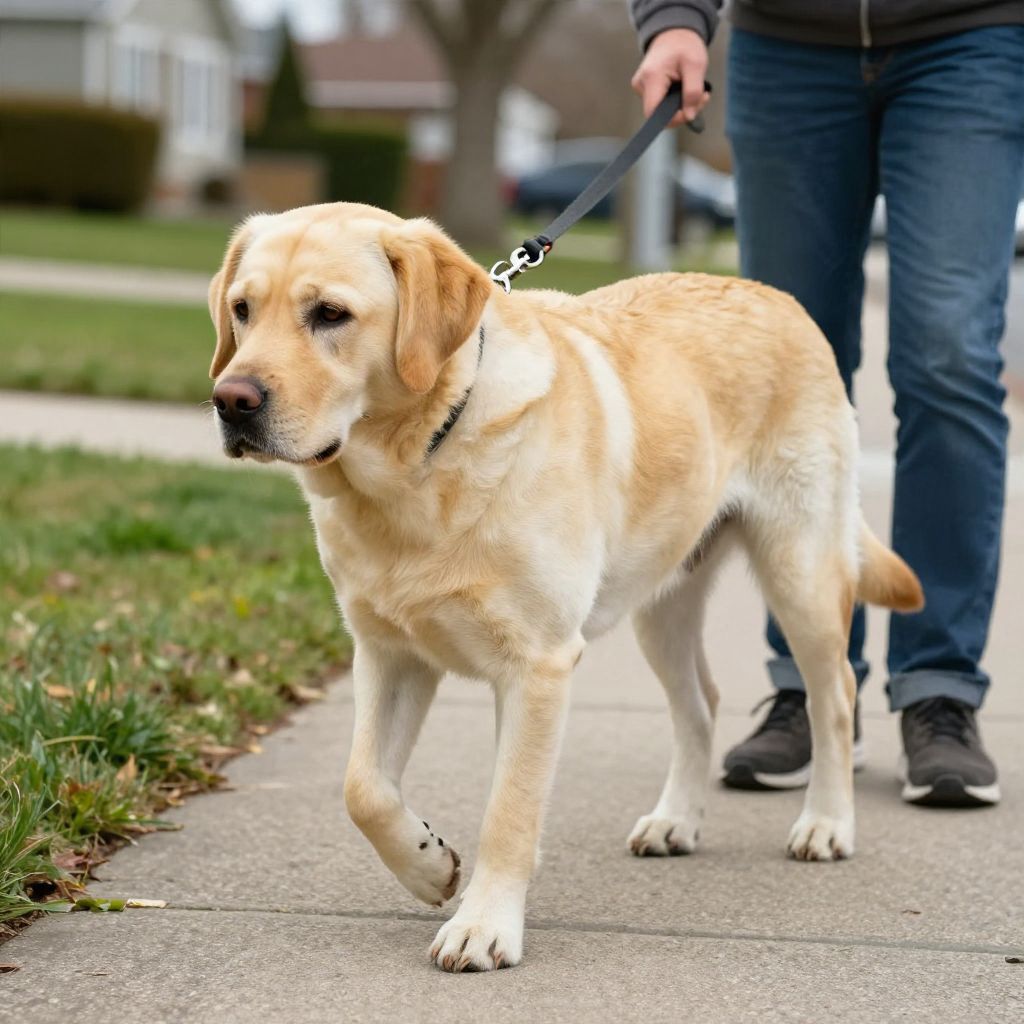
My dog is limping, and that can be worrying whether it started suddenly or has been getting worse over time. Limping usually means pain, injury, inflammation, or weakness in one or more legs, paws, hips, or the spine.
Some causes are minor, but others need prompt veterinary care. Watch how severe the limp is, whether your dog can bear weight, and whether there are other symptoms such as swelling, bleeding, fever, or lethargy.
My Dog Is Limping: What Does It Mean?
Limping means your dog is protecting a painful limb or moving abnormally because something hurts or feels unstable. It can happen after a twist, cut paw pad, nail injury, sprain, bite wound, arthritis flare, or a more serious problem such as a fracture or joint disease.
What You Should Do First
Start by keeping your dog calm and limiting movement. If the limp is sudden, severe, or your dog refuses to put weight on the leg, arrange a veterinary exam as soon as possible.
- Keep walks short and controlled.
- Prevent jumping, running, and stairs.
- Check the paw, nails, and leg for visible injury.
- Do not give human pain medicine unless a veterinarian specifically told you to.
Quick at-home check
Gently look for a torn nail, swelling, heat, a cut, a stuck object between the toes, or a sore spot. If your dog resists touch, cries out, or the area looks deformed, stop and call your veterinarian.
When a Limp Is an Emergency
Some signs mean your dog should be seen urgently, not watched at home. Go to an emergency veterinarian right away if your dog cannot stand, the limb looks bent or obviously broken, there is heavy bleeding, or your dog is in severe pain.
- Sudden non-weight-bearing limp
- Visible deformity or suspected fracture
- Major swelling after trauma
- Open wound, puncture, or bite injury
- Fever, extreme lethargy, or collapse
- Loss of balance, weakness, or dragging a limb
- Repeated crying, panting, or inability to settle
If your dog’s limp comes with breathing changes, collapse, or neurologic signs such as wobbliness or facial droop, treat it as urgent. Those symptoms can point to a broader medical problem, not just a sore leg.
Common Reasons Dogs Limp
Many different issues can cause a dog to limp, and the cause often depends on age, activity level, body size, and overall health. A young, active dog may be more likely to injure a paw or strain a soft tissue, while an older dog may limp because of arthritis or another chronic joint problem.
Injury-related causes
- Sprain or strain
- Cut paw pad or broken nail
- Foreign object in the paw
- Bruise or soft tissue injury
- Fracture or dislocation
- Ligament injury, including cranial cruciate ligament problems
Medical causes
- Arthritis or joint degeneration
- Hip, elbow, or knee disease
- Infection in a joint or bone
- Inflammation from immune-mediated disease
- Neurologic issues affecting coordination or strength
- Growth-related bone pain in puppies and young dogs
Some breeds may be more prone to certain orthopedic problems, but no breed is guaranteed to develop them. Your veterinarian will consider your dog’s age, size, history, and exam findings before deciding what tests are needed.
How to Tell How Serious the Limp Is
The way your dog walks can help you judge urgency, though it cannot tell you the exact cause. A mild limp that improves with rest may still need a veterinary visit if it lasts more than a day or two, while a severe limp needs faster attention.
- Mild: Slight uneven gait, but your dog still uses the leg.
- Moderate: Obvious limp, reduced weight bearing, or reluctance to run.
- Severe: No weight on the leg, crying, or refusal to move.
Also note whether the limp is constant or comes and goes. Intermittent limping can happen with some joint or soft tissue problems, especially after exercise, but it still deserves veterinary evaluation if it keeps returning.
What Not to Do at Home
It is easy to make a painful injury worse by trying to “walk it off.” Avoid common mistakes that can delay healing or increase pain.
- Do not force exercise to test the leg.
- Do not massage a painful limb aggressively.
- Do not bandage tightly unless a veterinarian instructed you how.
- Do not give ibuprofen, naproxen, acetaminophen, or other human pain relievers without veterinary guidance.
- Do not assume a limp is “just old age.”
What the Veterinarian May Check
Your veterinarian will usually start with a physical exam and gait assessment. They may gently manipulate the joints, check the paws and nails, and look for swelling, pain, instability, or neurologic changes.
Depending on the findings, your dog may need imaging such as X-rays, and sometimes blood work or other tests. The goal is to find the cause of the limp and choose the safest treatment, which may include rest, pain control, wound care, or further procedures.
How Rest and Recovery Usually Help
For some minor soft tissue injuries, controlled rest is an important part of recovery. That usually means leash walks only for bathroom breaks, no rough play, and no jumping onto furniture or into cars unless your veterinarian says it is safe.
- Use a leash even in the yard if your dog tends to zoom around.
- Block access to stairs when possible.
- Provide a comfortable, non-slippery resting area.
- Use ramps or assistance for getting into the car if needed.
If your dog seems better after a day of rest, that does not always mean the problem is gone. Some injuries improve briefly and then worsen again if activity resumes too soon.
Limping in Puppies, Adult Dogs, and Seniors
Puppies
Puppies can limp from play injuries, stepping awkwardly, or growth-related pain. Because they are still developing, persistent limping in a puppy should be checked rather than assumed to be minor.
Adult dogs
In adults, sudden limping often follows activity, trauma, or a paw injury. Recurrent limping may suggest a joint or ligament issue that needs a more complete workup.
Senior dogs
Older dogs commonly have arthritis, but seniors can also have fractures, tumors, or neurologic disease. If your senior dog is slower to rise, stiff after rest, or limps more on cold mornings, ask your veterinarian about chronic pain management.
How to Help Prevent Future Limping
You cannot prevent every injury, but you can lower the risk. Good body condition, regular exercise, and a safe environment all help support joint and muscle health.
- Keep nails trimmed to reduce slipping and toe strain.
- Maintain a healthy weight to reduce stress on joints.
- Warm up before vigorous play or sport.
- Use non-slip rugs on slick floors.
- Inspect paws after walks for cuts, burrs, or debris.
- Choose age-appropriate exercise and avoid sudden overexertion.
Dogs with known orthopedic problems may benefit from a veterinarian-approved plan that includes controlled exercise, weight management, and follow-up care. The right plan depends on your dog’s size, age, diagnosis, and activity level.
When to Schedule a Non-Urgent Visit
If the limp is mild but does not improve within 24 to 48 hours, or if it keeps returning, schedule a veterinary appointment. Even a subtle limp can reflect pain that your dog is trying to hide.
Also book a visit if you notice stiffness, trouble rising, licking at one paw or joint, a change in behavior, or reduced interest in walks or play. Dogs often show pain through behavior changes before they show obvious signs.
Bottom Line
If my dog is limping, the safest first step is to restrict activity and look for obvious injury, then decide whether the signs are mild or urgent. Sudden non-weight-bearing limps, swelling, bleeding, deformity, or severe pain need prompt veterinary care. When in doubt, call your veterinarian early.
If you want to learn more about related warning signs, you may also find why a dog may be breathing heavily helpful, especially if limping is happening alongside distress or weakness.