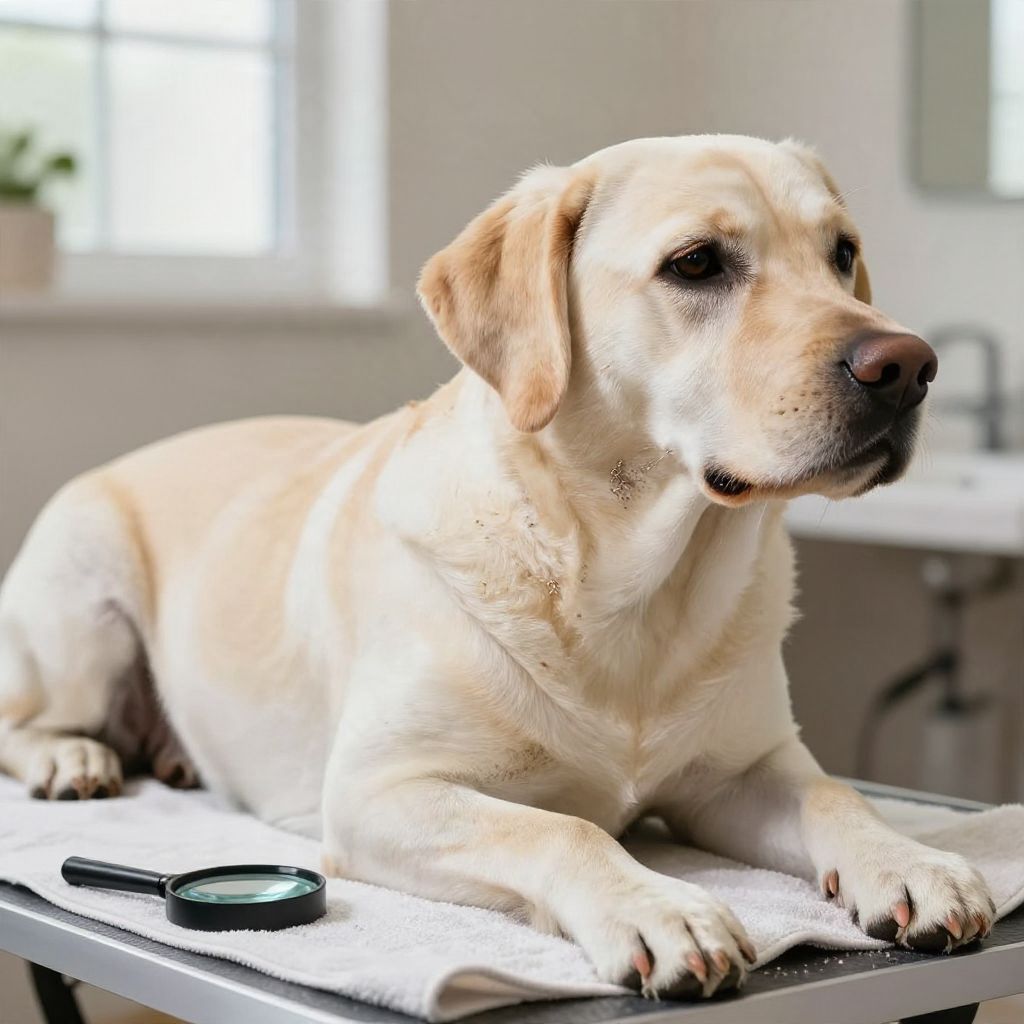
If you’re asking, “What do dog mites look like?” the short answer is that they are usually too small to see clearly with the naked eye. Different mites can cause similar skin problems, but the signs you notice are often hair loss, crusts, redness, itching, or dark debris in the ears.
The exact appearance depends on the type of mite and where it lives on your dog. Because many skin problems look alike, a veterinarian may need to examine skin scrapings, ear debris, or hair samples to identify the cause.
What do dog mites look like?
Dog mites are tiny parasitic or skin-dwelling organisms, and most are not visible without magnification. If you do spot one, it may look like a very small moving speck, but the more common clue is the skin damage they cause: itching, scabs, dandruff, hair loss, and irritated ears or skin.
How different dog mites may appear
Different mites affect dogs in different ways, so “what they look like” is often less important than where they live and what symptoms they trigger. Here are the most common types and the signs they tend to cause.
Demodex mites
Demodex mites live in hair follicles and are usually microscopic. They are not something you normally see crawling on the coat.
- Often linked with patchy hair loss
- May cause mild redness or scaling
- Can lead to acne-like bumps or crusting in some dogs
These mites are commonly found in small numbers on healthy dogs, but overgrowth can cause skin disease. Puppies and dogs with immune problems may be more vulnerable, though any dog can be affected.
Sarcoptic mange mites
Sarcoptic mites are also too small to see easily. They burrow into the skin and usually cause intense itching that seems out of proportion to what you can see.
- Very itchy skin, especially ears, elbows, belly, and hocks
- Redness, crusting, and thickened skin from scratching
- Hair loss from self-trauma
Because the mites are hard to spot directly, a veterinarian may suspect them based on symptoms and response to treatment.
Ear mites
Ear mites are tiny and may sometimes be seen as moving white specks, but many owners notice the debris first. The ear canal often looks dirty, irritated, and uncomfortable.
- Dark brown or black crumbly discharge
- Frequent head shaking or ear scratching
- Red, inflamed ears and a strong odor in some cases
Ear mites are more common in puppies and in dogs living with other pets that may carry them.
Cheyletiella mites
These mites are sometimes called “walking dandruff” because the skin flakes they cause may seem to move. The mites themselves are tiny, pale, and difficult to see without magnification.
- Flaky skin along the back and neck
- Mild to moderate itching
- Visible dandruff-like scaling
Some dogs show only light flaking, while others become quite itchy. Cats and rabbits can also carry these mites, so household spread is possible.
What you may notice before you ever see a mite
In real life, owners usually notice the effects of mites before they see the mites themselves. Common clues include:
- Excessive scratching or biting at the skin
- Hair loss in patches or thin coats
- Scabs, crusts, or flaky skin
- Redness, swelling, or irritated skin
- Head shaking or ear discharge
- Restlessness from discomfort
These signs can also happen with allergies, bacterial skin infections, yeast overgrowth, fleas, or other parasites. That is why a proper diagnosis matters.
Can you see dog mites with the naked eye?
Usually, no. Most dog mites are microscopic, and even when they are visible, they are extremely small and easy to miss. What you may see instead are the symptoms they cause, such as dandruff, crusting, or dark ear debris.
If you suspect mites, a veterinarian may use a skin scraping, tape test, ear swab, or other exam to look for the cause. Sometimes more than one issue is present at the same time.
When dog mites are a concern
Mites are more than a nuisance when they cause ongoing itching, skin damage, or ear inflammation. They can also spread between pets depending on the mite type, so early attention helps protect your dog and other animals in the home.
- Persistent itching that does not improve
- Open sores from scratching or chewing
- Ear pain, head tilt, or heavy discharge
- Rapid hair loss or spreading skin lesions
- Lethargy, poor appetite, or fever along with skin disease
These signs warrant a veterinary visit. If your dog seems very painful, has severe swelling, or is suddenly unwell, seek urgent care.
What you should do if you think your dog has mites
Do not try to guess the cause based only on appearance. Many skin problems look similar, and the wrong treatment can delay recovery.
- Schedule a veterinary exam as soon as possible.
- Keep your dog away from other pets until you know whether the condition is contagious.
- Wash bedding, blankets, and washable toys if your veterinarian advises it.
- Follow the treatment plan exactly if mites are confirmed.
- Ask whether other pets in the home should be checked or treated too.
Do not use over-the-counter sprays, essential oils, or leftover medications unless your veterinarian specifically recommends them. Some products can irritate skin or be unsafe if licked.
How veterinarians confirm mites
Because mites are tiny, diagnosis often depends on a combination of exam findings and lab tests. Your veterinarian may look for:
- Skin scrapings to search for mites
- Ear debris examined under a microscope
- Tape impressions or hair plucks
- Signs of secondary infection from scratching
Sometimes mites are difficult to find even when they are present. In those cases, your veterinarian may still recommend treatment based on the overall picture.
How mite problems are usually treated
Treatment depends on the type of mite, your dog’s age and health, and whether there is a secondary infection. Your veterinarian may prescribe parasite control medication, ear treatment, medicated shampoos, or therapy for skin infections.
Recovery often improves faster when you also address the itch-scratch cycle. That may mean preventing self-trauma, cleaning the environment as directed, and rechecking progress with your vet.
Common mistakes to avoid
- Assuming all itching is “just allergies”
- Using random flea or mite products without veterinary guidance
- Stopping treatment early when the skin looks better
- Ignoring ear scratching or head shaking
- Forgetting to check other pets in the household
Can dog mites spread to people or other pets?
Some mites are more likely to spread to other animals than to people, while others can temporarily irritate human skin. The risk depends on the mite type and the household situation.
If anyone in the home develops itching or a rash after close contact with an affected dog, contact a medical professional for advice. Your veterinarian can also tell you whether isolation or household treatment is needed.
How to help prevent mite problems
You cannot prevent every skin issue, but you can lower the risk of mite-related problems and catch them early.
- Keep up with regular veterinary checkups
- Use parasite prevention recommended for your dog
- Monitor ears, skin, and coat during grooming
- Wash bedding regularly
- Address itching early instead of waiting for sores to form
Dogs with chronic skin disease, immune issues, or repeated ear problems may need closer monitoring. Puppies and senior dogs may also need faster follow-up if symptoms appear.
When to call the vet right away
Some signs mean you should not wait for a routine appointment. Get prompt veterinary care if your dog has:
- Severe, nonstop itching or pain
- Bleeding, raw skin, or large open sores
- Swollen, smelly, or very painful ears
- Head tilt, balance problems, or sudden hearing concerns
- Loss of appetite, fever, or low energy along with skin symptoms
These signs may indicate a serious infection, a heavy parasite burden, or another medical problem that needs treatment quickly.
Bottom line
What dog mites look like depends on the type, but most are too small to see clearly. The bigger clue is usually the skin trouble they cause: itching, flakes, crusts, hair loss, or ear debris. If you suspect mites, a veterinarian should confirm the cause and guide treatment.
If you want to learn more about related skin and itch issues, you may also find do dogs get pimples? and why is my dog licking his paws? helpful for comparing common causes of skin irritation.