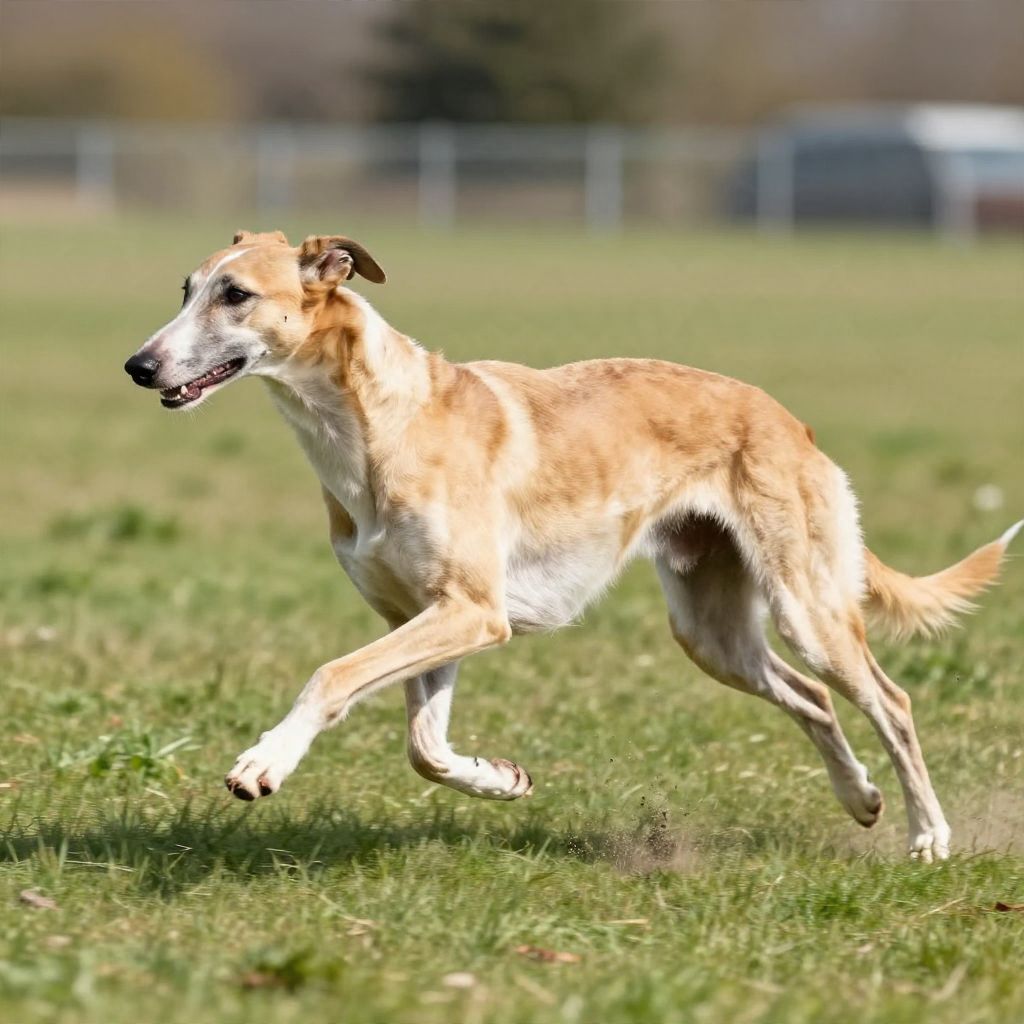
How fast can a dog run? It depends on the dog’s breed, body shape, age, health, and fitness. Some dogs are built for short bursts of speed, while others are better at steady endurance.
If you want to know what is normal for your dog, the most useful answer is not one exact number. It is understanding what affects speed, how to keep running safe, and when your dog may be too young, old, or unwell for hard exercise.
How fast can a dog run?
A healthy dog’s running speed can range from a slow trot to very fast sprinting, depending on size, breed type, and conditioning. Many dogs can run faster than people for short distances, but not every dog should be pushed to run long or fast. Individual health and fitness matter as much as breed.
What affects a dog’s running speed?
Several factors influence how fast your dog can run and how long they can keep going. Some are physical, while others are about training and overall health.
- Breed and body type: Lean, long-legged dogs often accelerate quickly, while stockier dogs may have more power than speed.
- Age: Puppies and senior dogs usually should not be pushed into intense running.
- Fitness level: A dog that exercises regularly may run better than a sedentary dog of the same breed.
- Health: Pain, heart disease, respiratory problems, arthritis, or obesity can reduce speed and stamina.
- Temperament and motivation: Some dogs naturally love to chase and sprint; others prefer sniffing, walking, or short play sessions.
- Weather and surface: Heat, humidity, ice, sand, and rough ground can slow a dog down and increase injury risk.
Which dogs are usually fastest?
Some breeds are commonly known for speed, but there are always individual differences. A dog’s build often matters more than its label.
Dogs that often run very fast
- Sighthound-type dogs: These dogs are often built for quick acceleration and chasing movement.
- Lean sporting or working dogs: Some are capable of strong bursts of speed and good endurance.
- Mixed-breed dogs: A mix can be surprisingly fast if their body shape and conditioning support it.
Remember that even within the same breed, one dog may be a quick sprinter while another is more moderate. Do not assume your dog can safely match a breed stereotype.
How do puppies and senior dogs differ?
Young and older dogs need special care when it comes to running. Their joints, bones, and stamina may not tolerate the same activity level as a healthy adult dog.
Puppies
Puppies may look energetic, but their bodies are still developing. Too much forced running, repetitive jumping, or hard pavement work can strain growing joints and feet.
- Keep exercise short and age-appropriate.
- Use play, short walks, and gentle exploration instead of long runs.
- Watch for limping, stiffness, or reluctance to move.
Senior dogs
Older dogs may still enjoy exercise, but they often need slower pacing and more recovery time. Arthritis, muscle loss, vision changes, and heart or lung disease can all affect how safely they run.
- Choose softer ground when possible.
- Warm up before activity and cool down afterward.
- Stop if your dog seems sore, tired, or short of breath.
How can you tell if your dog is fit to run?
Before asking how fast can a dog run, ask whether your dog is actually ready to run. A dog may look eager but still have a health or conditioning problem that makes fast exercise unsafe.
- They move comfortably at a walk and trot.
- They recover normally after exercise.
- They do not cough, wheeze, limp, or overheat easily.
- They maintain a healthy body condition.
If your dog is overweight, has a chronic illness, or has not exercised much before, ask your veterinarian how to build activity safely. A gradual plan is much safer than sudden intense running.
How to help your dog run safely
Safe running is about preparation, pacing, and paying attention to your dog’s signals. Even a naturally athletic dog can get hurt or overheated if you increase activity too quickly.
- Start with a warm-up: Begin with a brisk walk before faster movement.
- Build gradually: Increase distance or speed little by little.
- Use appropriate gear: A well-fitting harness and secure leash help control sudden pulls.
- Choose safe surfaces: Avoid very hot pavement and slippery or jagged ground.
- Offer water and rest: Give breaks, especially in warm weather.
- Watch body language: Slow down if your dog lags, pants heavily, or loses interest.
Signs your dog may be overdoing it
- Excessive panting that does not settle
- Drooling more than usual
- Stumbling, limping, or stiffness
- Refusing to continue
- Dark red gums, weakness, or collapse
Heatstroke is an emergency. If your dog collapses, seems confused, has trouble breathing, or cannot cool down, seek urgent veterinary care immediately.
What are common mistakes when asking how fast can a dog run?
Many exercise problems happen because people overestimate their dog’s capacity or ignore early warning signs. Avoiding these mistakes can protect your dog’s joints, heart, and overall safety.
- Forcing speed too soon: A dog that is not conditioned can strain muscles or injure paws.
- Running in extreme heat: Dogs can overheat faster than many owners expect.
- Ignoring breed and body shape: A dog’s build affects breathing, endurance, and stride.
- Skipping veterinary checks: A cough, limp, or sudden slowdown may signal a medical issue.
- Using punishment to “motivate” exercise: Humane, reward-based training is safer and more effective.
When should you call a veterinarian?
Contact your veterinarian if your dog’s running ability changes suddenly or if exercise seems unusually hard for them. A dog that once ran well but now tires quickly may have an underlying problem.
Make an appointment if you notice:
- New limping or stiffness
- Coughing during or after exercise
- Heavy panting at mild effort
- Reluctance to run or play
- Weight gain or poor stamina
- Repeated paw injuries or nail damage
Seek urgent care right away if your dog collapses, has blue or pale gums, cannot stand, seems disoriented, or has trouble breathing.
How can training improve running safely?
Training does not make every dog faster, but it can improve control, confidence, and safe movement. A dog that understands cues is easier to protect during exercise.
- Teach a reliable recall for off-leash safety where allowed.
- Practice loose-leash walking before introducing faster movement.
- Reward check-ins so your dog stays engaged with you.
- Use rest cues so your dog learns when to pause.
Reward-based training helps your dog associate exercise with calm focus rather than stress. That matters whether you are jogging, hiking, or simply trying to keep your dog active.
What if your dog is not a natural runner?
Not every dog wants or needs to run fast. Many dogs stay healthier and happier with a mix of walking, sniffing, play, and mental enrichment instead of speed work.
- Use short games of fetch or tug if your dog enjoys them.
- Try scent games and puzzle feeders for mental exercise.
- Build fitness with regular walks before expecting faster movement.
- Respect your dog’s preferences and physical limits.
If your dog seems reluctant to run, do not assume they are lazy. Pain, fear, poor conditioning, or simple temperament can all play a role.
Bottom line
How fast can a dog run depends on the individual dog, not just the breed. The safest approach is to build fitness gradually, watch for signs of strain, and get veterinary help if your dog’s speed, stamina, or comfort changes.
If you want to support your dog’s exercise routine, it can also help to read more about safe dog walking habits and how to tell if your dog is getting enough exercise.