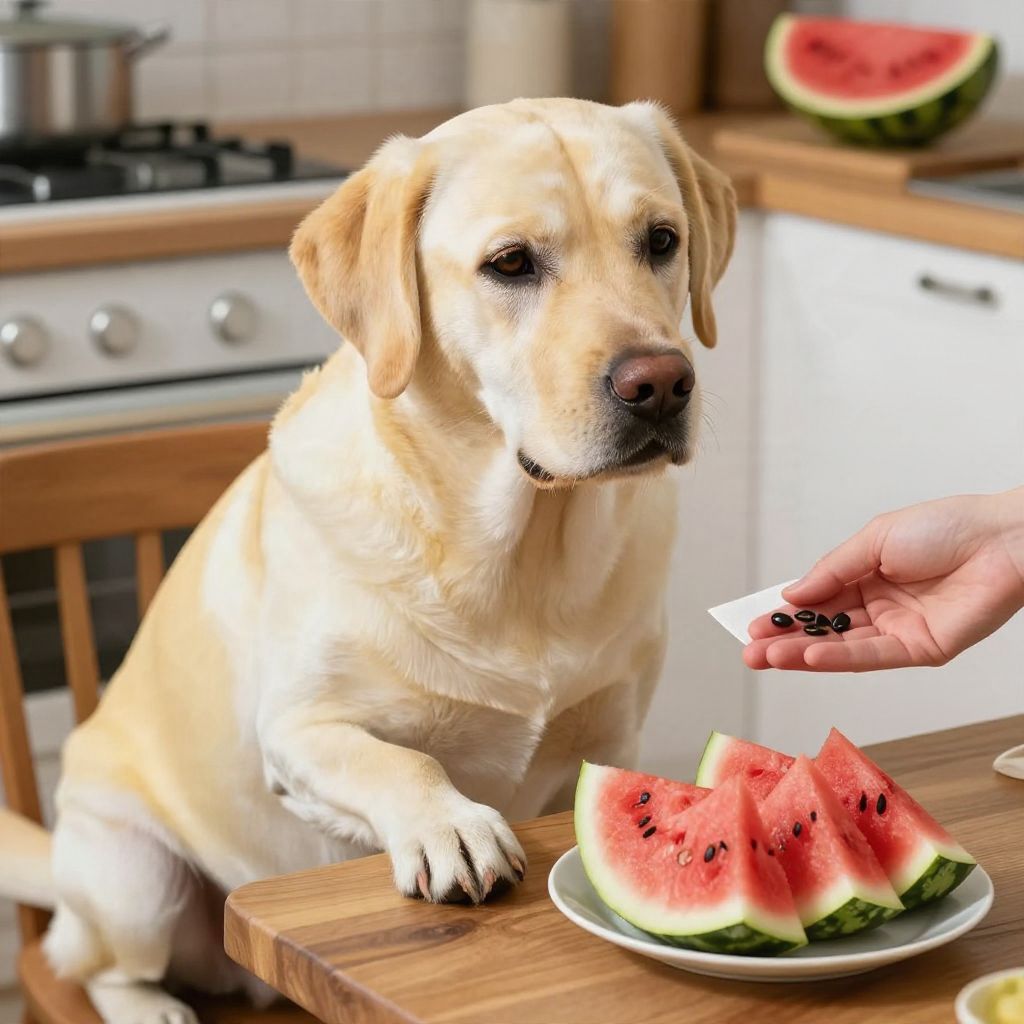
Can dogs eat watermelon seeds? In most cases, a few swallowed seeds are unlikely to cause serious harm, but they are not something you should intentionally feed. The main concerns are choking, stomach upset, and a blockage if a dog eats a large number of seeds or the seeds are mixed into large chunks of fruit.
If you want to share watermelon, the safest approach is to remove the seeds and offer only small, seed-free pieces. Dogs with sensitive stomachs, very small dogs, puppies, or dogs that tend to gulp food may need extra caution.
Can Dogs Eat Watermelon Seeds?
Most dogs can pass a small number of watermelon seeds without problems, but watermelon seeds are not a recommended treat. They can pose a choking risk, may irritate the stomach, and in larger amounts could contribute to an intestinal blockage, especially in small dogs or dogs that eat quickly.
Why Watermelon Seeds Can Be a Problem
Watermelon flesh is usually the part people want to share, but the seeds change the safety picture. The risk depends on how many seeds your dog ate, your dog’s size, and whether the seeds were chewed or swallowed whole.
1. Choking risk
Seeds can be a choking hazard, particularly for puppies, toy breeds, and dogs that inhale food without chewing much. Even if a seed does not fully block the airway, it can still cause coughing or gagging.
2. Digestive upset
Some dogs may get an upset stomach after eating seeds, especially if they ate several at once. Possible signs include mild vomiting, soft stool, or temporary loss of appetite.
3. Blockage risk
A single seed usually passes through the digestive tract, but a larger amount can be more concerning. The risk is higher for small dogs, dogs with a history of swallowing foreign objects, and dogs that already have gastrointestinal sensitivity.
What To Do If Your Dog Ate Watermelon Seeds
If your dog swallowed a few seeds, monitor them closely and keep an eye on appetite, stool, energy level, and vomiting. Many dogs will be fine, but you should contact your veterinarian if you are unsure, especially if your dog is small or ate a lot of seeds.
- Stay calm and estimate how many seeds were eaten.
- Check whether your dog is coughing, gagging, or having trouble breathing.
- Watch for vomiting, diarrhea, belly pain, or repeated swallowing.
- Call your veterinarian if your dog ate a large amount or has any concerning signs.
Red flags that need urgent veterinary care
- Difficulty breathing or persistent choking
- Repeated vomiting
- Swollen or painful abdomen
- Extreme lethargy or collapse
- Refusing food and water for more than a short period
- Straining to defecate or no stool after possible blockage
Do not try to make your dog vomit unless a veterinarian specifically tells you to do so. If your dog is showing emergency signs, seek prompt veterinary care.
Are Watermelon Seeds Toxic to Dogs?
Watermelon seeds are not generally considered toxic in the way some foods are, but that does not make them harmless. The issue is mostly mechanical and digestive rather than poisonous. In other words, the seeds are more of a risk food than a toxin.
That said, any dog can react differently. A dog with a sensitive stomach, a history of intestinal obstruction, or a very small body size may have a lower tolerance for even small mistakes.
Can Dogs Eat Seedless Watermelon Instead?
Yes, plain watermelon flesh is usually safer than the seeds, as long as you remove the rind and offer it in moderation. Watermelon is mostly water, so it can be a refreshing occasional treat, but it should not replace a balanced diet.
Safe feeding tips
- Use seedless watermelon when possible.
- Remove any visible seeds before serving.
- Cut the fruit into small, bite-sized pieces.
- Offer only plain watermelon, with no sugar, salt, or seasoning.
- Introduce it slowly if your dog has a sensitive stomach.
Which Dogs Need Extra Caution?
Some dogs are more likely to have trouble with watermelon seeds than others. This does not mean they can never have watermelon, but it does mean you should be more careful about preparation and portion size.
Small dogs and toy breeds
Smaller dogs have less room in their digestive tract, so a food item that seems minor to a large dog can be more serious for them. Even a modest number of seeds may matter more in a tiny dog.
Puppies
Puppies are curious and often swallow food quickly. Their smaller size and developing digestive systems make it especially important to avoid seeds and other choking hazards.
Dogs that gulp food
If your dog tends to swallow treats whole, they may be more likely to inhale seeds or eat them without chewing. For these dogs, seed removal and small portions are especially important.
Dogs with digestive disease
Dogs with a history of vomiting, diarrhea, pancreatitis, inflammatory bowel disease, or previous blockages may need stricter limits on treats. Ask your veterinarian before adding new foods.
How Much Watermelon Is Appropriate?
There is no universal amount that fits every dog, because size, age, health, and overall diet all matter. A few small pieces of seed-free watermelon are usually enough for most dogs as an occasional treat.
A good rule is to keep treats, including fruit, to a small part of your dog’s daily intake. If your dog is already getting plenty of treats, extra fruit can displace balanced nutrition and increase stomach upset.
Common Mistakes to Avoid
- Feeding watermelon seeds on purpose as a snack
- Giving large chunks that are hard to chew
- Leaving seeds in the fruit and assuming they are harmless
- Offering watermelon with rind attached
- Using fruit as a substitute for a complete dog food
- Ignoring repeated vomiting, belly pain, or lethargy after eating seeds
When To Call Your Veterinarian
Call your veterinarian if your dog ate a lot of watermelon seeds, if your dog is very small, or if you notice any signs of illness. It is also smart to check in if your dog has a medical history that makes digestive problems more concerning.
Seek urgent help right away if your dog has choking, trouble breathing, repeated vomiting, a painful belly, or seems weak or distressed. Those signs should not be watched at home.
Bottom Line
Can dogs eat watermelon seeds? A few accidental seeds are usually not an emergency, but they are not a safe treat to offer on purpose. Remove the seeds, serve small pieces of plain watermelon, and contact your veterinarian if your dog eats a large amount or shows any warning signs.
If you want more details on fruit safety, you may also find these related guides helpful: can dogs eat watermelon seeds and can dogs eat watermelon.