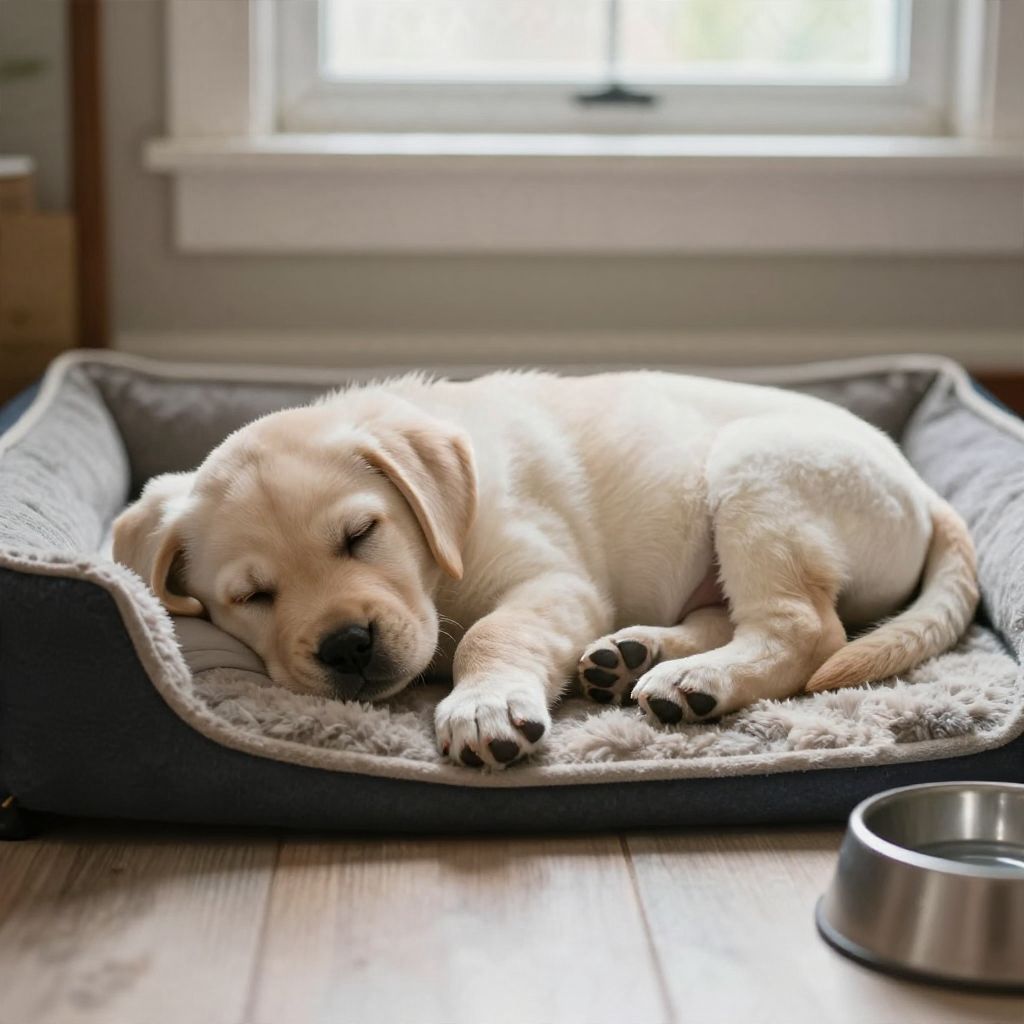
How long do puppies sleep? A lot more than adult dogs. Most puppies need about 18 to 20 hours of sleep a day, especially in the early months, because growth, learning, and a busy new environment are tiring.
Sleep needs change with age, activity, health, and temperament. If your puppy seems constantly exhausted, unusually restless, or hard to wake, it may be normal—or it may be a sign to check in with your veterinarian.
How long do puppies sleep?
Most puppies sleep 18 to 20 hours per day, with shorter awake periods for eating, potty breaks, play, and training. Very young puppies often nap in many small stretches, while older puppies gradually stay awake longer and sleep a bit less as they mature.
Puppy sleep timeline by age
There is no single perfect number, but this general timeline can help you know what to expect. Individual puppies vary based on breed, size, activity level, and health.
8 to 12 weeks
New puppies usually sleep the most. Their bodies are growing quickly, and they tire easily after short bursts of play or training.
- Many naps throughout the day
- Wake windows may only be 30 to 90 minutes
- Frequent potty breaks are still necessary
3 to 6 months
Puppies often begin to stay awake a little longer, but they still need a lot of rest. Sleep is still essential for development and behavior regulation.
- Longer play and training periods, followed by naps
- More predictable daytime sleep patterns
- Night sleep may improve as bladder control matures
6 to 12 months
Sleep needs usually start to look more like those of an adolescent dog, though many puppies still nap heavily. High-energy puppies may seem ready to go all day, but overtired behavior is common at this stage.
- Fewer naps than a young puppy, but still substantial rest
- Some dogs need enforced quiet time to settle
- Sleep patterns may shift during growth spurts or training changes
What affects how much a puppy sleeps?
Several factors can change how long puppies sleep. A puppy that sleeps more or less than another puppy of the same age is not automatically unhealthy.
- Age: Younger puppies sleep more than older ones.
- Breed and body size: Some dogs tend to be more energetic or more laid-back, but there are always individual differences.
- Exercise and mental stimulation: A busy day can increase sleep, but too much activity can also cause overtiredness.
- Diet and feeding routine: Hunger, digestive upset, or irregular mealtimes can affect rest.
- Health: Pain, parasites, infections, and other illnesses can disrupt sleep.
- Environment: Noise, temperature, household activity, and lack of a safe resting spot matter.
What normal puppy sleep looks like
Healthy puppy sleep is usually deep and frequent. Your puppy may fall asleep quickly after play, training, or a meal, then wake up bright-eyed and ready for a potty break or a short activity.
- Brief, regular naps throughout the day
- Easy settling after activity
- Normal appetite and interest in play when awake
- Steady growth and age-appropriate energy between naps
Signs your puppy may be overtired
Many behavior problems in puppies are actually fatigue problems. When a puppy misses enough rest, you may see the opposite of what you expect: more biting, more zooming, less focus, and more difficulty calming down.
- Hyperactivity that gets worse instead of better
- Excessive nipping or mouthiness
- Whining, barking, or seeming unable to settle
- Clumsy behavior or poor coordination
- Tantrum-like behavior after stimulation
If your puppy acts “wild” after a busy period, a nap in a quiet, safe space may help more than extra play.
How to help your puppy sleep well
Good sleep is not just about tiredness. Puppies often need help learning how to settle, especially in a new home full of interesting sights, sounds, and people.
Create a calm sleep space
- Use a crate, pen, or bed in a quiet area of the home
- Keep the space comfortable and predictable
- Limit constant interruptions during naps
Build a simple routine
- Feed meals at consistent times
- Offer potty breaks before and after sleep
- Alternate short play, training, and rest periods
Match activity to age
Young puppies do best with short, gentle sessions instead of long workouts. Too much stimulation can make them more tired and less able to settle.
- Short training sessions with rewards
- Age-appropriate play
- Calm enrichment, such as sniffing games or food puzzles if your puppy handles them safely
Teach settling skills
You can reward quiet behavior, relaxed lying down, and calm chewing. Avoid forcing a puppy to “tire out” through endless activity, because that often backfires.
Night sleep vs. daytime naps
Puppies need both. Night sleep may become more consistent as they grow, but daytime naps are still important for a long time.
- Nighttime: Many puppies need at least one or more potty breaks, especially when very young.
- Daytime: Frequent naps help prevent crankiness and over-arousal.
If your puppy wakes often at night, first consider whether the issue is normal bladder capacity, hunger, discomfort, or environmental disturbance.
Common sleep mistakes puppy owners make
Well-meaning owners sometimes accidentally make sleep harder. Small changes can make a big difference.
- Too much stimulation: Constant play, visitors, or training can leave a puppy overtired.
- Skipping naps: Puppies do not usually “power through” like adults.
- Inconsistent routine: Unpredictable schedules can make settling harder.
- Punishing restlessness: Fear or stress can worsen sleep problems.
- Ignoring medical signs: Sleep changes can sometimes point to illness.
When sleep changes may signal a health problem
Call your veterinarian if your puppy’s sleep pattern changes suddenly or seems clearly abnormal for their age and routine. Sleep issues can be caused by pain, digestive problems, parasites, infection, or other medical concerns.
- Sudden lethargy or weakness
- Difficulty waking up normally
- Restlessness with signs of pain
- Vomiting, diarrhea, coughing, fever, or poor appetite
- Marked behavior change, confusion, or collapse
Seek urgent veterinary care if your puppy is hard to rouse, collapses, has trouble breathing, has repeated vomiting, shows seizures, or seems in significant pain.
Do some puppies need more sleep than others?
Yes. Even among healthy puppies of the same age, sleep needs can differ. A calmer puppy may nap more, while a highly alert puppy may resist sleep but still need just as much rest.
Some breeds are often described as more energetic or more easygoing, but that is only a tendency, not a rule. Training history, enrichment, and daily routine often matter more than breed label alone.
How to tell if your puppy is getting enough sleep
A well-rested puppy usually has a better ability to learn, play appropriately, and recover after excitement. You are looking for balance, not a perfect schedule.
- They can settle after activity with help
- They wake alert but not frantic
- They can focus briefly during training
- They are not constantly cranky, frantic, or crashing
When to ask a trainer or behavior professional for help
If your puppy cannot settle even with a good routine, a qualified reward-based trainer or veterinary behavior professional can help you troubleshoot the environment, schedule, and training plan.
This is especially useful if your puppy seems anxious, panicked when alone, or unable to relax in normal home life.
The bottom line on puppy sleep
Most puppies sleep 18 to 20 hours a day, and that need gradually decreases as they grow. If you provide a calm routine, age-appropriate activity, and a safe place to rest, your puppy is more likely to sleep well and develop healthy habits.
If you want more dog-care reading, you may also find breed-specific guidance helpful at Online Dog Breeds, especially when you are learning how your puppy’s typical energy level may change with age.