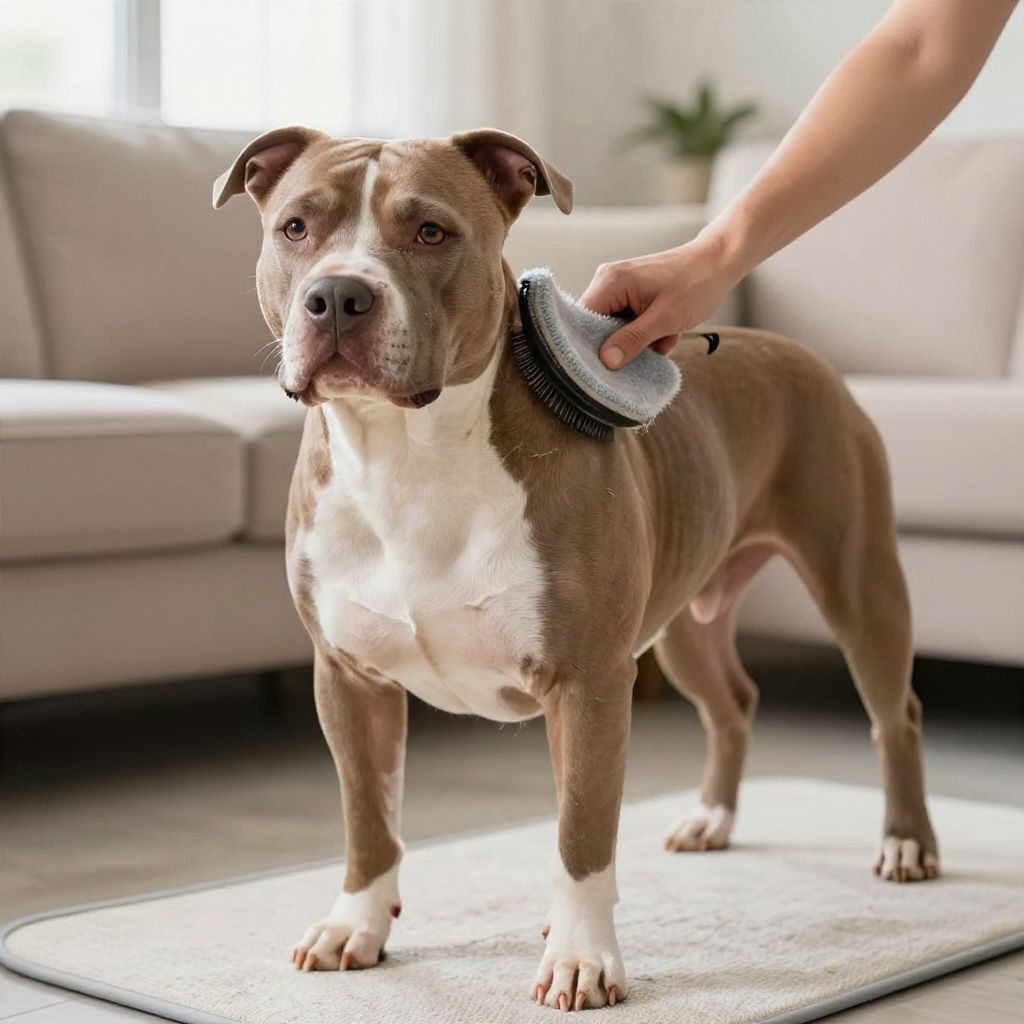
Do Pitbulls shed? Yes, they do, but usually not as heavily as many double-coated breeds. Most Pitbull-type dogs have short, smooth coats that shed year-round in small amounts, with some seasonal increase.
How much you notice depends on the individual dog, diet, skin health, grooming routine, and the home environment. If shedding suddenly becomes excessive or patchy, it can point to a skin or medical issue that needs a vet check.
Do Pitbulls Shed?
Yes. Pitbulls typically shed a moderate amount because they have a short coat that naturally renews itself. Shedding is normal, but the amount can vary from dog to dog. If you see sudden heavy shedding, bald spots, itching, or redness, that is not just “normal shedding” and should be evaluated by a veterinarian.
What Their Coat Usually Means for Shedding
Pitbulls are known for a short, close-lying coat, which often makes loose hair easier to notice on furniture, clothing, and car seats. Even though the hair is short, it can still spread widely because it is stiff and can work into fabrics.
Typical shedding pattern
- Year-round shedding: Most Pitbulls lose some hair all the time.
- Seasonal changes: Many dogs shed a bit more during weather changes.
- Individual variation: Some dogs shed lightly, while others seem to shed constantly.
Coat color, age, and overall health do not reliably predict shedding by themselves. A healthy dog with a short coat can still shed more than another dog of the same type.
How Much Shedding Is Normal?
Normal shedding usually looks like a light, even loss of hair without skin irritation. You may notice a thin layer of hair on bedding or clothing, especially if your dog sleeps on soft surfaces or spends time indoors.
What is less normal is a sudden increase in hair loss, clumps of fur coming out, or areas where the coat looks thin. Those changes can happen with allergies, parasites, infections, hormonal problems, stress, or poor nutrition.
Signs shedding may be more than normal
- Itching, licking, or chewing at the skin
- Red, flaky, or greasy skin
- Bald patches or thinning around the ears, belly, or tail
- Bad odor from the skin
- Scabs, sores, or broken hair
How to Reduce Pitbull Shedding
You cannot stop shedding completely, but you can usually reduce loose hair and keep the coat healthier. A simple routine works better than occasional deep cleaning.
- Brush regularly. A soft bristle brush, grooming mitt, or rubber curry tool can remove loose hair before it falls around the house.
- Bathe only as needed. Too-frequent bathing can dry the skin and make shedding worse in some dogs.
- Use a dog-safe shampoo. Choose products designed for dogs, especially if the skin is sensitive.
- Feed a complete diet. Good nutrition supports skin and coat health.
- Check for fleas and skin irritation. Parasites and allergies often cause extra shedding.
- Keep up with veterinary care. Skin and coat changes are easier to manage when caught early.
Best grooming approach for a short-coated dog
For many Pitbulls, brushing once or twice a week is enough, though some dogs benefit from more frequent grooming during seasonal shedding. Short coats do not need heavy trimming, but they do benefit from consistent coat care.
If your dog dislikes brushing, start with very short sessions and reward calm behavior with treats or praise. Gentle handling helps grooming become routine rather than stressful.
Does Diet Affect Shedding?
Yes, diet can affect coat quality. A balanced, complete dog food supports healthy skin, which may help reduce excessive shedding caused by poor nutrition. However, food is not a cure-all, and sudden coat changes should not be blamed on diet alone.
Nutrition points that matter
- Choose a complete and balanced food appropriate for your dog’s life stage.
- Avoid switching foods too often unless your veterinarian recommends it.
- Make sure your dog has steady access to fresh water.
If you are considering supplements for skin or coat health, talk with your veterinarian first. Some products are unnecessary, and some can interfere with other health needs.
When Shedding May Signal a Health Problem
Excessive shedding can be a clue that something else is going on. Common causes include allergies, fleas, mites, skin infections, endocrine disorders, and stress-related overgrooming. A veterinarian can help identify the cause rather than guessing at home.
Call your vet soon if you notice
- Hair loss that is patchy, sudden, or worsening
- Persistent scratching or biting at the skin
- Redness, sores, crusts, or swelling
- Changes in appetite, energy, or weight along with coat changes
- Strong odor, discharge, or signs of infection
Seek urgent veterinary care if your dog has facial swelling, trouble breathing, widespread hives, repeated vomiting, severe weakness, or a rapidly worsening skin reaction.
How to Manage Hair Around the Home
If your Pitbull sheds enough to bother you, household management can make a big difference. The goal is not to eliminate hair entirely, but to keep it under control.
- Use washable blankets or covers on favorite resting spots.
- Vacuum upholstery and floors regularly.
- Keep a lint roller near common dog areas.
- Brush your dog outdoors or over an easy-to-clean surface when possible.
- Wash bedding on a regular schedule.
These habits are especially helpful if your dog sleeps on couches, beds, or rugs where hair collects quickly.
Common Mistakes People Make
Some well-meaning habits can make shedding or skin problems worse. A short coat still needs proper care, but not all grooming advice is appropriate for every dog.
- Bathing too often: This can dry the skin and increase irritation.
- Using human shampoo: Human products can be too harsh for dogs.
- Ignoring itching: Shedding plus scratching often means more than simple coat loss.
- Skipping parasite prevention: Fleas and mites can trigger major coat problems.
- Assuming all shedding is normal: Sudden changes deserve attention.
Do Puppies Shed Too?
Yes, puppies shed as their coats change and mature. A young Pitbull may go through coat transitions that make shedding seem more noticeable for a while. That is usually normal, but a puppy with bald spots, skin redness, or intense itching should still be checked by a vet.
Because puppies are still developing, it is especially important to use gentle grooming tools and avoid overbathing. Early positive grooming experiences can make future coat care much easier.
When to Ask for Professional Help
If you are unsure whether your dog’s shedding is normal, a veterinarian is the best first step. They can look for allergies, parasites, infections, or other causes of hair loss. If the issue seems behavior-related, such as excessive licking from stress, a certified trainer or veterinary behaviorist may also help.
Bring notes about when shedding started, where the hair loss is occurring, whether your dog is itchy, and any recent changes in food, grooming, or environment. That information can help your vet narrow down the cause faster.
So, do Pitbulls shed? Yes, but usually in a manageable way with regular brushing and good skin care. If shedding becomes sudden, heavy, or paired with itching or hair loss, schedule a veterinary visit to rule out an underlying problem. For more coat-care comparisons, you may also find Do French Bulldogs Shed? and Do Chihuahuas Shed? helpful.