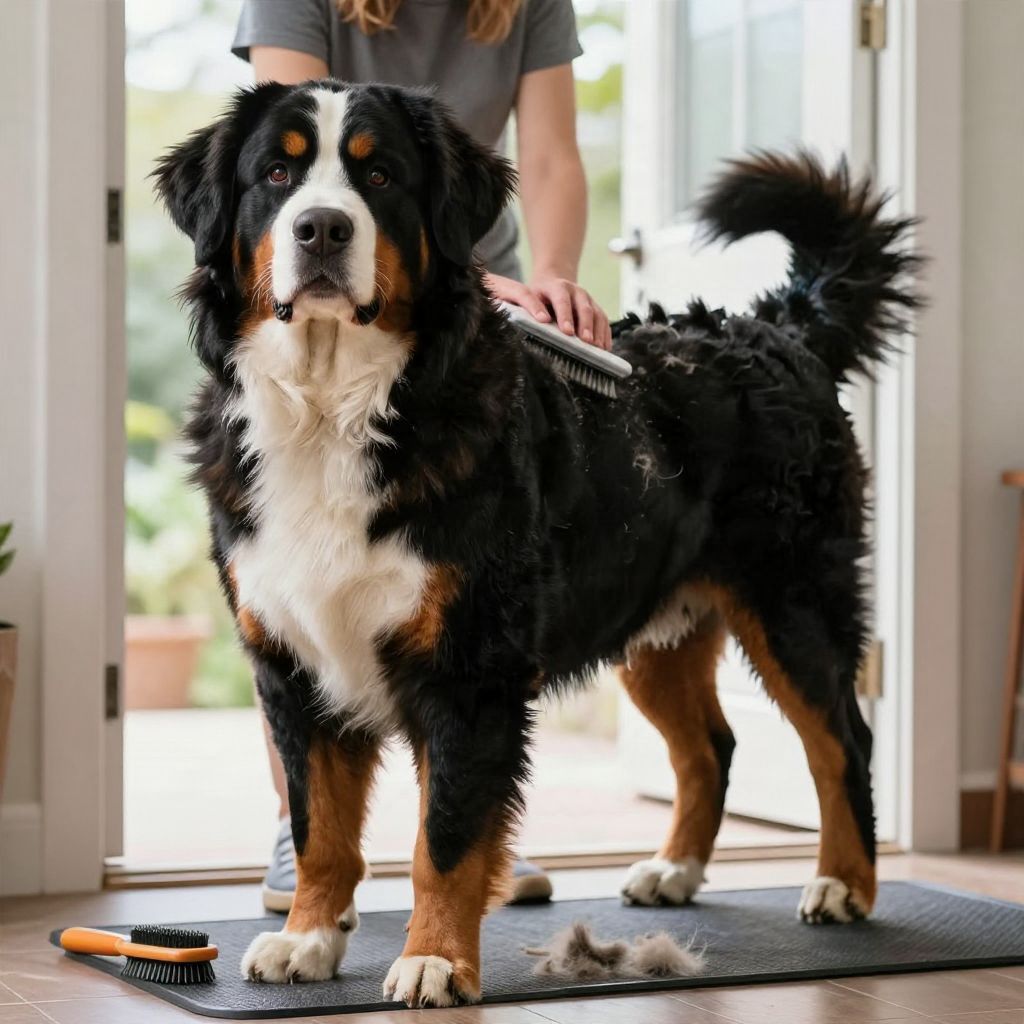
Do Bernese Mountain Dogs shed? Yes—this breed is known for noticeable shedding year-round, with heavier seasonal coat blowouts in many dogs. Their thick double coat helps protect them from weather, but it also means loose hair around your home is part of life with a Bernese.
The good news is that shedding can usually be managed with consistent grooming, good nutrition, and attention to skin health. If shedding suddenly increases or comes with itching, bald spots, or other symptoms, a vet check is important.
Do Bernese Mountain Dogs Shed?
Yes. Bernese Mountain Dogs typically shed a moderate to heavy amount because they have a dense double coat. Most owners notice shedding all year, with more hair loss during seasonal coat changes. Regular brushing helps remove loose undercoat before it ends up on your floors, furniture, and clothes.
Why Bernese Mountain Dogs Shed So Much
Shedding is normal for this breed because the coat is designed for insulation and protection. The outer coat helps repel dirt and moisture, while the undercoat provides warmth. When the weather changes or the coat grows out, old hairs are released and replaced.
What affects shedding in individual dogs
- Season and climate: Many dogs shed more in spring and fall, though indoor living can blur these cycles.
- Age: Puppies, adolescents, adults, and seniors may have different coat patterns and grooming needs.
- Health: Skin problems, allergies, parasites, hormone disorders, and poor coat condition can change shedding.
- Diet and overall care: A balanced diet and regular grooming support healthier skin and coat.
- Individual variation: Some Bernese shed more noticeably than others, even within the same household.
How Much Shedding Is Normal?
Normal shedding means you see loose hair, especially after brushing, during seasonal changes, or on bedding and clothing. What is not normal is a sudden increase in shedding, patchy hair loss, redness, scabs, strong odor, or constant scratching. Those signs suggest a possible medical or skin issue.
Signs the shedding may be excessive
- Visible bald spots or thinning areas
- Itching, licking, chewing, or rubbing
- Flaky skin, redness, or sores
- Hair coming out in clumps
- Greasy coat or a strong, unpleasant smell
- Behavior changes such as discomfort or restlessness
How to Manage Bernese Mountain Dog Shedding
You cannot stop shedding completely, but you can reduce loose hair and keep your dog more comfortable. The most effective approach is regular grooming, good coat care, and watching for skin problems early.
1. Brush consistently
Brushing is the main tool for controlling shedding. For many Bernese Mountain Dogs, brushing several times a week is helpful, and during heavy shedding periods you may need to brush more often.
- Use a slicker brush or undercoat tool suitable for thick coats.
- Work gently through tangles to avoid pulling the skin.
- Pay attention to friction areas like behind the ears, under the legs, and around the tail.
- Brush before bathing when possible to remove loose hair more effectively.
2. Bathe only as needed
Bathing can help loosen dead hair, but too-frequent bathing may dry the skin. Use a dog-safe shampoo and rinse thoroughly. If your dog has sensitive skin, ask your veterinarian which products are appropriate.
3. Keep the coat and skin healthy
A healthy coat starts from the inside out. Feed a complete, balanced diet appropriate for your dog’s age and size, and make sure fresh water is always available. If your veterinarian recommends supplements for skin support, follow professional guidance rather than guessing.
4. Check for parasites and skin irritation
Fleas, mites, and other skin irritants can make shedding worse. Routine parasite prevention and regular skin checks help you catch problems early. If you notice fleas, scabs, or intense itching, contact your veterinarian.
Grooming Tips for a Bernese Mountain Dog
Good grooming is about more than keeping your home cleaner. It also helps you spot skin issues, mats, hot spots, and other concerns before they become serious.
Helpful grooming routine
- Brush your dog on a regular schedule.
- Inspect the coat for mats, burrs, redness, and bumps.
- Trim nails as needed so your dog stays comfortable.
- Clean ears only if your veterinarian has shown you how and your dog needs it.
- Schedule professional grooming if the coat becomes difficult to manage.
Common grooming mistakes to avoid
- Shaving the coat without veterinary guidance
- Using harsh human shampoos
- Ignoring mats until they tighten against the skin
- Brushing too aggressively and irritating the skin
- Assuming heavy shedding is always “just the breed”
When Shedding Means a Vet Visit Is Needed
Because shedding can be linked to medical problems, it is important not to dismiss changes that seem unusual for your dog. A veterinarian can help determine whether the issue is simple coat turnover or something that needs treatment.
Call your vet soon if you notice
- Sudden or severe hair loss
- Persistent itching or licking
- Hot spots, sores, or crusting skin
- Changes in appetite, energy, or weight along with coat changes
- Hair loss around the face, ears, tail, or symmetrical areas
Seek urgent veterinary care if your dog has
- Open wounds, bleeding, or rapidly spreading skin damage
- Swelling, severe pain, or a very red, hot area of skin
- Difficulty breathing, collapse, or signs of a serious allergic reaction
- Repeated vomiting, diarrhea, or sudden weakness along with skin changes
How to Keep Your Home Cleaner
If you live with a Bernese Mountain Dog, some hair around the house is normal. A few practical habits can make the shedding much easier to manage.
- Brush outdoors or in an easy-to-clean area when possible.
- Use washable blankets on favorite resting spots.
- Vacuum regularly, especially during seasonal shedding.
- Keep a lint roller or pet-hair remover handy for clothing and furniture.
- Wash dog bedding often to remove loose hair and dander.
Do Puppies and Older Bernese Shed Differently?
Yes, they can. Puppies may have softer coats that change as they mature, while adult dogs develop the fuller double coat that sheds more noticeably. Senior dogs may also experience coat changes, but increased shedding in an older dog should not be assumed normal if it comes with weight loss, skin changes, or low energy.
Can Diet Reduce Shedding?
A balanced diet will not stop normal shedding, but it can support healthier skin and coat. Poor nutrition can worsen coat quality and make shedding look more dramatic. If you are concerned about your dog’s coat, ask your veterinarian whether the current food is appropriate and complete.
Avoid using supplements or oils without professional advice, especially if your dog has allergies, digestive issues, or other health conditions.
What Not to Expect From a Bernese Mountain Dog Coat
If you are hoping for a low-shed breed, a Bernese Mountain Dog is usually not the best match. They are affectionate, beautiful dogs, but their coat requires commitment. Planning for grooming time, cleaning, and seasonal hair is part of responsible ownership.
Bottom Line
Do Bernese Mountain Dogs shed? Yes, and often more than many first-time owners expect. With regular brushing, sensible bathing, good nutrition, and prompt attention to skin changes, you can keep shedding manageable and your dog more comfortable.
If you want to compare coat care in other breeds, you may also find it helpful to read do Border Collies shed? and do French Bulldogs shed?