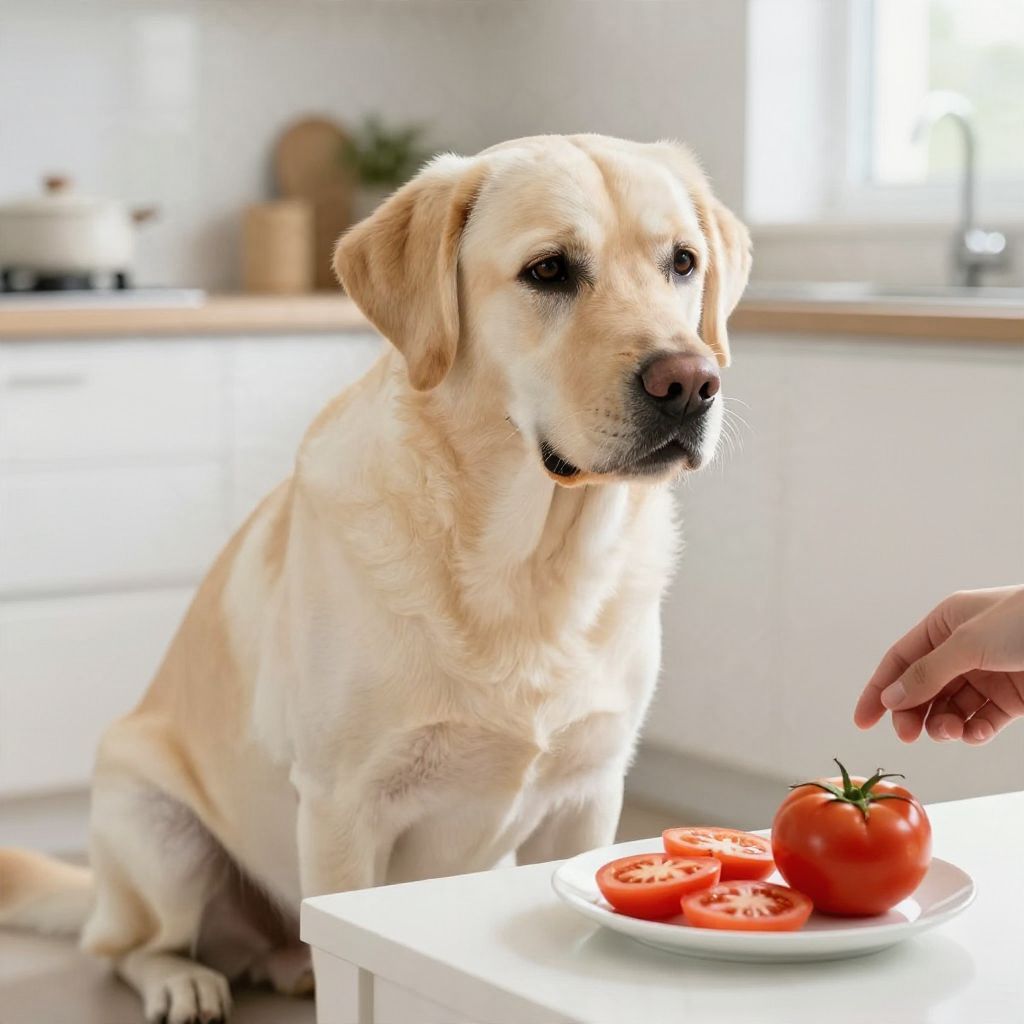
Can dogs eat tomatos? In small amounts, ripe tomatoes are usually not toxic to dogs, but the plant itself and unripe parts can be risky. The safest approach is to offer only plain, fully ripe tomato flesh and avoid stems, leaves, and green tomatoes.
Even when ripe tomato is safe for many dogs, it should be an occasional treat, not a regular part of the diet. Some dogs with sensitive stomachs, pancreatitis, or food allergies may react poorly, so it’s smart to introduce any new food cautiously.
Can Dogs Eat Tomatos?
Yes, dogs can usually eat small amounts of ripe, red tomato flesh if it is plain and free of stems, leaves, and seasoning. Unripe tomatoes and the tomato plant contain compounds that can upset dogs and may be dangerous in larger amounts, so only offer ripe fruit as an occasional treat.
What Parts of Tomato Are Safe for Dogs?
Not every part of the tomato plant is equally safe. The fruit and the plant should be treated differently when you are deciding whether to share tomato with your dog.
Usually safer
- Ripe tomato flesh in small pieces
- Plain tomato without salt, garlic, onion, spices, or sauces
- Fresh tomato served as a rare treat
Best avoided
- Green or unripe tomatoes
- Tomato stems and leaves
- Tomato vines, which can be more concerning than the ripe fruit
- Processed tomato foods like salsa, soup, pasta sauce, or ketchup
The main issue is that the tomato plant contains natural compounds that can cause problems if a dog eats enough of the wrong part. That risk is much lower with a small amount of ripe fruit, but it is not zero.
Why Unripe Tomatoes and Tomato Plants Are Riskier
Green tomatoes and tomato plant parts are more likely to cause digestive upset and may lead to more serious signs if a dog eats enough. The risk depends on how much was eaten, your dog’s size, and whether your dog is especially sensitive.
Possible concerns include:
- Vomiting
- Diarrhea
- Drooling
- Lethargy
- Loss of appetite
- Weakness or wobbliness in more serious exposures
If your dog ate a large amount of tomato plant material or is acting unwell, call your veterinarian promptly. Do not wait for symptoms to worsen.
How Much Tomato Can Dogs Eat?
There is no universal safe serving for every dog, because tolerance varies with body size, age, health, and individual digestion. A tiny piece of ripe tomato is enough for most dogs to sample safely, but tomato should remain an occasional treat rather than a snack you give often.
Use these practical guidelines:
- Start with a small bite of ripe tomato the first time.
- Watch for stomach upset over the next several hours.
- Reduce the amount or stop offering it if your dog has loose stool, vomiting, or gas.
- Keep treats, including tomato, to a small part of your dog’s daily intake.
Larger dogs may tolerate a little more than very small dogs, but size does not make tomato a free-for-all. Puppies, seniors, and dogs with medical issues may need extra caution.
When Tomato Is Not a Good Choice
Some dogs should avoid tomato altogether unless your veterinarian says otherwise. Individual health matters more than the food trend or a general yes-or-no answer.
Be extra careful if your dog has:
- A sensitive stomach or frequent diarrhea
- Pancreatitis or a history of fatty-food intolerance
- Food allergies or suspected food sensitivities
- Kidney, liver, or other chronic illness
- A tendency to gulp food without chewing
For these dogs, even a small new food can trigger vomiting or diarrhea. If you are unsure, ask your veterinarian before offering tomato.
Can Puppies Eat Tomatoes?
Puppies can be more sensitive than adult dogs because their digestive systems are still developing. A tiny amount of ripe tomato may be fine for some puppies, but it is usually best to keep treats simple and limited while they are young.
If you choose to offer tomato to a puppy, make sure it is plain, fully ripe, and cut into very small pieces. Stop if you notice soft stool, vomiting, or decreased appetite.
How to Safely Feed Tomato to Your Dog
If you want to share tomato, preparation matters. The goal is to remove the risky parts and avoid anything that could upset your dog’s stomach.
- Wash the tomato well.
- Choose a ripe, red tomato.
- Remove the stem, leaves, and any green parts.
- Cut the flesh into small pieces to reduce choking risk.
- Offer only a tiny amount at first.
- Monitor your dog for digestive upset afterward.
Plain is best. Do not add salt, butter, oil, cheese, garlic, onion, pepper, or seasoning blends.
Tomato Foods Dogs Should Avoid
Many tomato-based human foods are not safe for dogs, even if the tomato itself is okay. The problem is often the added ingredients, not the fruit alone.
- Tomato sauce often contains onion, garlic, salt, and sugar
- Salsa may include onion, chili, and spices
- Pizza sauce is usually too seasoned and salty
- Tomato soup can contain cream, salt, and seasonings
- Ketchup is sugary and not a useful dog treat
Even if a product seems tomato-based, it may contain ingredients that are unsafe or irritating for dogs. Read labels carefully and skip anything heavily seasoned.
Signs Your Dog May Have Reacted Badly to Tomato
Most dogs that eat a small amount of ripe tomato do fine, but you should watch for signs of stomach upset or a more serious reaction.
Call your veterinarian if you notice:
- Repeated vomiting
- Diarrhea that does not quickly improve
- Marked drooling
- Refusing food
- Unusual tiredness
- Abdominal discomfort
Seek urgent veterinary care if your dog has:
- Tremors, weakness, or trouble walking
- Collapse
- Difficulty breathing
- Severe vomiting or diarrhea
- A swollen or painful abdomen
- Signs of choking after eating tomato pieces
If your dog ate tomato plant material, green tomatoes, or a large amount of tomato-based food, contact your veterinarian or an emergency clinic right away. Quick guidance is better than guessing.
Common Mistakes to Avoid
Most tomato-related problems happen because the wrong part of the plant or the wrong kind of food is offered. A few simple habits can reduce the risk.
- Do not let your dog nibble tomato plants in the garden.
- Do not assume all red foods are safe just because the fruit is ripe.
- Do not give seasoned human tomato dishes.
- Do not offer tomato to a dog with a sensitive stomach without caution.
- Do not use tomato as a meal replacement or a major treat source.
Remember that treats should support, not replace, a balanced dog diet. If you want to add variety, keep it simple and safe.
What to Do If Your Dog Already Ate Tomato
If your dog ate a small amount of ripe tomato flesh, they will often be fine. Keep an eye on them and avoid giving more new foods that day.
If your dog ate green tomato, stems, leaves, or a large amount of tomato sauce or seasoned food, contact your veterinarian for advice. Be ready to tell them:
- What your dog ate
- How much was eaten
- When it happened
- Your dog’s weight and age
- Any symptoms you have noticed
Do not try home remedies or induce vomiting unless a veterinarian specifically instructs you to do so.
The Bottom Line on Dogs and Tomatoes
Can dogs eat tomatos? Yes, in small amounts, ripe tomato flesh is usually okay for many dogs, but the plant, green tomatoes, and seasoned tomato foods are not safe choices. Keep it plain, keep it small, and stop if your dog shows any digestive upset.
If you want to learn more about safe people foods for dogs, you may also find these guides helpful: can dogs eat avocado and can dogs eat limes.