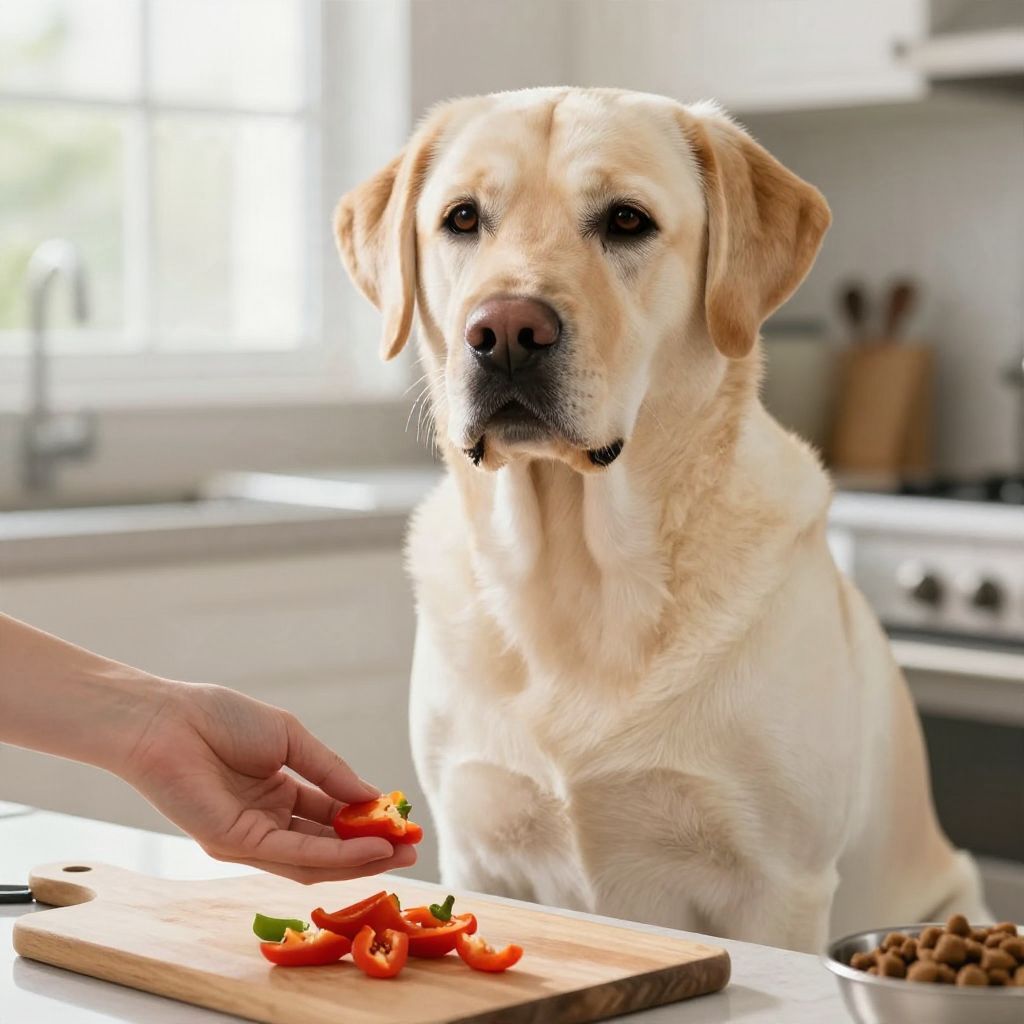
Can dogs eat sweet peppers? Yes, most dogs can safely eat sweet peppers in small amounts when they are plain, washed, and cut into bite-sized pieces. They should be an occasional treat, not a meal replacement, and some dogs tolerate them better than others.
The safest approach is to offer raw or lightly cooked sweet peppers without seeds, stems, seasoning, oil, onion, garlic, or sauces. If your dog has a sensitive stomach, pancreatitis, diabetes, or a history of food allergies, check with your veterinarian first.
Can Dogs Eat Sweet Peppers?
Yes, dogs can usually eat sweet peppers, including red, yellow, orange, and green varieties, as long as they are plain and served in small pieces. Sweet peppers are not toxic to dogs, but too much can cause stomach upset, and some dogs may struggle to digest the skin or seeds.
Why Sweet Peppers Can Be a Dog-Friendly Treat
Sweet peppers are low in calories and contain water, fiber, and vitamins. That makes them a reasonable occasional treat for many dogs when you want something crunchy that is not highly processed.
They can be especially useful if you are looking for a fresh treat to use during training or enrichment. Still, treats should make up only a small part of your dog’s daily intake.
Potential benefits
- Low calorie compared with many commercial snacks
- Crunchy texture that some dogs enjoy
- Simple ingredient when served plain
- Hydration support from their high water content
How to Safely Feed Sweet Peppers to Dogs
If you want to share sweet peppers with your dog, preparation matters. Plain, fresh pieces are the best option, and the serving size should match your dog’s body size, diet, and digestive sensitivity.
- Wash the pepper thoroughly.
- Remove the stem, seeds, and white inner membrane if possible.
- Cut it into small, manageable pieces.
- Offer a few pieces first, especially if your dog has never eaten peppers before.
- Watch for vomiting, diarrhea, gas, or itching after the first serving.
Raw or cooked?
Raw sweet pepper is usually fine for healthy dogs in small amounts. Lightly cooked pepper can also be fine if it is plain and soft enough for your dog to chew safely.
Avoid frying, roasting with oil, or adding spices. Dogs do not need flavorings to enjoy the vegetable, and added ingredients can create avoidable digestive problems.
How Much Sweet Pepper Can a Dog Have?
There is no universal amount that fits every dog. A tiny dog may only do well with a few small pieces, while a larger dog may tolerate a little more, but sweet peppers should still remain a treat rather than a major part of the diet.
A practical rule is to start with a small amount and see how your dog responds. If your dog has a sensitive stomach, start even smaller and introduce new foods one at a time.
Factors that affect portion size
- Your dog’s size and weight
- Age, especially puppies and senior dogs
- Activity level and overall diet
- History of digestive upset
- Medical conditions such as diabetes, pancreatitis, or inflammatory bowel disease
Risks and When Sweet Peppers Are Not a Good Idea
Sweet peppers are generally safe, but they are not ideal for every dog. Some dogs will have no issue, while others may get loose stools, gas, or discomfort after eating even a small amount.
Common concerns
- Digestive upset: too much fiber or a sudden new food can cause diarrhea or vomiting
- Choking risk: large pieces can be difficult to swallow, especially for small dogs
- Seasonings: onion, garlic, chili, salt, butter, and sauces can be harmful or irritating
- Food allergies or sensitivities: uncommon, but possible in individual dogs
Dogs who may need extra caution
Talk to your veterinarian before feeding sweet peppers if your dog has a sensitive digestive tract, a history of pancreatitis, diabetes, or a prescribed therapeutic diet. Dogs on special diets should not receive extra foods unless your vet says it is okay.
Can Puppies Eat Sweet Peppers?
Puppies can usually try tiny amounts of plain sweet pepper, but their digestive systems are more sensitive than adult dogs’. Keep portions very small and introduce the food slowly.
Puppies also need consistent nutrition for growth, so treats should stay minimal. If your puppy has diarrhea, vomiting, or refuses food after trying peppers, stop offering them and ask your veterinarian for advice.
Can Senior Dogs Eat Sweet Peppers?
Many senior dogs can eat sweet peppers safely, but age-related issues may change what works best. Older dogs may have dental problems, slower digestion, or chronic illnesses that make even healthy treats less suitable.
If your senior dog has trouble chewing, offer very small soft pieces or skip peppers altogether. For dogs with ongoing medical conditions, check with your vet before adding new foods.
What Parts of the Pepper Are Safe?
The fleshy part of the sweet pepper is the main safe portion. The stem, seeds, and white pith are not toxic, but they are less digestible and can be irritating or difficult to chew.
For most dogs, the best preparation is simple: remove the inedible parts and serve the pepper plain in small pieces.
Best practices
- Use fresh, unseasoned peppers
- Remove stems and seeds
- Cut into small pieces for safer chewing
- Offer only as an occasional treat
Sweet Peppers vs. Hot Peppers
Sweet peppers are not the same as hot chili peppers. Hot peppers can irritate a dog’s mouth, stomach, and eyes, and they are much more likely to cause discomfort.
If your dog accidentally eats a hot pepper, monitor for drooling, pawing at the mouth, vomiting, or distress. If symptoms are severe or your dog seems unwell, contact your veterinarian promptly.
Signs Your Dog Did Not Tolerate Sweet Peppers Well
Even a safe food can upset an individual dog. Watch your dog after the first few servings, especially if the pepper was raw or the portion was larger than usual.
Signs of poor tolerance may include:
- Vomiting
- Diarrhea
- Excess gas
- Abdominal discomfort
- Reduced appetite
- Itching, facial swelling, or hives
Seek urgent veterinary care if your dog has repeated vomiting, severe lethargy, a swollen face, trouble breathing, collapse, a painful abdomen, or cannot keep water down.
Common Mistakes to Avoid
Most problems with sweet peppers happen because of preparation or portion size, not because the pepper itself is inherently dangerous. A few simple mistakes can turn a harmless snack into a problem.
- Feeding peppers cooked with onion, garlic, or heavy seasoning
- Giving large chunks that could be swallowed whole
- Offering too much at once
- Using peppers as a replacement for balanced dog food
- Ignoring vomiting or diarrhea after a new food
Are Sweet Peppers Better Than Other Vegetables?
Sweet peppers can be a good treat, but they are not automatically better than every other dog-safe vegetable. The best choice depends on what your dog likes, tolerates, and needs.
Some dogs prefer softer vegetables, while others enjoy crunchier foods. Variety can be fine, but introduce one new food at a time so you can tell what agrees with your dog.
When to Call the Veterinarian
Contact your veterinarian if your dog has a chronic health condition and you are unsure whether sweet peppers fit into the diet. This is especially important for dogs on prescription food or those with recurring stomach issues.
You should also call promptly if your dog develops persistent vomiting, diarrhea lasting more than a day, marked discomfort, or any signs of an allergic reaction after eating peppers.
Bottom Line
Most dogs can eat sweet peppers safely in small, plain, bite-sized pieces. Keep them unseasoned, introduce them slowly, and stop if your dog shows digestive upset or allergy-like symptoms.
If you want to keep learning about dog-safe produce, you may also find can dogs eat arugula and can dogs eat tomatos helpful for comparing safe vegetable options.