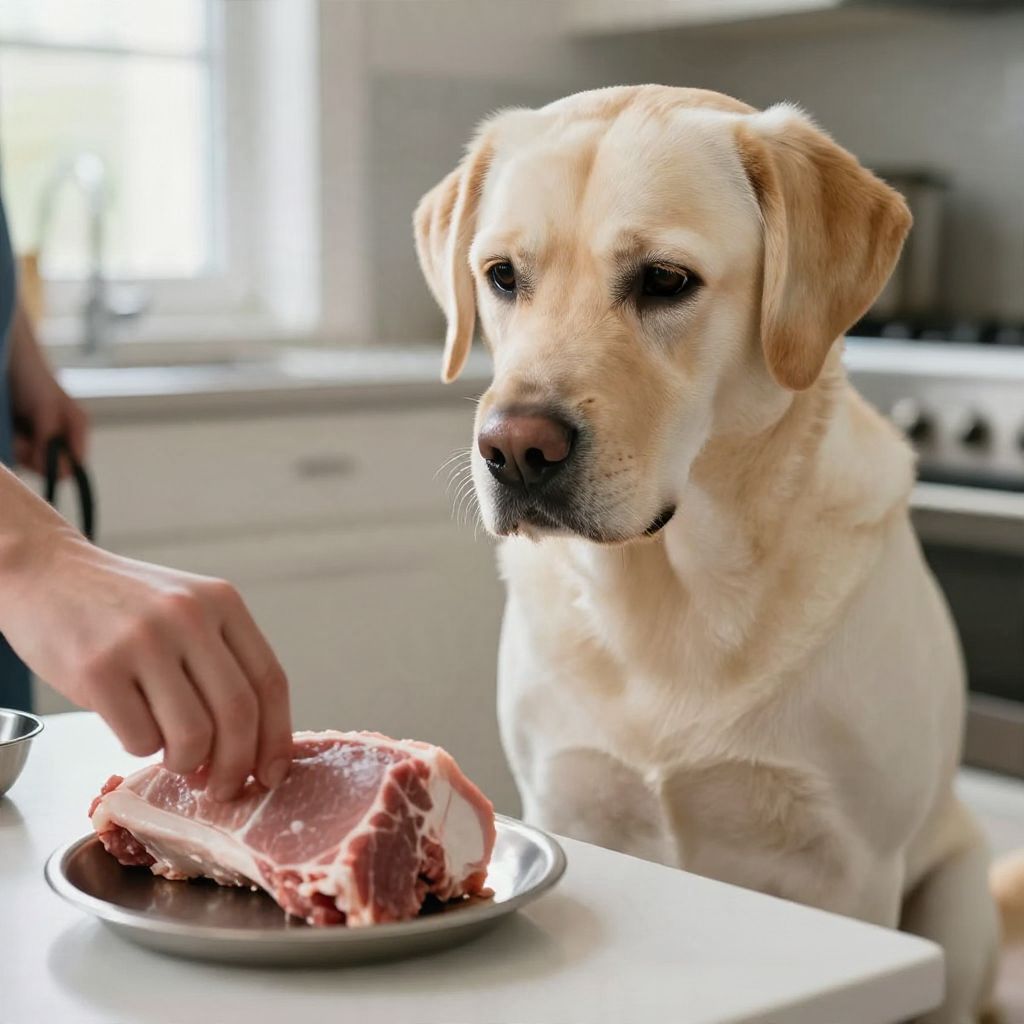
Can dogs eat raw pork? In most cases, it’s not a safe choice. Raw pork can carry parasites and bacteria that may make dogs sick, and it can also upset digestion or create a choking risk if bones are present.
If your dog already ate raw pork, the right response depends on how much was eaten, whether it had bones, and whether your dog is showing symptoms. When in doubt, call your veterinarian for guidance.
Can dogs eat raw pork?
Dogs should not regularly eat raw pork because it can contain harmful parasites and bacteria, including organisms that may cause serious illness. Even if a dog seems fine after eating it, raw pork is not considered a safe routine food. Cooked, plain pork is safer in small amounts.
Why raw pork is risky for dogs
Raw pork carries several avoidable hazards. Some are foodborne, while others are mechanical risks like bone splinters or large fatty pieces that can irritate the stomach.
Parasites and bacteria
Raw pork may contain parasites or bacteria that can lead to vomiting, diarrhea, fever, lethargy, or more severe illness. Dogs can sometimes carry infections without obvious signs at first, which makes the risk easy to miss.
Bone and choking hazards
If the pork includes bones, those bones can splinter or get stuck in the throat, stomach, or intestines. That can cause choking, pain, constipation, vomiting, or a blockage that needs urgent veterinary care.
High fat and digestive upset
Pork can be fatty, especially if it includes skin, trimmings, or marbling. Rich, fatty foods may trigger diarrhea, vomiting, or pancreatitis in some dogs, particularly those with sensitive stomachs or a history of digestive disease.
What to do if your dog ate raw pork
If your dog ate a small amount of plain raw pork and is acting normal, monitor closely for the next day or two. If the pork had bones, seasoning, or was a large amount, call your veterinarian sooner for advice.
- Watch for symptoms: vomiting, diarrhea, drooling, abdominal pain, loss of appetite, weakness, or unusual behavior.
- Check for choking or blockage signs: gagging, repeated retching, trouble swallowing, bloated abdomen, constipation, or inability to pass stool.
- Seek urgent care immediately if your dog has trouble breathing, collapses, has a swollen belly, cannot keep water down, or seems severely painful.
Do not try to make your dog vomit unless a veterinarian specifically tells you to do so. The safest next step depends on the amount eaten, the presence of bones, and your dog’s health history.
Signs that need a veterinarian
Some dogs may only have mild stomach upset, but others can become seriously ill. Contact a veterinarian promptly if symptoms appear after eating raw pork.
- Repeated vomiting or diarrhea
- Blood in vomit or stool
- Marked lethargy or weakness
- Fever or shivering
- Abdominal pain, hunching, or restlessness
- Refusing food or water
- Neurologic changes such as wobbliness, tremors, or unusual agitation
Emergency note: If your dog is a puppy, senior dog, pregnant, immunocompromised, or has pancreatitis, gastrointestinal disease, or another chronic condition, take raw pork exposure more seriously and call your vet sooner.
Is cooked pork safe for dogs?
Plain, fully cooked pork can be safe for many dogs in small amounts, as long as it is unseasoned and free of bones. It should be treated as an occasional treat, not a meal replacement.
How to serve pork more safely
- Cook it thoroughly.
- Remove all bones.
- Avoid salt, garlic, onion, spices, sauces, and marinades.
- Trim excess fat.
- Offer only a small amount at first to see how your dog tolerates it.
Even cooked pork may not suit every dog. Dogs with sensitive digestion, weight issues, or a history of pancreatitis may need to avoid rich meats or only eat them under veterinary guidance.
Common mistakes to avoid
When people ask, “Can dogs eat raw pork?” the biggest problems usually come from assuming “natural” means safe. Food safety still matters for dogs.
- Feeding raw pork as a regular diet without veterinary oversight
- Giving pork bones because they seem like a chew toy
- Serving seasoned pork with onion, garlic, or heavy sauces
- Offering fatty trimmings from the table
- Ignoring mild symptoms after a dog eats raw meat
It’s also important not to use pork as a shortcut to better nutrition. Dogs need a balanced diet formulated for their life stage, not just meat scraps.
Does breed, age, or size change the risk?
Yes, individual factors matter. A large adult dog may tolerate a small accidental exposure better than a tiny puppy, but no dog is immune to foodborne illness or bone injury. Breed alone does not determine safety.
Puppies
Puppies are more vulnerable because their digestive systems are still developing and dehydration can happen faster. Even a short bout of vomiting or diarrhea can become a bigger problem in a young dog.
Senior dogs
Older dogs may have weaker digestion, dental problems, kidney disease, or other health issues that make raw pork a poor choice. They may also recover more slowly if they get sick.
Dogs with medical conditions
If your dog has a history of pancreatitis, immune suppression, chronic gastrointestinal upset, or food sensitivities, ask your veterinarian before offering any pork at all. A dog’s individual health history matters more than general rules.
Safer alternatives if you want to share meat
If you want to give your dog a meat treat, choose safer options that are plain and fully cooked. Keep portions small and make sure the food fits your dog’s daily calorie needs.
- Plain cooked chicken or turkey
- Plain cooked lean pork, fully deboned
- Small pieces of cooked beef
- Dog-safe commercial treats designed for daily use or training
If you are comparing meat options, it can also help to read about other raw-food questions, such as can dogs eat raw steak and can dogs eat raw fish, so you can make safer choices across different foods.
Bottom line
Can dogs eat raw pork? It’s best not to feed it. The risks from parasites, bacteria, bones, and fat outweigh any benefit, and cooked plain pork is the safer option if you want to offer pork at all. If your dog already ate raw pork and develops symptoms, contact your veterinarian promptly.