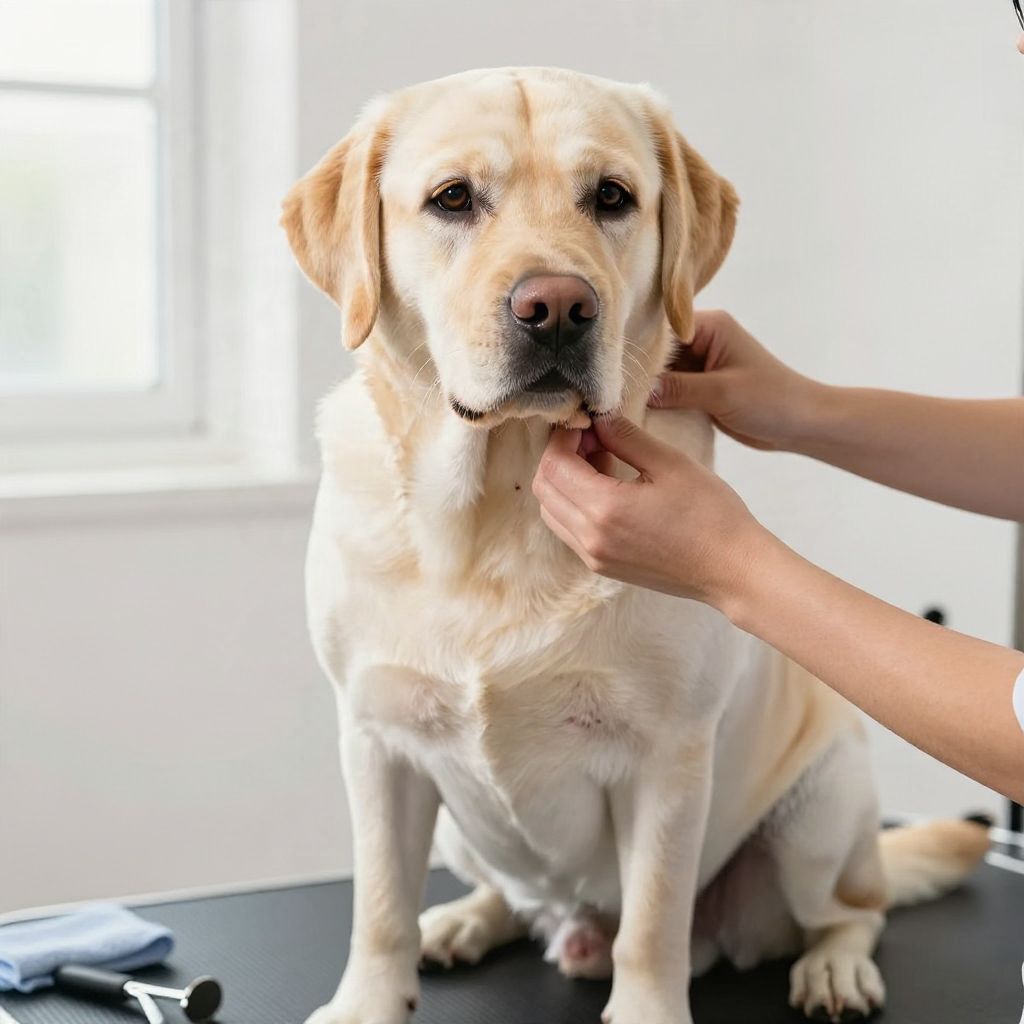
Do dogs get pimples? Yes, they can develop pimple-like bumps on the skin, especially on the chin, lips, belly, or groin. Some are simple clogged pores or mild acne, while others may be infection, allergies, insect bites, or another skin problem.
Because several conditions can look similar, it helps to know what is normal, what needs monitoring, and when your dog should see a veterinarian. Never squeeze bumps or start human acne products without veterinary advice.
Do Dogs Get Pimples?
Yes. Dogs can get pimple-like bumps, and the cause may be acne, folliculitis, allergies, insect bites, or infection. Small, mild bumps may improve with gentle hygiene, but painful, spreading, itchy, or pus-filled lesions need a vet exam to find the real cause and prevent complications.
What Dog Pimples Usually Look Like
Dog pimples are often small raised bumps that may be red, white, or skin-colored. They can appear singly or in clusters and may be found on the chin, muzzle, lips, belly, armpits, or groin.
Some bumps are dry and harmless-looking. Others may ooze, crust over, or feel warm and tender. If your dog is scratching, licking, or rubbing the area, the skin may be irritated or infected.
Common signs that the bump may be acne or a skin issue
- Red or inflamed skin around the bump
- Blackheads or clogged-looking pores
- Small pustules, which can look like whiteheads
- Crusting, scabbing, or hair loss
- Itching, licking, or face rubbing
What Causes Dog Pimples?
There is no single cause. In many dogs, pimple-like bumps happen when hair follicles become irritated or blocked. In others, the skin reacts to something in the environment or develops an infection.
Common causes
- Dog acne, often on the chin and lips
- Folliculitis, an inflamed or infected hair follicle
- Allergies to food, fleas, pollen, or contact irritants
- Insect bites or minor skin trauma
- Skin infections from bacteria or yeast
- Friction or pressure from collars, harnesses, or rough surfaces
Age, coat type, grooming habits, and skin sensitivity can all affect whether a dog gets these bumps. Some dogs are more prone to facial acne, while others develop bumps because they lick or scratch a lot due to allergies or discomfort.
Are Dog Pimples Dangerous?
Many are mild, but some can become painful or infected. A small bump that stays stable and does not bother your dog may be less urgent than a rapidly growing, bleeding, or pus-filled lesion.
The main risk is assuming every bump is “just a pimple.” Skin tumors, cysts, warts, and abscesses can also look similar, so persistent or unusual bumps should be checked by a veterinarian.
When You Should Call the Vet
Contact your veterinarian if the bump does not improve, keeps coming back, or seems to bother your dog. A vet can examine the skin and decide whether your dog needs testing, prescription treatment, or simple monitoring.
Get veterinary advice promptly if you notice:
- Pus, bad odor, or a wet, draining sore
- Rapid swelling or a bump that grows quickly
- Bleeding, ulceration, or open skin
- Significant pain or tenderness
- Widespread itching, redness, or hair loss
- Fever, lethargy, or reduced appetite
- Facial swelling or trouble eating
Seek urgent veterinary care if your dog has trouble breathing, severe facial swelling, collapse, or a suddenly painful swelling that may be an abscess or allergic reaction.
What You Can Safely Do at Home
For a mild, small bump that is not painful or spreading, gentle care can help while you watch for changes. Keep the area clean and avoid anything that could irritate the skin more.
- Clean food and water bowls daily, especially if your dog gets chin bumps.
- Use a soft, clean cloth to gently wipe dirty skin after meals or outdoor play.
- Check collars and harnesses for rubbing or pressure points.
- Prevent licking or scratching if the skin is getting irritated.
- Monitor the bump for size, color, discharge, or discomfort.
Do not pop, squeeze, or pick at the bump. That can push bacteria deeper into the skin and make the problem worse.
What not to use without veterinary guidance
- Human acne creams or spot treatments
- Alcohol, hydrogen peroxide, or harsh antiseptics
- Essential oils
- Ointments your dog may lick off
- Human pain relievers
How Vets Diagnose Dog Pimples
If the bumps are persistent, your vet may look at the skin closely and ask about your dog’s diet, grooming routine, environment, and symptoms. The goal is to tell a simple pimple-like lesion apart from infection, allergy, parasites, or another skin disease.
Depending on what they see, your vet may recommend a skin scrape, cytology, culture, or other tests. These help identify bacteria, yeast, mites, or other causes so treatment is targeted.
Treatment Depends on the Cause
There is no single treatment for all dog pimples. Mild acne may need improved hygiene, while infection or allergy-related skin disease may need medical treatment from your veterinarian.
Possible treatment approaches your vet may consider
- Medicated shampoos or wipes
- Topical treatments for localized skin inflammation
- Prescription medication for infection or itching
- Allergy management if skin flare-ups are recurring
- Changes to grooming, bowls, or harness fit if irritation is involved
Follow your vet’s instructions closely and finish any prescribed course of treatment unless your vet tells you otherwise. Stopping early can allow the problem to return.
Can Diet Cause Dog Pimples?
Diet is not usually the direct cause of a single pimple, but food sensitivities can contribute to ongoing skin problems in some dogs. If bumps come with itching, ear issues, or recurring redness, your vet may consider an elimination diet or other allergy workup.
Do not switch foods repeatedly on your own if the skin issue keeps returning. Frequent diet changes can make it harder to identify the real trigger.
Are Some Dogs More Likely to Get Pimples?
Any dog can get skin bumps, but some individuals are more prone because of their age, skin type, habits, or underlying health. Young dogs may develop acne-like bumps, while dogs with allergies or frequent licking may get recurrent skin irritation.
Breed tendencies can vary, but they are not guarantees. A dog’s environment, grooming, and overall health often matter just as much as breed.
How to Help Prevent Recurring Bumps
Prevention focuses on reducing irritation, keeping skin clean, and addressing the underlying cause if one is found. Small routine changes can make a noticeable difference for many dogs.
- Wash food and water bowls regularly
- Choose a well-fitting collar or harness
- Groom your dog consistently, especially if the coat is dense or oily
- Check skin after outdoor activity for bites, burrs, or debris
- Manage fleas and other parasites with veterinarian-approved prevention
- Address chronic licking, scratching, or rubbing early
When a “Pimple” Is Probably Something Else
Some bumps are not pimples at all. A lump that is firm, fixed in place, irregular, or steadily enlarging deserves veterinary attention, even if it does not seem painful.
Warts, cysts, abscesses, and skin tumors can resemble acne at first glance. If you are unsure, it is safer to have a veterinarian examine it than to guess at home.
Bottom Line
Yes, dogs can get pimples, but not every bump is simple acne. Watch for redness, pain, discharge, spreading irritation, or repeated flare-ups, and see your vet if the bump is persistent or concerning. Gentle hygiene helps, but proper diagnosis is the key to safe treatment.
If you want to learn more about related skin and comfort issues, you may also find these guides helpful: why dogs lick their paws and what to do if your dog is limping.