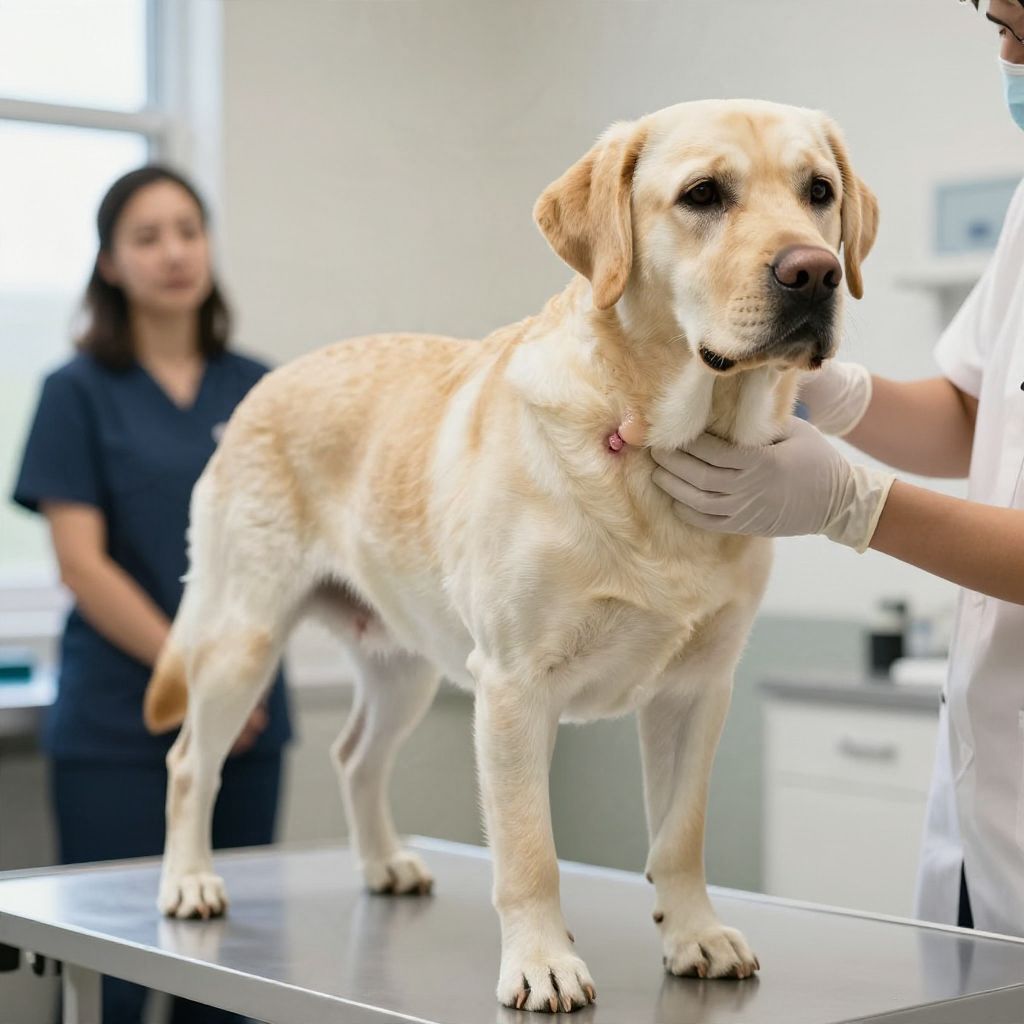
Can dogs get skin tags? Yes, dogs can develop small, benign skin growths that look like skin tags, especially as they age. Many are harmless, but not every bump is a skin tag, so it is important to watch for changes in size, color, shape, or comfort.
If you notice a new lump on your dog, a veterinarian can help confirm what it is and whether it needs treatment. Some growths are simple skin tags, while others can resemble warts, cysts, or tumors and should not be guessed at from appearance alone.
Can dogs get skin tags?
Yes, dogs can get skin tags, and they are often benign, soft, fleshy growths that may hang from the skin by a narrow base. They are more common in adult and senior dogs, but any dog can develop a lump that looks similar, so a veterinary exam is the safest way to tell.
What a skin tag on a dog may look like
Skin tags in dogs often appear as small, soft, skin-colored or slightly darker flaps of tissue. They may be smooth or a little wrinkled, and they usually do not bother the dog unless they rub, snag, or become irritated.
Common features people notice
- Small, soft, and movable on the skin
- Skin-colored, pink, or lightly pigmented
- May dangle from a thin stalk
- Usually slow-growing
- Often painless unless irritated
Why they can be mistaken for other growths
Many skin problems can look similar at first glance. Warts, cysts, benign masses, infected follicles, and some tumors can all resemble a skin tag, which is why appearance alone is not enough for a diagnosis.
Are skin tags in dogs dangerous?
Most skin tags are not dangerous by themselves, but they should still be monitored. A growth that changes quickly, bleeds, becomes painful, or looks unusual may need prompt veterinary attention because it could be something other than a harmless skin tag.
Watch for these warning signs
- Rapid growth
- Bleeding, ulceration, or crusting
- Redness, swelling, or discharge
- Pain when touched
- Itching, licking, or chewing at the spot
- Change in color or texture
- New lumps appearing in clusters
Urgent veterinary care is important if a lump is bleeding heavily, your dog seems unwell, the area is rapidly enlarging, or the growth interferes with eating, walking, blinking, or breathing.
What causes skin tags in dogs?
The exact cause is not always clear. Age-related skin changes, friction, and individual skin tendencies may play a role, but there is no single cause that applies to every dog.
Factors that may make them more likely
- Older age
- Repeated rubbing from collars, harnesses, or skin folds
- Chronic skin irritation
- Individual variation in skin and coat type
Some dogs may seem more prone to skin growths than others, but this is not a guarantee based on breed alone. Body size, age, coat type, and overall skin health can matter more than breed labels.
How a veterinarian checks a dog’s skin tag
Your veterinarian will usually start with a physical exam and ask how long the growth has been there, whether it has changed, and whether your dog seems bothered by it. If the lump is uncertain, a sample may be recommended to help identify the cells involved.
Tests that may be used
- Visual exam and palpation
- Fine-needle sample or cytology
- Biopsy for unclear or suspicious masses
These tests help distinguish a harmless skin tag from other growths that may need treatment. Do not assume a bump is safe just because it is small or has been present for a while.
Should you remove a skin tag at home?
No, you should not cut, tie off, burn, or squeeze a growth on your dog at home. Home removal can cause pain, bleeding, infection, and delayed diagnosis if the lump is not actually a skin tag.
Why home removal is risky
- You may remove the wrong type of growth
- Bleeding can be difficult to control
- Infection can develop
- The area may heal poorly if your dog licks it
- A serious mass could be missed
If the growth is getting caught on a collar, brush, or furniture, your veterinarian can advise whether monitoring or removal is the best option.
When skin tags may be removed
Veterinarians may recommend removal if a skin tag is repeatedly irritated, bleeds, gets in the way, or cannot be confidently identified as harmless. Removal is also more likely if the growth is in a location where it is constantly rubbed or snagged.
Common reasons for treatment
- Frequent trauma from grooming or movement
- Persistent bleeding or irritation
- Unclear diagnosis
- Cosmetic concern when medically appropriate
The right approach depends on your dog’s age, health status, location of the growth, and whether the lump is truly a skin tag. A veterinarian can explain the safest option for your individual dog.
How to monitor a skin tag at home
If your veterinarian says the growth appears benign, tracking it at home can help you notice changes early. A simple photo record is often useful because small changes are easier to spot over time than from memory alone.
- Take a clear photo in good light.
- Note the location and approximate size.
- Check it weekly for changes in shape, color, or texture.
- Watch for licking, scratching, or bleeding.
- Report any change to your veterinarian.
If your dog has many lumps or skin changes, keeping a written log can help your vet compare what is stable and what is new.
How to protect the area from irritation
Simple management can reduce rubbing and accidental injury. This is especially helpful if the skin tag is in a spot that gets brushed, clipped, or contacted by a harness.
- Use a well-fitting collar or harness that does not rub the lump
- Be gentle during grooming around the area
- Prevent excessive licking or chewing if advised by your vet
- Keep the skin clean and dry if the area becomes moist or irritated
Do not apply human creams, acids, or over-the-counter wart removers unless your veterinarian specifically tells you to do so.
When a lump is probably not just a skin tag
Some lumps deserve faster evaluation because they do not behave like a typical skin tag. A growth that is firm, fixed in place, irregular, rapidly changing, or painful should be checked promptly.
Examples of concerning changes
- Sudden enlargement over days or weeks
- Open sores or repeated bleeding
- Strong odor or pus
- Swelling around the lump
- Change in your dog’s energy, appetite, or comfort
Even a lump that looks harmless can still need testing. The safest rule is simple: if you are not sure what it is, have it examined.
Skin tags, age, and overall health
Older dogs are more likely to develop benign skin growths, but age alone does not tell you whether a lump is safe. Senior dogs may also have other health conditions that make it more important to avoid unnecessary irritation, bleeding, or stress.
For puppies and young dogs, a new skin tag-like bump is less typical and should be shown to a veterinarian sooner rather than later. In younger dogs, it is especially important not to assume every bump is a skin tag.
What you can do next
If you find a growth on your dog, take a photo, avoid manipulating it, and schedule a veterinary visit if it is new, changing, or uncertain. If your vet confirms it is a skin tag, you may simply monitor it unless it starts to bother your dog.
For more dog skin and health guidance, you may also find do dogs get pimples? helpful if you are trying to tell apart different kinds of bumps and blemishes. If your dog has a head or facial change that seems linked to discomfort, can dogs get headaches? may also be useful reading.
In short, yes, dogs can get skin tags, and many are harmless. But because several other conditions can look similar, the safest approach is to have any new or changing lump checked by a veterinarian.