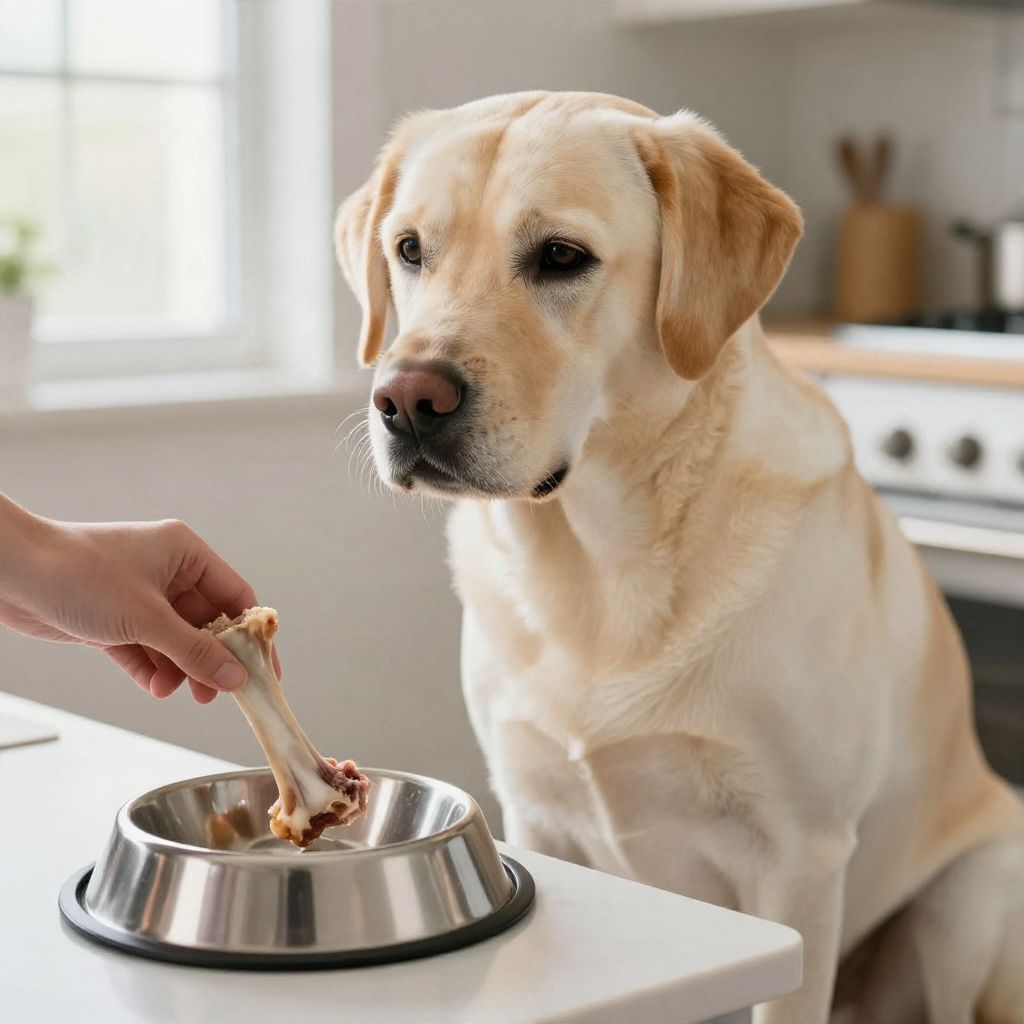
Can dogs eat lamb bones? In general, it’s safest to say no, especially if the bones are cooked. Lamb bones can splinter, crack teeth, cause choking, or lead to dangerous blockages or internal injury. Even raw bones can be risky depending on your dog and how the bone is prepared.
If your dog already ate a lamb bone, the right response depends on the bone type, your dog’s size, and whether any symptoms are showing. Watch closely for warning signs and contact your veterinarian promptly if you’re unsure.
Can Dogs Eat Lamb Bones?
Most dogs should not eat lamb bones, particularly cooked ones. Cooked lamb bones are more likely to splinter, while raw bones can still break teeth, get stuck, or cause digestive problems. If your dog swallowed a bone, monitor closely and call your vet if you notice vomiting, pain, choking, or trouble passing stool.
Why Lamb Bones Can Be Dangerous
Lamb bones may seem natural, but “natural” does not always mean safe. The main risks depend on whether the bone is cooked, raw, weight-bearing, or small enough to swallow.
Cooked lamb bones
Cooked bones are the biggest concern because heat makes them brittle. They can splinter into sharp pieces that may injure the mouth, throat, stomach, or intestines.
- Choking hazard: Pieces can lodge in the throat.
- Tooth fractures: Hard bones can crack or break teeth.
- Internal injury: Sharp fragments may cut the digestive tract.
- Blockage risk: Larger chunks can obstruct the stomach or intestines.
Raw lamb bones
Raw bones are generally less likely to splinter than cooked bones, but they are not risk-free. They can still break teeth, carry bacteria, cause constipation, or become a choking or blockage hazard.
Some dogs may chew raw bones more safely than others, but safety varies with size, chewing style, and health history. A dog that gulps food, is an aggressive chewer, or has dental disease may be at higher risk.
When a Lamb Bone Is Most Likely to Cause Trouble
Risk is not the same for every dog. Your dog’s age, size, chewing habits, and medical history all matter.
- Puppies: They may swallow pieces quickly and are still learning safe chewing habits.
- Small dogs: Pieces can be easier to swallow and more likely to cause blockage.
- Strong chewers: They may crack teeth or splinter the bone into sharp fragments.
- Dogs with dental disease: Weak or painful teeth can be injured more easily.
- Dogs with a history of GI issues: They may be more vulnerable to vomiting, constipation, or obstruction.
Breed alone does not determine safety. Individual chewing style and health matter more than a label on the dog.
What To Do If Your Dog Ate a Lamb Bone
If your dog just ate a lamb bone, stay calm and assess the situation. The next steps depend on whether the bone was cooked or raw, whether your dog swallowed a large piece, and whether any symptoms are present.
- Remove any remaining bone if you can do so safely.
- Check your dog’s mouth only if it is safe; do not risk a bite.
- Note the type of bone and whether it was cooked, raw, or seasoned.
- Watch for symptoms over the next several hours and into the next day.
- Call your veterinarian for guidance, especially if the bone was cooked or your dog swallowed pieces.
Do not try to make your dog vomit unless a veterinarian specifically tells you to do so. That can make the situation worse if the bone is sharp or already moving through the throat.
Emergency Warning Signs After Eating a Lamb Bone
Some symptoms mean your dog needs urgent veterinary care right away. Do not wait and see if any of these appear.
- Choking, gagging, or trouble breathing
- Repeated vomiting or retching
- Bloated or painful abdomen
- Drooling, pawing at the mouth, or obvious mouth pain
- Blood in vomit or stool
- Straining to defecate or inability to pass stool
- Lethargy, weakness, or collapse
- Refusing food or water after eating the bone
If your dog seems uncomfortable but not in immediate distress, call your veterinarian the same day. Bone-related problems can worsen gradually.
Can Raw Lamb Bones Ever Be Given Safely?
Some owners choose raw bones as chews, but this should be done cautiously and only after discussing it with your veterinarian. Even then, not every dog is a good candidate.
If your vet says a raw bone may be acceptable, safety depends on careful selection and supervision. The goal is to reduce risk, not eliminate it completely.
Safer practices if your vet approves a raw bone
- Choose a bone that is appropriately sized for your dog.
- Supervise the chewing session from start to finish.
- Take the bone away if it gets small enough to swallow.
- Discard bones that crack, splinter, or become heavily worn.
- Do not give bones to dogs who gulp, resource-guard, or chew destructively.
Even with supervision, there is still some risk of tooth damage, stomach upset, or bacterial exposure. If your dog has a sensitive stomach or a history of obstruction, ask your vet before offering any bone.
Why Lamb Bones Are Not a Good Everyday Treat
Bones are not a balanced food and should not be treated as a regular snack. They can add unnecessary risk without providing meaningful nutrition that your dog cannot get more safely from a complete diet and approved treats.
If you want a chew option, ask your veterinarian about safer alternatives based on your dog’s chewing strength, age, and dental health. Many dogs do better with vet-recommended dental chews or durable chew toys designed for canine use.
Common Mistakes Dog Owners Make
Many bone-related emergencies happen because the risk seems small at first. Avoid these common mistakes.
- Giving cooked lamb bones
- Leaving a dog unsupervised with any bone
- Offering bones that are too small
- Giving bones to puppies or dogs who swallow food quickly
- Ignoring vomiting, coughing, or stool changes after chewing
- Assuming a bone is safe because the dog “handled it before”
Past success does not guarantee future safety. A dog may chew one bone without issue and still have a serious problem the next time.
What Symptoms to Watch for After the Bone Passes
Sometimes a dog swallows a small piece and seems fine at first. Problems can still show up later as the piece moves through the digestive tract.
Contact your vet if you notice:
- Reduced appetite
- Vomiting or nausea
- Constipation or hard stools
- Diarrhea
- Abdominal pain or a hunched posture
- Unusual tiredness
These signs do not prove a blockage, but they do mean your dog should be evaluated. A veterinarian can decide whether your dog needs an exam, imaging, or monitoring.
How Veterinarians May Handle a Bone Ingestion Case
If your dog ate a lamb bone, your vet may recommend observation, an exam, or diagnostic testing depending on the situation. The approach depends on the bone type, when it was eaten, and whether your dog is symptomatic.
Do not delay professional advice if the bone was cooked, if your dog swallowed a large piece, or if your dog is showing signs of distress. Early care can reduce the chance of a more serious complication.
Safer Chew Alternatives
If your dog likes to chew, safer options are usually better than lamb bones. The right choice depends on your dog’s size, chewing strength, and dental health.
- Vet-approved dental chews
- Durable chew toys made for your dog’s size
- Food puzzle toys filled with part of your dog’s regular meal
- Appropriate rubber or nylon chew products recommended by your vet
Always supervise new chew items at first. Any chew can become unsafe if pieces break off or your dog tries to swallow large chunks.
Bottom Line
Can dogs eat lamb bones? It is safest to avoid them, especially cooked lamb bones. If your dog already ate one, watch for choking, vomiting, pain, constipation, or blood in the stool, and contact your veterinarian promptly if anything seems wrong.
If you want to learn more about bone safety, you may also find these guides helpful: can dogs have chicken bones and can dogs eat raw steak.