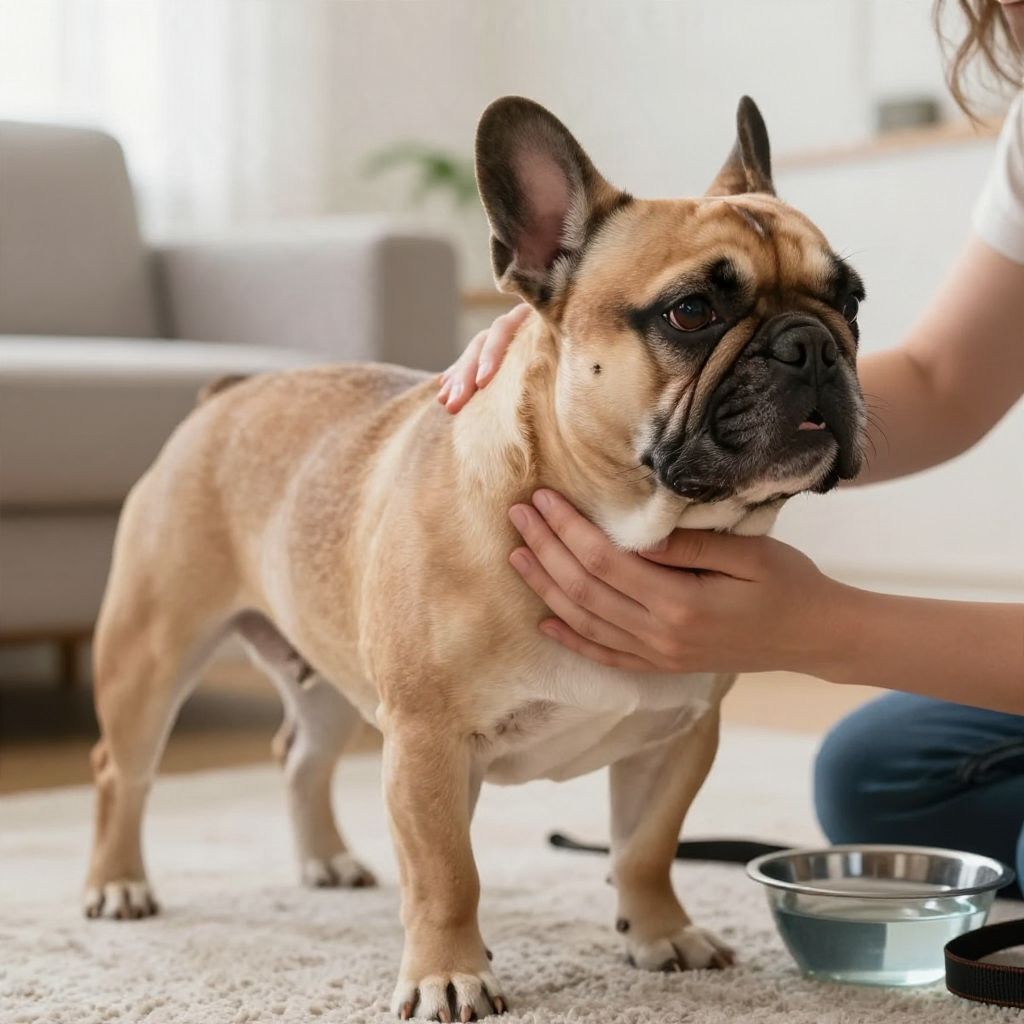
How to stop reverse sneezing in dogs starts with staying calm and helping your dog settle. Most episodes are brief and harmless, but they can look alarming, so it helps to know what to do in the moment and when a veterinary exam is needed.
You can often shorten an episode by keeping your dog calm, gently massaging the throat, and encouraging a swallow. If the episodes are frequent, last a long time, or come with breathing trouble, call your veterinarian promptly.
How To Stop Reverse Sneezing In Dogs?
To help stop reverse sneezing, keep your dog calm, gently massage the throat, and briefly cover one nostril to encourage swallowing. Move your dog away from irritants, such as dust or perfume. If the episode does not stop quickly, or your dog struggles to breathe, seek veterinary help.
What reverse sneezing looks like
Reverse sneezing is a sudden series of rapid, noisy inhalations through the nose. Your dog may stand still, extend the neck, flare the elbows, or look startled, but the episode usually ends on its own within seconds to a minute.
It can sound much worse than it is. Many dogs recover completely between episodes and act normal afterward.
How it differs from coughing or choking
- Reverse sneezing: repeated snorting or honking while breathing in.
- Coughing: forceful expulsion of air, often with a hacking sound.
- Choking or airway blockage: distress, pawing at the mouth, blue gums, or inability to breathe normally.
Step-by-step: what to do during an episode
- Stay calm. Your dog may react to your stress, so keep your voice soft and steady.
- Move to a quiet area. Reduce excitement, noise, smoke, dust, or strong scents.
- Gently massage the throat. Light pressure under the jaw or along the neck may help your dog relax.
- Encourage swallowing. A small sip of water can help some dogs reset their breathing pattern.
- Briefly close one nostril if needed. Covering one nostril for a moment may prompt a swallow and stop the episode. Do this gently and stop immediately if your dog resists.
- Watch the clock. If the episode lasts longer than usual or repeats back-to-back, contact your veterinarian.
Do not force your dog’s mouth open, stick fingers inside the mouth, or use tools to “clear” the throat. Those actions can cause injury or make the problem worse.
Common triggers you can reduce at home
Reverse sneezing often happens when the nose or throat is irritated. Some dogs are more sensitive than others, and triggers can vary by age, size, environment, and underlying health.
- Dust, pollen, or mold
- Strong perfumes, cleaning sprays, or smoke
- Pulling on the leash or collar pressure on the neck
- Excitement, rapid exercise, or sudden temperature changes
- Eating or drinking too quickly in some dogs
- Nasal irritation from infections, allergies, or a foreign object
If your dog seems to reverse sneeze after walks, grooming, or time in a dusty room, note the pattern. That information helps your veterinarian narrow down the cause.
When reverse sneezing is more likely to need a vet visit
Occasional reverse sneezing in an otherwise healthy dog is often not an emergency. Still, repeated episodes or changes in your dog’s overall condition deserve a veterinary exam.
Make an appointment soon if you notice:
- Episodes happening often or becoming more intense
- Nasal discharge, especially if it is thick, bloody, or one-sided
- Snoring, noisy breathing, or persistent coughing
- Face rubbing, pawing at the nose, or sneezing fits
- Reduced appetite, lethargy, or fever
- Symptoms that started after a new environment, grooming product, or possible irritant exposure
Seek urgent veterinary care now if your dog has:
- Blue, gray, or very pale gums
- Open-mouth breathing at rest or obvious breathing distress
- Collapse, weakness, or inability to settle
- Suspected choking or a foreign object in the nose or throat
- Swelling of the face or throat
These signs are not typical reverse sneezing and may indicate a true emergency.
What causes reverse sneezing in dogs?
Reverse sneezing is a reflex caused by irritation in the upper airway. It is a symptom, not a diagnosis, so the goal is to find and manage the trigger when possible.
Possible causes include allergies, post-nasal drip, nasal mites, a small foreign body, an upper respiratory infection, or irritation from collar pressure. In some dogs, the cause is never found, and the episodes remain mild and occasional.
Breed, age, and body type can matter
Some dogs with shorter muzzles or more delicate upper airways may seem more prone to noisy breathing issues, but not every dog of a breed will have the same problem. Puppies may also have episodes because their airways are small and easily irritated.
Older dogs or dogs with chronic respiratory disease may need closer evaluation because reverse sneezing can overlap with other breathing problems.
How to prevent episodes
You may not be able to prevent every episode, but you can often reduce how often they happen.
- Use a harness instead of a neck collar if collar pressure seems to trigger episodes.
- Keep your home free of heavy dust, smoke, and strong aerosols.
- Choose gentle grooming products and avoid spraying them near the face.
- Introduce exercise gradually, especially in hot, cold, or windy weather.
- Feed smaller meals if your dog tends to gulp food or get excited around mealtimes.
- Keep up with parasite prevention and routine veterinary care.
If allergies are suspected, your veterinarian may recommend a plan to reduce exposure or treat the underlying inflammation. Do not start medications on your own without veterinary guidance.
Common mistakes to avoid
- Panicking. Stress can make your dog more agitated during the episode.
- Assuming every noisy breath is reverse sneezing. Coughing, choking, and breathing distress need different responses.
- Using harsh handling. Restraining the head or forcing the mouth open can injure your dog.
- Ignoring frequent episodes. Repeated events may point to an underlying problem that needs treatment.
- Waiting through red-flag symptoms. Blue gums, collapse, or severe distress need urgent veterinary care.
What your veterinarian may check
If the episodes are frequent, prolonged, or accompanied by other symptoms, your veterinarian may examine the nose, throat, and chest and ask about triggers, timing, and any recent exposures. Depending on the case, they may recommend allergy management, imaging, or further testing.
This is especially important if your dog has chronic nasal discharge, repeated sneezing, or trouble breathing outside the episodes themselves.
Practical takeaway for dog owners
Most reverse sneezing episodes are short and resolve on their own. Your best response is to stay calm, reduce irritation, and use gentle techniques that encourage swallowing while watching for signs that the problem is more serious.
If the episodes are frequent, new, or paired with breathing difficulty, contact your veterinarian. For more help recognizing other breathing concerns, you may also find why is my dog breathing heavy useful, and if your dog has digestive upset at the same time, see how to stop dog diarrhea.