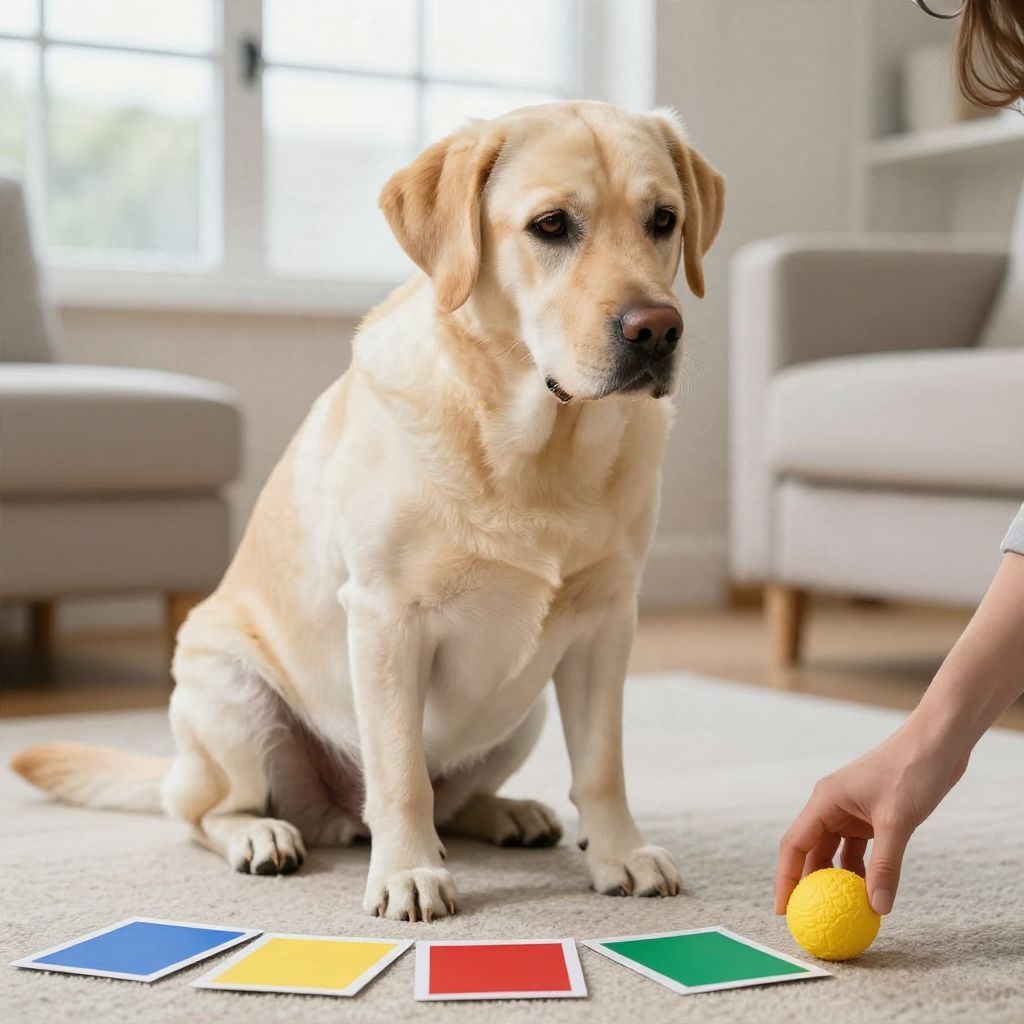
Do dogs see in color? Yes, but not the same way people do. Dogs have fewer color-detecting cells in their eyes, so their world is more limited and less vivid than ours.
That does not mean dogs see only black and white. They can still use color cues, but brightness, contrast, motion, and scent matter much more to them than a rainbow does.
Do Dogs See In Color?
Yes. Dogs can see color, but their vision is limited compared with human vision. Most dogs likely see shades of blue and yellow more clearly, while reds and greens may look muted, grayish, or hard to distinguish. Their eyesight is built more for motion and low-light awareness than for color detail.
How Dog Vision Works
To understand why dogs see color differently, it helps to know a little about the eye. Human eyes have three types of color receptors, while dogs have two. That means dogs are considered dichromatic, not fully color-blind, but they do not perceive the full spectrum people do.
What this means in everyday life
- Blue and yellow objects are usually easier for dogs to notice.
- Red, orange, and green items may blend into the background more easily.
- Dogs often rely on movement, scent, and contrast more than color alone.
This is why a bright red toy on green grass may not stand out to your dog as much as you expect, even if it looks obvious to you.
What Colors Can Dogs See Best?
Most dogs see blue and yellow best. These colors tend to stand out more clearly because they fall within the range their eyes detect more effectively. Colors such as red and green are harder for many dogs to separate, so they may appear similar or dull.
Keep in mind that vision can vary with age, eye health, breed tendencies, and individual differences. A dog with cataracts, retinal disease, or another eye condition may see color and contrast differently from a healthy adult dog.
Simple way to think about it
- More visible: blue, yellow
- Less distinct: red, green, orange
- Most useful cues: movement, contrast, smell
Do Dogs See Only Black And White?
No. That is a common myth. Dogs do not see the world in black and white only. Instead, they see a narrower color range than humans, with less ability to distinguish some colors. Their vision is still colorful, just not as richly varied as ours.
This misunderstanding often leads people to choose toys, bowls, or training gear based on human preferences rather than canine vision. A dog may ignore a toy that looks flashy to you simply because it does not stand out well to them.
Why Color Matters For Dog Safety And Training
Color can matter when you choose toys, training tools, or outdoor gear. Using colors your dog can see more easily may make play and training simpler, especially for fetch, agility, and recall practice.
Helpful practical choices
- Choose blue or yellow toys for grass, sand, or mixed outdoor backgrounds.
- Use high-contrast items when teaching fetch or retrieve.
- Pick mats, bowls, or markers that stand out from the floor if your dog has vision challenges.
That said, color is only one part of visibility. A bright toy can still be hard to find if it is small, hidden in brush, or not scented well enough to interest your dog.
Best Toy Colors For Dogs
If you want to make toys easier for your dog to spot, blue and yellow are usually the safest bets. These colors often provide the strongest visual contrast for dogs, especially outdoors. Many dog toys are now made in these shades for that reason.
Tips for choosing toys
- Pick a color that contrasts with the play area.
- Choose larger toys if your dog has trouble tracking small objects.
- Use textured or squeaky toys if your dog responds well to sound and feel.
- Rotate toys so your dog stays engaged without needing constant novelty.
If your dog ignores a toy, it may not be because they are stubborn. It may simply be difficult for them to see, smell, or understand in that setting.
How Age And Eye Health Affect Color Vision
Color vision is not fixed for every dog. Puppies, adult dogs, and senior dogs can all experience vision differently, and eye disease can change how a dog sees. Older dogs may also have reduced contrast sensitivity, making it harder to navigate dim areas or spot objects.
Watch for possible vision changes
- Bumping into furniture or walls
- Reluctance to go into dark rooms or down stairs
- Hesitation in new environments
- Cloudy eyes, redness, squinting, or discharge
- Sudden changes in confidence or movement
If you notice sudden vision changes, eye pain, or a rapid decline in your dog’s ability to navigate, contact a veterinarian promptly. Eye problems can become urgent, especially if they happen quickly.
Does Breed Change How Dogs See Color?
Breed can influence general eye shape, facial structure, and risk for certain eye conditions, but no breed sees exactly the same way as another. Some dogs may be more prone to inherited eye disease or structural issues that affect vision, while others may have fewer problems. Individual health matters more than breed labels alone.
Rather than assuming a breed “sees better” or “sees worse,” pay attention to your own dog’s behavior, eye health, and comfort in different environments. If your dog seems unusually hesitant, clumsy, or visually distracted, a veterinary exam is the best next step.
How To Help Your Dog In A Color-Based World
You do not need to redesign your whole home for your dog’s vision, but a few small changes can make daily life easier. Focus on contrast, consistency, and clear cues.
At home
- Keep walking paths clear of clutter.
- Use non-slip rugs or mats if your dog is older or unsure on smooth floors.
- Place food and water bowls in a consistent location.
- Use night lights in hallways if your dog moves around after dark.
During training
- Use simple, consistent cues.
- Reward with treats, praise, or play when your dog responds correctly.
- Choose visual markers that contrast with the background.
- Pair visual cues with sound or scent when helpful.
Positive reinforcement works well because it does not depend on perfect vision. Your dog learns from clear repetition and rewarding outcomes, not from punishment or intimidation.
Common Mistakes People Make
One common mistake is assuming a dog should notice any brightly colored item just because humans can. Another is using low-contrast toys or training props and then thinking the dog is being uncooperative.
- Assuming black-and-white vision: dogs do see color, just differently.
- Using only red or green markers: these may be hard for many dogs to distinguish.
- Ignoring eye discomfort: squinting or cloudiness should not be brushed off.
- Expecting color to do all the work: scent, sound, and motion are also important.
When To Call A Veterinarian
Contact your veterinarian if your dog’s vision seems to change, if they start avoiding familiar spaces, or if you notice any signs of eye discomfort. Some causes are mild, but others need prompt treatment to protect eyesight.
Seek urgent veterinary care if your dog has sudden blindness, a painful or swollen eye, trauma to the eye, severe redness, a bulging eye, or a sudden change in behavior that suggests distress. Do not wait to see if it improves on its own.
The Bottom Line On Dog Color Vision
Dogs do see in color, but not like you do. They are better at noticing blue and yellow than red and green, and they rely heavily on contrast, movement, and scent. If you choose toys, training tools, and home setups with that in mind, you can make life easier and more engaging for your dog.
If you want to learn more, you may also find these related guides helpful: colors dogs can see and can dogs see colors.