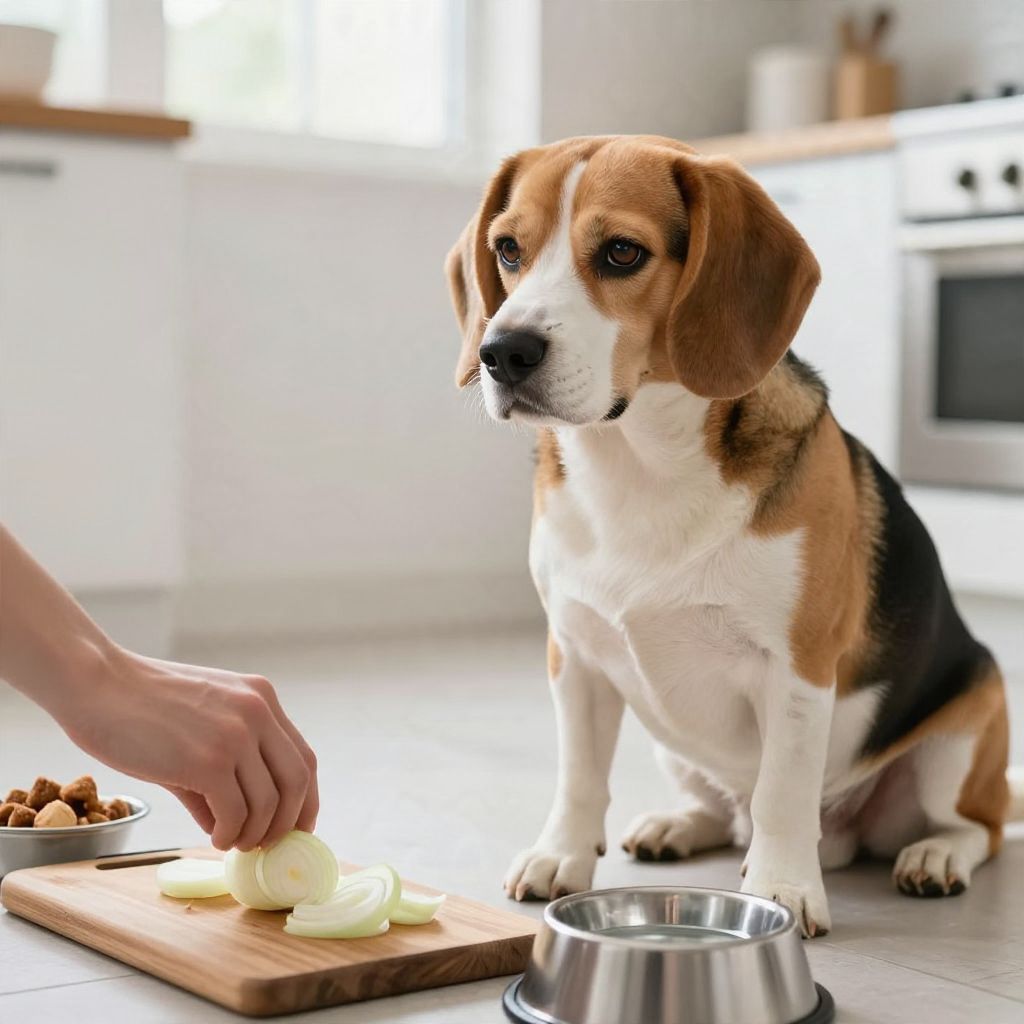
Why are onions bad for dogs? Onions contain compounds that can damage a dog’s red blood cells and lead to anemia. This risk applies to raw, cooked, powdered, dehydrated, and concentrated forms, so even small amounts can matter depending on the dog and the product.
If your dog ate onion, the safest next step is to contact your veterinarian or a pet poison helpline right away. Early guidance matters because symptoms may not appear immediately, and treatment is most effective before serious blood damage develops.
Why Are Onions Bad for Dogs?
Onions are bad for dogs because they contain organosulfur compounds that can cause oxidative damage to red blood cells. That damage can make it harder for the body to carry oxygen, which may lead to weakness, pale gums, vomiting, or more serious anemia. All forms of onion can be risky.
What Makes Onion Toxic to Dogs?
The concern is not just the taste or the smell. Onion toxicity comes from natural chemicals in the plant that can injure a dog’s red blood cells after ingestion.
This can happen with:
- Raw onion
- Cooked onion
- Fried onion
- Onion powder
- Dehydrated onion
- Soups, sauces, seasonings, and baby foods that contain onion
Powdered and dehydrated forms can be especially easy to overlook because they are concentrated and often hidden in packaged foods.
What Symptoms Should You Watch For?
Signs may not show up right away. Some dogs seem fine at first, then develop symptoms hours or even days later as red blood cells are affected.
Common signs of onion poisoning
- Vomiting
- Diarrhea
- Drooling
- Lack of appetite
- Weakness or tiredness
- Pale gums
- Fast breathing or panting
- Dark urine
- Collapse in severe cases
Emergency warning signs
Get urgent veterinary help now if your dog has trouble breathing, collapses, has very pale gums, seems extremely weak, or cannot stand. These can be signs of serious anemia or another emergency.
How Much Onion Is Dangerous for Dogs?
There is no safe amount you can count on for every dog. Risk depends on the dog’s size, health, age, how much was eaten, and whether the onion was raw, cooked, or concentrated in a seasoning or food.
Because individual sensitivity varies, it is best not to guess. A small dog may be affected by less than a larger dog, and repeated small exposures can also become a problem.
What Should You Do If Your Dog Ate Onion?
Act quickly and calmly. Do not wait for symptoms to appear before asking for help.
- Remove any remaining onion or onion-containing food.
- Check the ingredient list if the food was prepared or packaged.
- Call your veterinarian, an emergency clinic, or a pet poison helpline.
- Tell them your dog’s weight, what was eaten, how much, and when.
- Follow their instructions exactly.
Do not try to make your dog vomit unless a veterinarian specifically tells you to do so. Some situations make vomiting unsafe, and the wrong approach can cause more harm.
Why Even Cooked Onion Can Be a Problem
Cooking does not make onion safe for dogs. The toxic compounds remain present after sautéing, roasting, boiling, or baking.
That means common human foods can still be risky, including:
- Soups and stews
- Gravy and sauces
- Casseroles
- Pizza toppings
- Seasoned meats
- Leftovers from restaurant meals
Foods that contain onion powder are also a concern, even if you cannot see onion pieces in the dish.
Are Some Dogs More at Risk?
Any dog can be affected, but some situations increase concern. Smaller dogs may be more vulnerable because they can receive a larger dose relative to body size. Puppies, senior dogs, and dogs with existing illness may also have less reserve if anemia develops.
Dogs with certain health conditions may need faster evaluation because they may not tolerate red blood cell damage as well. Your veterinarian can help assess the risk based on your dog’s individual situation.
How Veterinarians May Handle Onion Exposure
What happens next depends on timing, amount, and symptoms. If the exposure was recent, a veterinarian may recommend decontamination or monitoring. If your dog is already showing signs, they may need examination and testing.
Possible veterinary steps can include:
- Physical exam
- Bloodwork to check red blood cells
- Urine testing if needed
- Supportive care for vomiting, dehydration, or weakness
- Hospital monitoring in more serious cases
Do not assume your dog is fine just because they acted normal at first. Onion-related anemia can develop after a delay.
How to Prevent Onion Accidents at Home
Prevention is usually straightforward once you know where onion hides. The biggest risk is often not a whole onion on the floor, but scraps, leftovers, and seasoned foods.
- Keep onions and onion-containing foods out of reach.
- Store leftovers securely and clean counters promptly.
- Check labels on soups, broths, sauces, and seasoning mixes.
- Remind family members and guests not to share table food.
- Use dog-safe treats instead of scraps from human meals.
If you cook for your family and your dog is nearby, be especially careful with chopping boards, cutting scraps, and trash bins. Dogs are often quick to investigate dropped food.
Common Mistakes Dog Owners Make
Onion exposure is easy to underestimate because the food may not look dangerous.
- Thinking a little onion is harmless
- Assuming cooked onion is safe
- Forgetting about onion powder in seasoning blends
- Waiting for symptoms before calling a vet
- Using home remedies instead of getting professional advice
If you are unsure whether a food contained onion, it is better to ask than to guess. Ingredient labels and restaurant ingredients can be surprisingly unclear.
What Foods Are Safer Instead?
If you want to share a treat, choose simple dog-safe options rather than human foods seasoned with onion or garlic. Safe choices should still fit your dog’s regular diet and any veterinary dietary restrictions.
Examples of generally dog-friendly treats include plain cooked vegetables or small amounts of vet-approved commercial treats. Keep portions modest so treats do not replace balanced nutrition.
When to Call the Vet Even If Your Dog Seems Fine
Call your veterinarian if your dog ate onion and you are unsure how much was consumed, especially if the food was seasoned, packaged, or mixed into a meal. It is also wise to call if your dog has a history of illness or if the exposure happened more than once.
Prompt advice is important because onion toxicity can be delayed, and early intervention may reduce the chance of complications.
Bottom Line
Why are onions bad for dogs? They can damage red blood cells and cause anemia, and all forms of onion can be risky. If your dog ate onion, contact your veterinarian right away, watch for warning signs, and keep onion-containing foods out of reach to prevent future accidents.
If you want to learn more about related risks, see can dogs have onion and how much garlic is toxic to dogs.