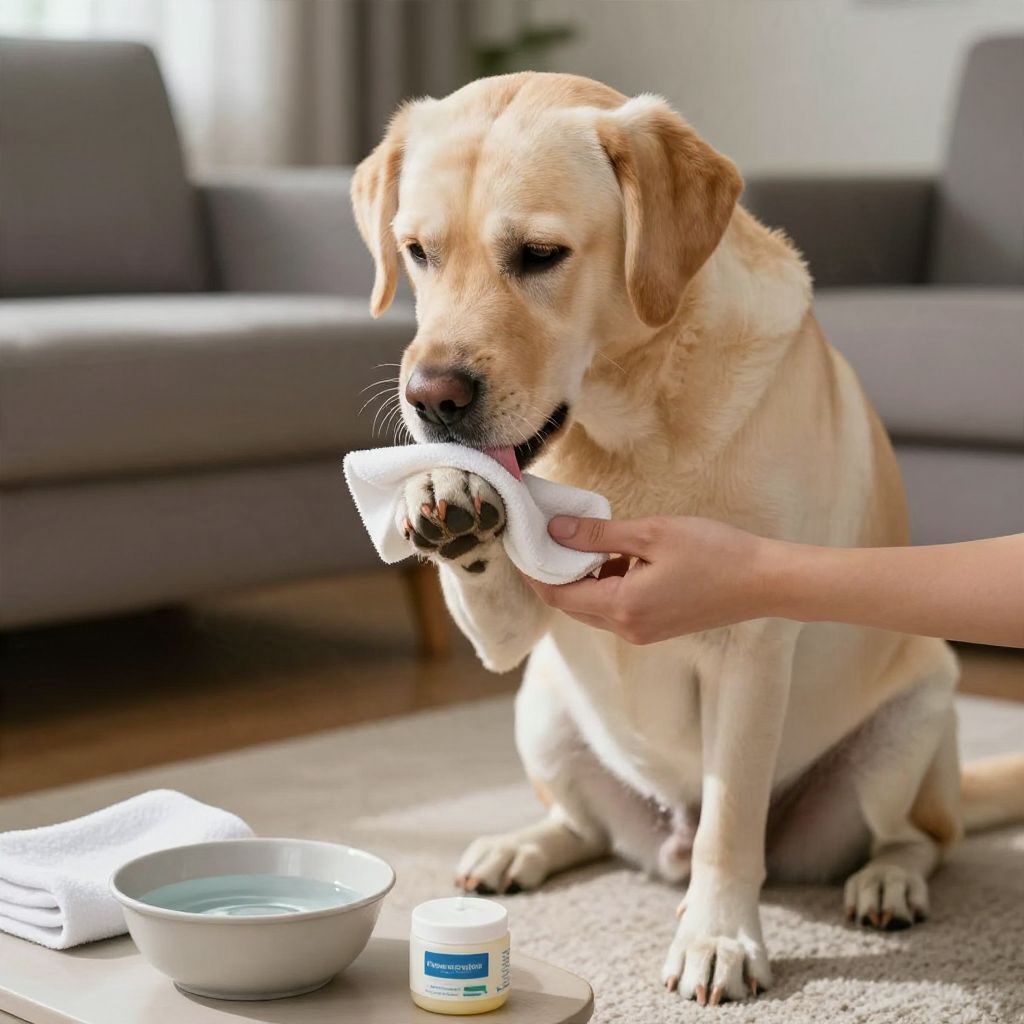
If you’re wondering how to stop dog from licking paws home remedy, the safest first step is to look for the cause. Paw licking can come from allergies, irritation, pain, parasites, anxiety, or a foreign object, and home care helps most when it reduces inflammation and prevents more licking.
For mild cases, you can clean the paws, dry them well, check for debris, and use simple management to break the cycle. If the licking is sudden, intense, or paired with redness, swelling, limping, odor, or wounds, your dog needs a veterinarian.
How to stop dog from licking paws home remedy?
The best home approach is to gently clean and dry the paws, remove obvious irritants, limit licking with safe barriers, and watch for patterns that point to allergies or pain. Use home care only for mild irritation. If the paw looks infected, painful, or keeps getting worse, call your vet.
Why dogs lick their paws
Paw licking is a symptom, not a diagnosis. Some dogs lick because something is bothering the skin, while others lick to soothe stress or boredom.
- Allergies: Environmental allergens, grass, dust, or food sensitivities can make paws itchy.
- Irritation: Salt, mud, pollen, lawn chemicals, or rough surfaces can bother the feet.
- Injury or pain: A cut, thorn, nail problem, sprain, or joint pain may lead to licking.
- Parasites: Fleas or mites can trigger itch and skin inflammation.
- Anxiety or boredom: Some dogs lick as a self-soothing habit.
- Infection: Yeast or bacterial skin infections can cause odor, redness, and repeated licking.
Because the cause varies by dog, breed, age, activity level, and health history, the most effective fix is the one that matches the trigger.
Step-by-step home care for mild paw licking
- Inspect the paw closely. Look between the toes, around the pads, and under the nails for thorns, grass awns, cuts, swelling, redness, or stuck debris.
- Rinse the paw with lukewarm water. This helps remove pollen, salt, dirt, and other irritants. Keep the rinse gentle.
- Dry thoroughly. Moisture trapped between the toes can worsen skin irritation and encourage yeast growth.
- Prevent more licking. Use a cone, recovery collar, or a vet-approved protective bootie if your dog keeps bothering the paw.
- Reduce exposure to triggers. Wipe paws after walks, avoid freshly treated lawns, and rinse after beach or salted-road exposure.
- Monitor for 24 to 48 hours. If the licking settles and the skin looks normal, continue basic paw care and watch for recurrence.
Safe home remedies that may help
These are supportive measures, not cures. They are most useful when the problem is mild and you have already ruled out obvious injury.
1. Paw washing after walks
A simple rinse can remove common irritants. Drying matters just as much as washing, especially in dogs with fluffy feet or skin folds between the toes.
2. Cool compresses
If the paw looks mildly irritated but not open or bleeding, a cool compress for a short period may calm the skin. Keep it gentle and stop if your dog resists or seems uncomfortable.
3. Protective barriers
Booties, socks used with supervision, or a cone can interrupt the licking cycle. The goal is to protect the skin while it calms down, not to make your dog miserable.
4. Environmental cleanup
If your dog licks after walks, try wiping the paws and lower legs before coming inside. For some dogs, changing walking routes or avoiding known irritants makes a big difference.
5. Enrichment and routine
For dogs that lick from stress or boredom, more exercise, sniffing games, food puzzles, and predictable routines can help. Reward calm behavior instead of scolding the licking.
What not to do at home
Some common “remedies” can make the problem worse or delay proper treatment.
- Do not use harsh chemicals, essential oils, or strong disinfectants on the skin.
- Do not apply human creams, sprays, or pain relievers unless your veterinarian tells you to.
- Do not wrap the paw tightly or leave a wet bandage on it.
- Do not punish your dog for licking; it usually increases stress and does not solve the cause.
- Do not assume every itchy paw is “just allergies” without checking for injury or infection.
When paw licking needs a vet visit
Home care is not enough if the licking is persistent or the skin is already damaged. A veterinarian can check for infection, foreign bodies, pain, allergies, parasites, or other medical causes.
Call your vet soon if you notice:
- Redness that does not improve
- Swelling between the toes or around the nails
- Bad odor, discharge, or greasy skin
- Hair loss, scabs, or darkened skin
- Limping or reluctance to bear weight
- Licking that keeps returning in the same paw
Seek urgent care if you notice:
- Bleeding that will not stop
- A deep cut, puncture, or embedded object
- Severe swelling, heat, or obvious pain
- A sudden inability to walk normally
- Signs of a serious allergic reaction, such as facial swelling, vomiting, trouble breathing, or collapse
How age and lifestyle can affect paw licking
Young dogs, active dogs, and seniors may lick for different reasons. Puppies often lick after exploring irritating surfaces, while older dogs may lick because of arthritis, nail discomfort, or skin changes.
- Puppies: Watch for chewing, teething-related mouth habits, and irritants from outdoor play.
- Adult dogs: Consider allergies, repetitive contact with grass or pavement, and stress-related licking.
- Senior dogs: Pain, mobility changes, and skin fragility can make paw licking more common.
Breed can matter too, but only as a tendency. Some dogs are more prone to allergies or skin irritation, yet any dog can develop paw licking if the trigger is present.
How to prevent paw licking from coming back
Prevention works best when you combine grooming, observation, and trigger control.
- Check paws regularly for cuts, burrs, and nail problems.
- Keep nails trimmed so they do not change how your dog walks.
- Dry paws after baths, rain, snow, or swimming.
- Use flea prevention recommended by your veterinarian.
- Note when licking happens, such as after walks, meals, or stressful events.
- Work with your vet if you suspect allergies or chronic skin disease.
When the cause may be behavioral
If the paws look normal and the licking happens mostly when your dog is resting, alone, or stressed, the habit may have a behavioral component. That does not mean it is “all in their head”; stress can still create real skin irritation over time.
Helpful steps include more exercise, mental enrichment, calm training, and reducing triggers like long periods of boredom or separation. If the habit is hard to interrupt, a certified trainer or veterinary behaviorist can help you build a plan that is humane and practical.
Simple troubleshooting guide
- If the paw is dirty: rinse and dry it.
- If there is a visible object: do not dig deeply; contact your vet if you cannot remove it easily.
- If the skin is red but intact: protect the paw and monitor closely.
- If there is odor, discharge, or swelling: book a vet visit.
- If licking is constant: treat it as a medical or behavioral issue, not a minor habit.
Conclusion
To stop dog from licking paws home remedy style, start with a careful paw check, gentle cleaning, thorough drying, and safe prevention of more licking. If the problem does not improve quickly, or if you see pain, swelling, odor, or limping, get veterinary help promptly so the real cause can be treated.
If you want to learn more, see why dogs lick their paws and, if stomach upset is part of the picture, how to stop dog diarrhea.