
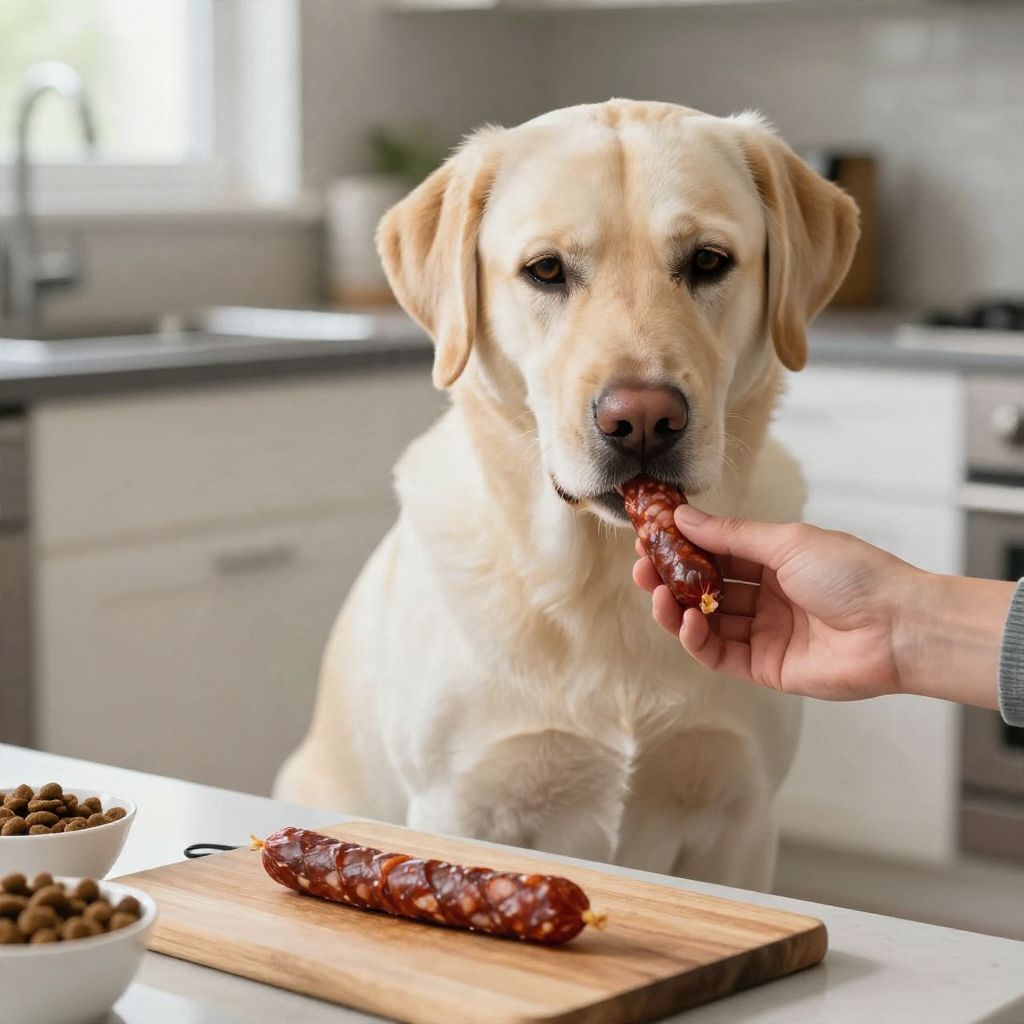
Can dogs eat chorizo? In most cases, no—it’s not a good choice for dogs. Chorizo is usually high in fat, salt, and spices, and some versions contain ingredients that can upset your dog’s stomach or be harmful in larger amounts.
If your dog stole a small bite, they may be fine, but you should watch for vomiting, diarrhea, drooling, or belly pain. If they ate a lot, or your dog has a sensitive stomach or a history of pancreatitis, call your veterinarian for advice.
Can dogs eat chorizo?
Dogs should not regularly eat chorizo. It is typically too fatty, too salty, and often seasoned with garlic, onion, chili, or other spices that can irritate a dog’s digestive system. A tiny accidental nibble may not cause harm, but chorizo is not a safe or healthy treat.
Why chorizo is risky for dogs
Chorizo is made for human taste, not canine nutrition. Even when it is cooked, the combination of fat, sodium, and seasoning can make it hard for dogs to digest.
High fat content
Fatty foods can trigger stomach upset in many dogs. In some dogs, especially those prone to digestive trouble or pancreatitis, a rich food like chorizo can be a serious problem.
Salt and seasonings
Chorizo is usually heavily salted and spiced. Too much sodium can make dogs excessively thirsty and, in larger amounts, can contribute to more serious illness. Spices may also cause vomiting, diarrhea, or mouth irritation.
Problem ingredients
Some chorizo recipes include garlic or onion powder, which are not appropriate for dogs. Even if the amount in one serving is small, it is still best to avoid making chorizo a habit.
What happens if a dog eats chorizo?
Many dogs that eat a small piece will only have mild stomach upset, if any. Others may react more strongly, depending on their size, age, health, and how much they ate.
- Vomiting
- Diarrhea
- Drooling
- Gas or bloating
- Reduced appetite
- Abdominal discomfort
These signs can show up within hours, but some digestive problems develop later. If symptoms are persistent, severe, or your dog seems unwell, contact your veterinarian.
When chorizo becomes an emergency
Some situations need urgent veterinary care. Do not wait at home if your dog shows any of the following after eating chorizo:
- Repeated vomiting
- Severe diarrhea or diarrhea with blood
- A swollen, painful, or hard belly
- Extreme lethargy or weakness
- Trouble breathing
- Collapse
- Signs of dehydration, such as dry gums or refusing water
If you think the chorizo contained a large amount of garlic or onion, or if your dog ate a very large portion, call your veterinarian promptly for guidance.
Does it matter what kind of chorizo it is?
Yes. Different types of chorizo can carry different risks, but none are a good routine treat for dogs.
Cooked chorizo
Cooked chorizo is still usually too fatty and salty for dogs. Cooking does not remove the seasoning or make it a healthy option.
Raw chorizo
Raw sausage products can carry a higher risk of bacterial contamination. Raw meat products also tend to be rich and messy, which can increase the chance of digestive upset.
Dry or cured chorizo
Cured versions are often especially high in salt. That makes them a poor choice for dogs, even in small amounts.
If your dog already ate chorizo, what should you do?
Stay calm and figure out how much your dog ate, what type it was, and whether it contained garlic, onion, or other strong seasonings. That information helps your veterinarian judge the risk.
- Remove any remaining chorizo so your dog cannot eat more.
- Check the ingredient list if you still have the package.
- Offer fresh water.
- Monitor your dog for vomiting, diarrhea, abdominal pain, or unusual behavior.
- Call your veterinarian if the amount was large, the ingredients are concerning, or your dog has symptoms.
Do not try to make your dog vomit unless a veterinarian specifically tells you to do so.
Which dogs are at higher risk?
Any dog can get an upset stomach from chorizo, but some dogs are more likely to have problems.
- Dogs with a history of pancreatitis
- Dogs with sensitive stomachs
- Small dogs, because even a small amount can be a relatively large rich snack
- Older dogs, who may tolerate rich foods less well
- Dogs with heart or kidney conditions, who may need to limit sodium
Breed alone does not determine the outcome. Individual health history, body size, and how much was eaten matter more.
Can puppies eat chorizo?
Puppies should not eat chorizo. Their digestive systems are still developing, and rich or spicy foods can cause more noticeable stomach upset. Puppies also need balanced nutrition for growth, so human sausage is not a useful snack for them.
If a puppy ate chorizo, watch closely for vomiting, diarrhea, low energy, or refusal to eat. Because puppies can become dehydrated more quickly than adult dogs, contact your veterinarian sooner rather than later if symptoms appear.
Safer alternatives to chorizo
If you want to share a treat, choose something simple and dog-safe instead of seasoned sausage. Keep treats small and make them only a small part of your dog’s daily intake.
- Plain cooked chicken or turkey with no seasoning
- Small pieces of plain cooked lean meat
- Dog treats made for your dog’s size and diet
- Some dogs may enjoy plain vegetables, such as carrot pieces, if they tolerate them well
Always avoid adding salt, onion, garlic, hot spices, or sauces when preparing food for your dog.
Common mistakes to avoid
People often assume that a “little bit” of a human food is harmless. With chorizo, that can be a risky assumption because the seasoning and fat content matter as much as the amount.
- Feeding chorizo as a regular treat
- Using chorizo to hide medication without veterinary approval
- Giving leftovers from tacos, pizza, or breakfast plates that include sausage and seasoning
- Ignoring vomiting or diarrhea after a rich meal
If your dog has a sensitive stomach, it is especially important to keep rich table scraps off the menu.
When to call your veterinarian
Call your veterinarian if your dog ate more than a tiny taste, if the chorizo contained garlic or onion, or if your dog has any health condition that makes fatty or salty foods more concerning. You should also call if your dog seems uncomfortable even without obvious vomiting or diarrhea.
If your dog is acting normal after a small accidental bite, your vet may simply recommend monitoring at home. If symptoms develop, seek advice promptly rather than waiting them out.
For more food-safety questions, you may also find it helpful to read about whether dogs can have sausage and whether ham is bad for dogs.
The bottom line: dogs should not eat chorizo as a treat or meal. If your dog only had a small accidental bite, monitor them closely, but if they ate a lot or show any warning signs, contact your veterinarian right away.