
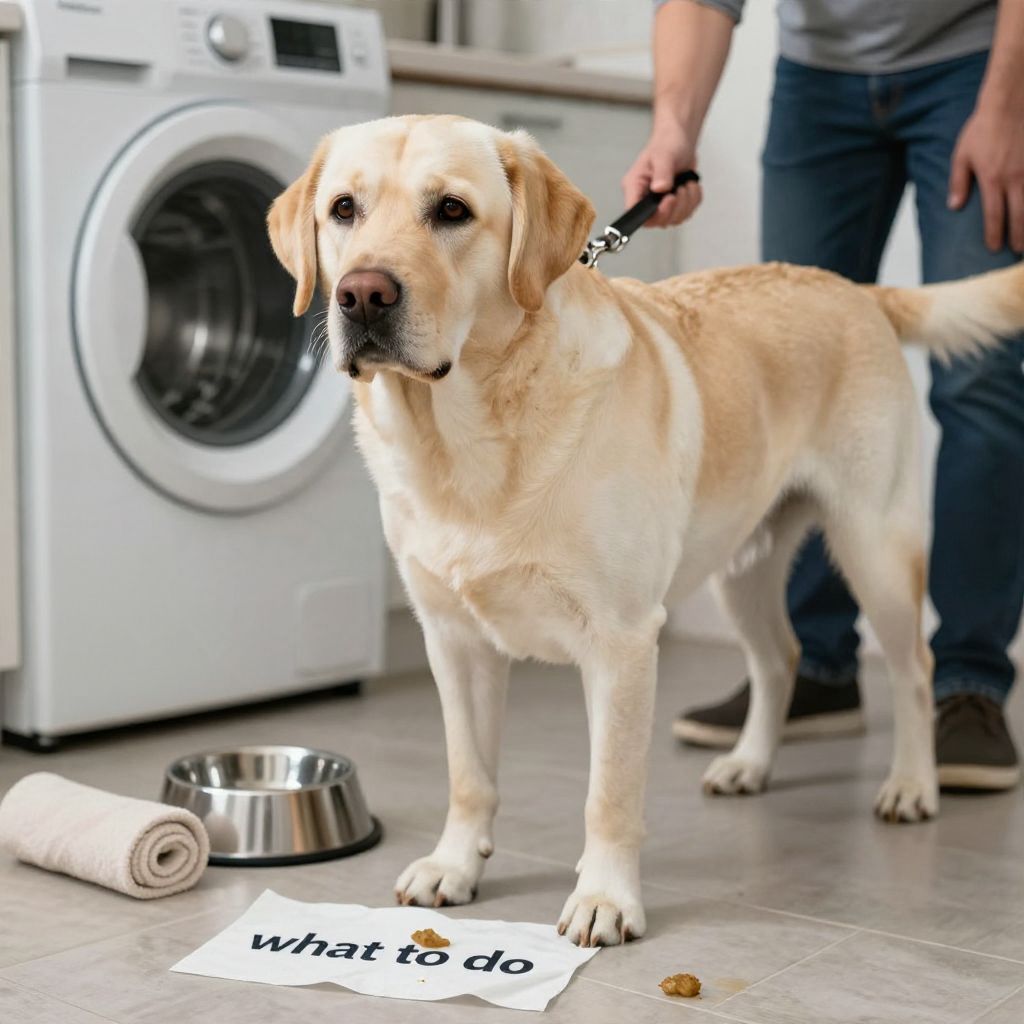
If your dog has diarrhea, start by checking how they feel overall. A single loose stool in an otherwise bright, drinking, and playful dog may be less urgent than diarrhea with vomiting, weakness, or blood.
Most mild cases improve with careful monitoring, a bland diet only if your veterinarian says it is appropriate, and plenty of water. Because diarrhea can also signal infection, parasites, dietary upset, toxins, or another illness, know the warning signs that need prompt veterinary care.
What to do if your dog has diarrhea
If your dog has diarrhea, keep them hydrated, stop access to any new foods or trash, and watch for red-flag symptoms. Offer a vet-approved bland diet if your dog is otherwise well, but contact a veterinarian quickly if diarrhea is severe, repeated, bloody, or paired with vomiting, pain, lethargy, or dehydration.
First steps to take at home
When diarrhea starts, focus on safety and observation. The goal is to reduce irritation, prevent dehydration, and gather useful details for your veterinarian if the problem continues.
- Remove possible triggers. Pick up garbage, spoiled food, bones, toys that were chewed apart, and anything your dog may have eaten outside.
- Offer fresh water. Keep clean water available at all times. Some dogs drink less when nauseated, so monitor intake closely.
- Track the stool. Note how often it happens, whether it is watery or soft, and whether you see mucus, black tarry stool, or blood.
- Limit stress and overexertion. Quiet rest can help, especially if your dog seems tired or unsettled.
- Call your veterinarian if you are unsure. It is better to ask early than to wait if your dog is very young, old, or already ill.
When diarrhea is an emergency
Some dogs need urgent veterinary attention right away. Do not wait at home if you notice any of the following:
- Blood in the stool or black, tarry stool
- Repeated vomiting or inability to keep water down
- Marked weakness, collapse, or extreme lethargy
- Signs of dehydration such as dry gums, sunken eyes, or very little urination
- Swollen abdomen, obvious pain, or repeated unproductive retching
- Possible toxin exposure such as medications, chemicals, xylitol, chocolate, grapes, raisins, or trash
- A puppy, toy-breed dog, senior dog, or medically fragile dog with diarrhea, because they can worsen faster
If your dog has diarrhea plus any of these signs, contact an emergency veterinarian immediately.
Why dogs get diarrhea
Diarrhea is a symptom, not a diagnosis. It can happen for many reasons, and the right response depends on the cause, your dog’s age, and how sick they seem.
Common causes
- Dietary changes or eating too much rich food
- Garbage, table scraps, or unfamiliar treats
- Stress, travel, or changes in routine
- Intestinal parasites such as worms or Giardia
- Viral or bacterial infections
- Food intolerance or sensitivity
- Inflammatory bowel disease or other digestive disorders
- Medication side effects
- Foreign material in the gut
- Toxin exposure
Some dogs are more sensitive than others. Puppies, dogs with chronic disease, and dogs with a history of digestive upset may need earlier veterinary evaluation than a healthy adult with a mild, short-lived episode.
What you can safely do while monitoring your dog
Supportive care is often about preventing worsening symptoms while you wait to see whether the diarrhea resolves. Keep things simple and avoid making sudden changes unless your veterinarian recommends them.
- Keep water available. Encourage small, frequent drinks rather than large amounts at once if your dog is nauseated.
- Feed only what your veterinarian advises. Some dogs do well with a temporary bland diet, but not every dog should fast or change food without guidance.
- Observe appetite and energy. A dog that is still eating, drinking, and acting normally is generally less concerning than one that is quiet or refusing food.
- Use a leash for potty breaks. This helps you monitor stool and prevents scavenging.
- Keep the environment calm. Stress can make some digestive problems worse.
What not to do
- Do not give human anti-diarrheal or pain medications unless your veterinarian specifically tells you to.
- Do not force food if your dog is vomiting or seems very unwell.
- Do not assume diarrhea is “just something they ate” if it lasts more than a day or two.
- Do not use harsh home remedies or random supplements without veterinary advice.
How age and size affect the risk
Not all dogs handle diarrhea the same way. Age, body size, and existing health problems can change how quickly a dog becomes dehydrated or how concerning the cause may be.
Puppies
Puppies can deteriorate quickly because they have smaller fluid reserves and are more vulnerable to parasites and infections. Even mild diarrhea in a puppy deserves closer attention, especially if the puppy is not fully vaccinated or has not been dewormed on schedule.
Adult dogs
A healthy adult with one or two loose stools and no other symptoms may be monitored briefly at home, but persistent diarrhea still needs a veterinary call. Repeated episodes can lead to dehydration and may point to a diet issue, parasites, or illness.
Senior dogs
Older dogs may have less reserve and may also have kidney, liver, pancreatic, or bowel disease. If a senior dog has diarrhea, especially with vomiting or reduced appetite, contact your veterinarian sooner rather than later.
Small dogs
Small dogs can become dehydrated faster than larger dogs, so even a short bout of diarrhea may matter more. Watch closely for weakness, trembling, or reduced drinking.
When to call the veterinarian
You should contact your veterinarian if diarrhea lasts more than 24 hours in a puppy, more than 48 hours in an adult dog, or sooner if your dog seems unwell. Also call if the diarrhea keeps returning, even if it improves between episodes.
Your veterinarian may ask about diet, treats, access to trash, travel, medications, vaccination status, and parasite prevention. Depending on the case, they may recommend a physical exam, stool testing, or other diagnostics.
Questions your vet may ask
- How long has the diarrhea been happening?
- Is there vomiting, fever, pain, or appetite loss?
- What does the stool look like?
- Has your dog eaten anything unusual?
- Is your dog on parasite prevention?
- Has there been a diet change recently?
Having this information ready can help your veterinarian narrow down the cause more efficiently.
Common mistakes to avoid
When you are worried, it is easy to make the problem harder to assess. Avoid these common missteps:
- Changing foods repeatedly. Too many switches can make diarrhea worse and confuse the picture.
- Giving rich “comfort” foods. Fatty table scraps can aggravate the stomach and pancreas.
- Ignoring blood or black stool. These are not normal and need veterinary attention.
- Waiting too long in young or frail dogs. Dehydration can develop quickly.
- Assuming stress is the only cause. Stress can contribute, but it should not be the only explanation if symptoms persist.
How to help prevent future episodes
Once your dog recovers, prevention is about consistency and supervision. Many dogs with sensitive stomachs do best when their diet and routine stay predictable.
- Transition to new food gradually, not all at once.
- Keep trash, compost, and spoiled food out of reach.
- Use parasite prevention as recommended by your veterinarian.
- Limit rich treats and table food.
- Supervise dogs that like to scavenge outdoors.
- Keep vaccinations and routine wellness care current.
If your dog has repeated digestive upset, ask your veterinarian whether a food trial, stool testing, or further evaluation makes sense. Chronic diarrhea should not be managed by guesswork.
Bottom line
If your dog has diarrhea, watch closely, keep them hydrated, remove possible triggers, and contact a veterinarian if symptoms are severe, persistent, or paired with vomiting, blood, pain, or weakness. Quick action is especially important for puppies, seniors, and dogs with existing health problems.
For more help, you may also find these related guides useful: how to help a dog with diarrhea and how to stop dog diarrhea.