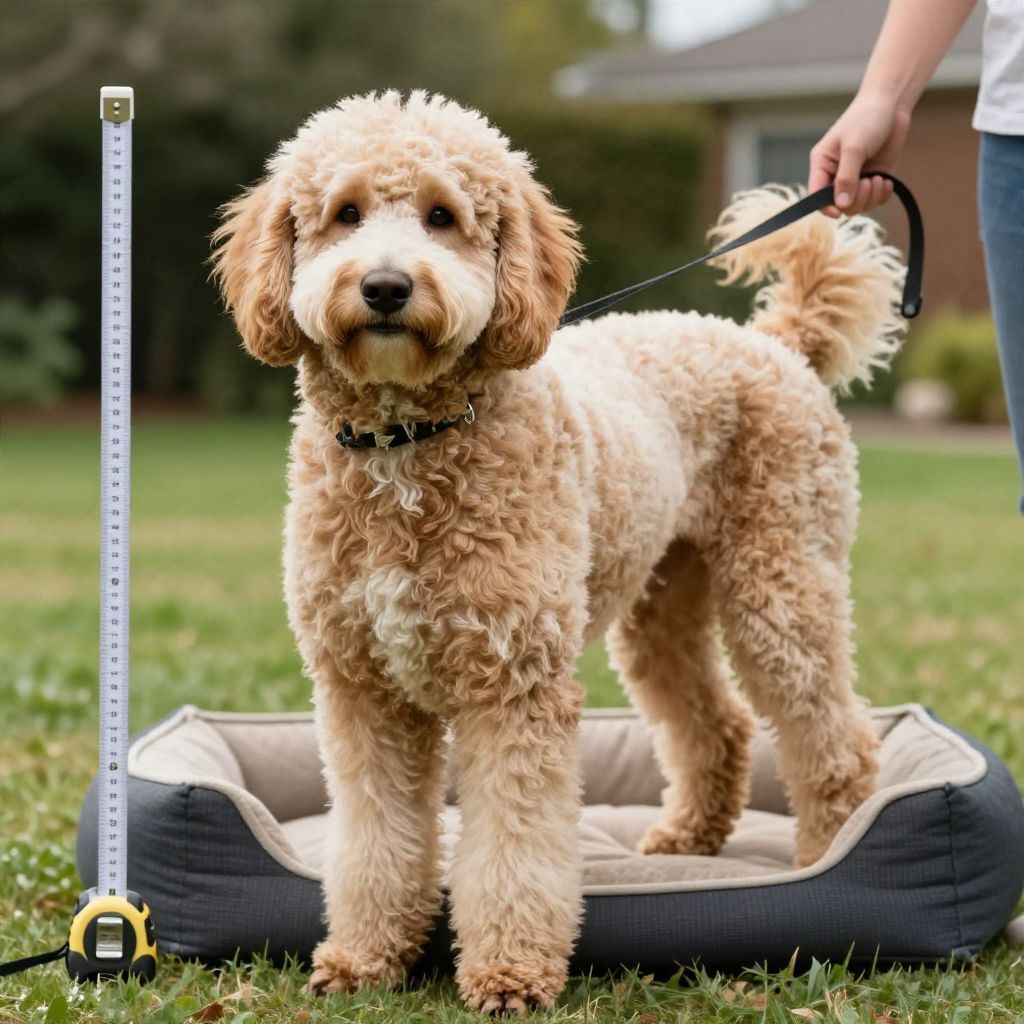
How big do Mini Goldendoodles get? In most cases, adult Mini Goldendoodles land in the small-to-medium range, but their final size depends on the size of the parent dogs, genetics, and whether they mature a little larger or smaller than expected.
If you are choosing one for your home, it helps to think in ranges rather than exact promises. A responsible breeder or rescue can often give you a better estimate based on the puppy’s parents, current growth, and overall body structure.
How big do Mini Goldendoodles get?
Mini Goldendoodles usually grow to about 13 to 20 inches tall and roughly 15 to 35 pounds, though some may be a bit outside that range. Their adult size depends mostly on genetics, especially the size of the Poodle parent, and individual dogs can mature at different rates.
What affects a Mini Goldendoodle’s adult size?
Mini Goldendoodles are mixed-breed dogs, so size is not as predictable as with some purebred dogs. The biggest factors are the parent dogs’ sizes, the puppy’s sex, overall health, and natural variation in growth.
Parent size matters most
If the Poodle parent is smaller, the puppies are more likely to stay on the lighter end of the range. If either parent is larger than expected, the puppy may grow bigger than the “mini” label suggests.
Age and growth stage
Most Mini Goldendoodles reach much of their height by around 9 to 12 months, but they may continue filling out after that. Some dogs look lanky as adolescents and then gain muscle and body mass over the next several months.
Health and nutrition
Good nutrition supports normal growth, but it does not make a dog “reach” a certain size. Overfeeding can lead to excess weight, which may make a Mini Goldendoodle seem larger than ideal and can strain joints and the heart over time.
Typical size by age
Growth patterns vary, but many Mini Goldendoodles follow a general puppy-to-adult progression. Your dog may grow faster early on and then slow down as adolescence begins.
- 8 to 12 weeks: Small, fast-growing puppy stage
- 4 to 6 months: Noticeable height increase and longer legs
- 6 to 9 months: Growth slows, body starts to look more proportionate
- 9 to 18 months: Final filling out and muscle development
Some Mini Goldendoodles finish growing sooner, while others keep adding body mass later. If you are unsure whether your dog is still growing normally, your veterinarian can track weight and body condition over time.
How to tell if your Mini Goldendoodle is a healthy size
A healthy dog is not judged by the scale alone. Body condition, energy level, and mobility matter just as much as numbers.
Signs your dog may be at a healthy weight
- You can feel the ribs with a light touch, but they are not sharply visible
- Your dog has a visible waist when viewed from above
- The belly tucks up slightly from the side
- Your dog moves comfortably and does not tire unusually fast
Signs your dog may be overweight
- No visible waist
- Ribs are hard to feel under a thick layer of fat
- Reduced stamina or reluctance to exercise
- Difficulty jumping, climbing stairs, or getting up
If your Mini Goldendoodle seems unusually small, very large, or is gaining weight quickly, a veterinary exam can help rule out medical concerns and confirm whether the growth pattern is normal.
Mini Goldendoodle size and daily care
Knowing your dog’s size helps you choose the right food portions, crate, harness, and exercise plan. It also helps you plan for grooming and training needs that fit a small-to-medium dog.
Feeding
Mini Goldendoodles need a complete and balanced diet suited to their life stage. Puppies, adults, and seniors have different nutritional needs, so choose food based on age rather than size alone.
- Use measured meals instead of free-feeding when possible
- Adjust portions based on body condition, not just package directions
- Limit treats so they do not crowd out balanced nutrition
Because this breed mix can vary in activity level, some dogs need more calories than others. Your vet can help you decide whether your dog is maintaining an ideal weight.
Exercise
Mini Goldendoodles are often active and benefit from daily physical activity plus mental enrichment. Their exact exercise needs depend on age, health, and temperament.
- Puppies need short, age-appropriate play sessions and rest
- Adults often do well with walks, play, and training games
- Seniors may need gentler, lower-impact activity
Avoid overexercising a growing puppy with long runs or repetitive jumping. Gentle, varied movement is usually safer for developing joints.
Grooming
Mini Goldendoodles often have coats that need regular brushing and professional grooming, but coat type can vary widely. Some have curlier coats that mat easily, while others have looser waves and shed more.
- Brush regularly to reduce tangles and matting
- Check ears, paws, and the tail area for debris
- Schedule grooming before mats become painful
Do Mini Goldendoodles stay small forever?
No. Mini Goldendoodles are not toy dogs, and most do not remain tiny as adults. They usually grow into a compact, manageable size that is smaller than a standard Goldendoodle but larger than many toy breeds.
If you are hoping for a very small dog, ask about the parents’ exact sizes and request realistic expectations. Even then, mixed-breed puppies can surprise you.
How to estimate your puppy’s adult size
You can make a rough estimate, but no method is perfect. The most reliable clues come from the parents and the puppy’s current growth pattern.
- Ask for the adult weights of both parents.
- Look at your puppy’s age and current weight trend.
- Ask whether the breeder expects a smaller or larger adult.
- Use your veterinarian’s growth assessment if you want a more informed estimate.
Keep in mind that a puppy’s paws, legs, or “big head” do not reliably predict adult size. Those old sayings are not dependable.
When size changes may signal a problem
Some size differences are normal, but sudden changes are not. A puppy or adult dog that is not growing as expected may need veterinary attention.
Call your vet if you notice:
- Poor appetite or repeated vomiting
- Chronic diarrhea
- Weakness, lethargy, or exercise intolerance
- Swollen belly or rapid unexplained weight gain
- Failure to gain weight despite eating normally
- Limping, pain, or trouble moving
Seek urgent veterinary care if your dog has trouble breathing, collapses, cannot stand, has a bloated abdomen, or shows severe pain. Those are emergency signs and should not wait.
Common mistakes owners make about Mini Goldendoodle size
It is easy to assume a “mini” label means a guaranteed small adult dog, but that is not always true. Avoid these common mistakes so you can care for your dog appropriately.
- Buying based on the name alone: “Mini” is a size category, not a promise
- Overfeeding a puppy: Extra weight can create health problems
- Expecting one exact adult size: Mixed breeds vary naturally
- Ignoring body condition: Healthy shape matters more than a single number
- Using growth supplements without veterinary guidance: These are usually unnecessary and may be harmful
Is a Mini Goldendoodle the right size for your home?
For many families, the Mini Goldendoodle size is appealing because it is easier to manage than a larger doodle while still being sturdy enough for active play. That said, size is only one part of the decision.
Consider the dog’s energy level, grooming needs, training needs, and how much daily time you can offer. A smaller dog still needs consistent exercise, socialization, and positive training.
Practical tips for the first year
If you have a Mini Goldendoodle puppy, the first year is when size, habits, and confidence take shape. Good routines now can make adult care much easier.
- Schedule regular veterinary checkups to track growth
- Use reward-based training to build manners and confidence
- Introduce new people, places, and sounds gradually
- Protect growing joints with age-appropriate exercise
- Keep a simple log of weight, appetite, and energy changes
Good early care helps your dog grow into a comfortable, well-adjusted adult, regardless of whether they end up on the smaller or larger side of the mini range.
Bottom line
Mini Goldendoodles usually grow into small-to-medium dogs, but the exact adult size varies from dog to dog. If you want the best estimate, look at the parents’ sizes, monitor your puppy’s growth, and ask your veterinarian if anything seems off. For more general puppy care, you may also find how long puppies sleep helpful, along with other dog-care reading at Online Dog Breeds.