
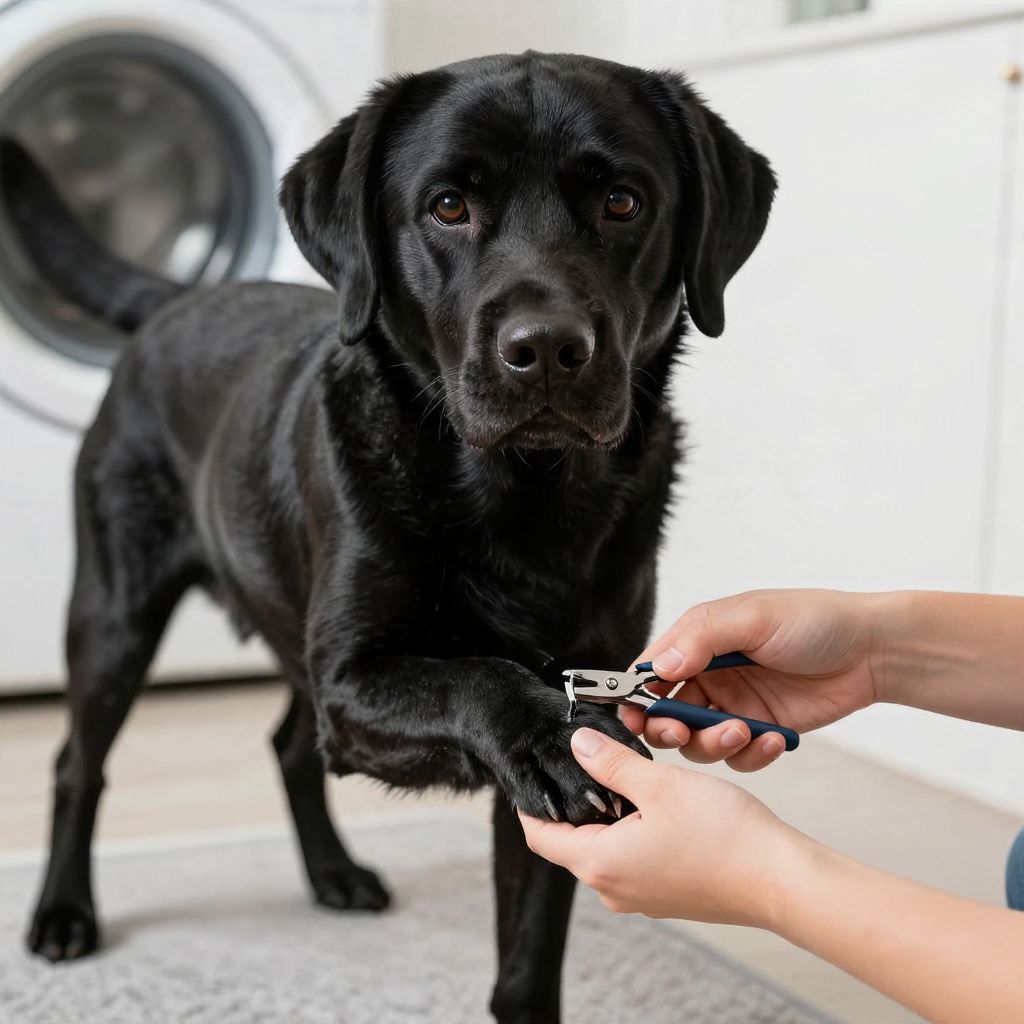
How do you trim black dog nails without cutting the quick? The main challenge is that the quick is hard to see, so you need to work slowly, trim tiny amounts, and watch for visual clues. With the right tools and a calm setup, most dogs can handle nail care safely at home.
The safest approach is to clip small slivers from the tip, stop often, and look for a chalky center or a dark dot that signals you are getting close to the quick. If your dog is anxious, has very thick nails, or has had a bad experience, a groomer or veterinarian can help.
How To Trim Black Dog Nails?
To trim black dog nails, use a sharp clipper or grinder, hold the paw steady, and remove only tiny pieces from the nail tip. After each cut, inspect the nail cross-section. When you see a gray or white center with a small dark circle, stop before the quick and reward your dog.
What You Need Before You Start
Good preparation makes the process safer and less stressful for both you and your dog. Gather everything first so you do not have to fumble while holding a paw.
- Dog nail clippers or a grinder designed for pets
- Styptic powder or another product your vet recommends for minor nail bleeding
- Good lighting
- Treats for calm, reward-based handling
- A towel or non-slip mat for stability
If your dog is nervous, choose a quiet room and keep the session short. For some dogs, especially puppies or dogs new to grooming, a few very short practice sessions work better than one long attempt.
Step-by-Step: How To Trim Black Dog Nails Safely
- Get your dog comfortable. Let your dog sniff the tools, then reward calm behavior.
- Hold one paw gently. Support the toe so the nail is steady, but do not squeeze.
- Trim the tip only. Take off a tiny piece at a time rather than trying to shorten the nail in one cut.
- Check the nail after each cut. Black nails often show a lighter outer shell and a darker center as you get closer to the quick.
- Stop when you see the warning sign. A black dot in the center of the nail usually means the quick is near.
- Reward and move on. Praise your dog and offer a treat before trimming the next nail.
If you accidentally nick the quick, stay calm. Apply styptic powder if you have it and contact your veterinarian if bleeding does not stop quickly or seems heavy.
How much should you trim?
With black nails, less is more. A few millimeters at a time is usually safer than a large cut, because the quick can extend farther than you expect. The goal is gradual shortening over multiple sessions, not a perfect result in one visit.
What does the quick look like in black nails?
In many black nails, the outer nail is hard and dark, while the inner area becomes lighter as you trim. Near the quick, the center may look gray, pinkish, or like a small dark circle. That is your cue to stop trimming that nail.
Should You Use Clippers or a Grinder?
Either tool can work well, and the best choice depends on your dog and your confidence level. Clippers are fast and familiar, while grinders let you remove small amounts gradually and can reduce the risk of taking too much at once.
- Clippers: Good for quick trims if you are steady and your dog tolerates them.
- Grinders: Useful for gradual shaping, especially on thick nails.
Grinders can create heat and vibration, so keep sessions brief and avoid holding the tool in one spot. If your dog dislikes the sound or sensation, a clipper may be less stressful.
How To Keep Your Dog Calm During Nail Trims
Calm handling matters as much as technique. Many dogs learn to tolerate nail care better when you pair it with treats, patience, and predictable routines.
- Start with one or two nails, then stop.
- Use high-value treats your dog enjoys.
- Handle paws briefly between trims so your dog gets used to touch.
- Trim after exercise when your dog is a little more relaxed.
- Do not force a struggling dog to continue for long periods.
If your dog has a history of fear or aggression around grooming, work on desensitization gradually or ask a certified trainer or veterinary behaviorist for help. Safety comes first.
How Often Should Black Nails Be Trimmed?
Most dogs need nail care every few weeks, but the right schedule depends on activity level, nail growth rate, age, and the surfaces your dog walks on. Dogs that walk mostly on soft ground may need more frequent trims than dogs that regularly wear down their nails on rough surfaces.
A practical check is whether the nails touch the floor when your dog stands. If you hear clicking on hard floors, the nails are often too long. Long nails can affect comfort and paw posture, so regular maintenance is worth the effort.
Common Mistakes To Avoid
- Cutting too much at once. Small trims are safer for black nails.
- Using dull tools. Dull clippers can crush the nail and make the experience unpleasant.
- Rushing through the session. Anxiety often increases when you hurry.
- Ignoring the dewclaw. This nail may grow into the skin if neglected.
- Skipping rewards. Positive reinforcement helps future trims go better.
What If Your Dog Has Very Thick, Dark Nails?
Some dogs naturally have thicker or harder nails, and older dogs may have nails that are more brittle or overgrown. In those cases, a grinder or a series of very small clipper cuts may be easier than one large trim. Breed, size, lifestyle, and age can all influence nail thickness, so adjust your method to the individual dog.
If the nails are severely overgrown, curled, cracked, or painful, ask a veterinarian or groomer to handle the first trim. Overgrown nails can be uncomfortable and may change how your dog stands and walks.
When To Stop and Call a Veterinarian
Most routine nail trims are straightforward, but some situations need professional help. Contact your veterinarian if you notice any of the following:
- Bleeding that does not stop promptly
- Swelling, redness, pus, or a bad smell around the nail
- A cracked, split, or partially torn nail
- Limping or obvious pain after trimming
- A nail that is growing into the paw pad or looks infected
If your dog becomes extremely distressed, snaps when handled, or has a medical issue affecting the paws or nails, do not force the trim at home. A professional can help keep the experience safe and less stressful.
Helpful Tips for Puppies and Senior Dogs
Puppies benefit from gentle early handling so nail care becomes normal before they are bigger and more sensitive. Keep sessions very short, reward often, and focus on positive exposure rather than getting every nail perfect.
Senior dogs may have arthritis, reduced balance, or thicker nails that need extra care. Support their body comfortably, move slowly, and choose a stable surface. If standing is difficult, ask your vet whether a modified grooming plan makes sense.
Conclusion
To trim black dog nails safely, work in tiny steps, check the nail after each cut, and stop before you reach the quick. Use patience, good lighting, and rewards, and get professional help if your dog is fearful, painful, or has a nail problem that looks abnormal.
If you want more guidance, you may also find these related dog-care articles helpful: how to trim dog nails that are black and how to cut dog nails.