
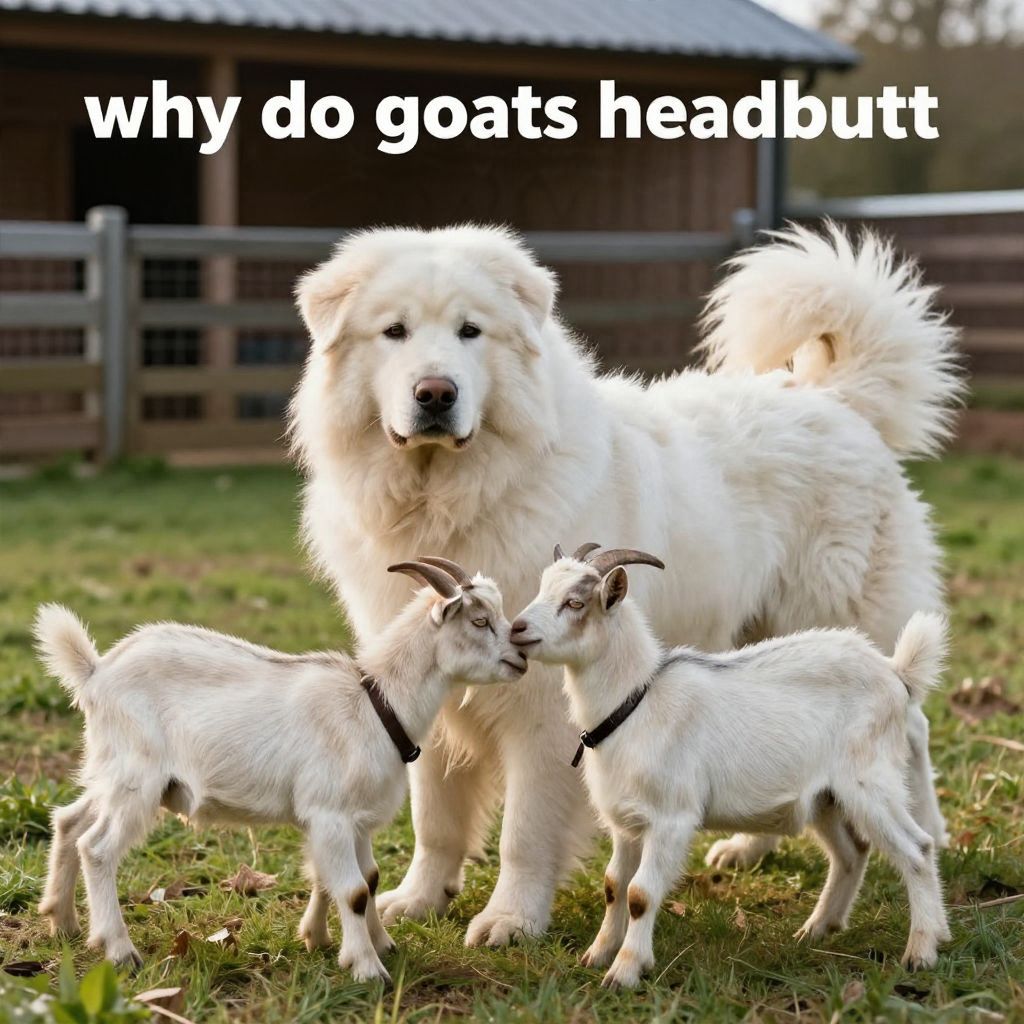
If you’re wondering why do goats headbutt, the short answer is that headbutting is normal goat behavior used for play, sorting out rank, and defending space. It can look rough, but it is often part of how goats communicate with each other.
For dog owners, the main concern is safety. A dog that is curious, pushy, or overly excited around goats can get injured, stress the animals, or trigger a dangerous chase. Supervision and calm management matter.
Why do goats headbutt?
Goats headbutt to communicate, compete, and sometimes play. Young goats may spar as part of normal development, while adults may use headbutting to establish space or protect resources. The behavior is usually more intense during breeding season or in unfamiliar, crowded, or stressful situations.
What this means if your dog is around goats
Dogs and goats read body language differently. A dog that bounces, stares, or tries to herd may look threatening to a goat, which can lead to headbutting, charging, or a chase. Even a friendly dog can accidentally start trouble if it gets too close too fast.
- Curious dogs may approach too quickly and invade a goat’s personal space.
- Herding breeds may be more likely to stalk, circle, or nip, though individual training matters more than breed alone.
- Small dogs can still be at risk if a goat swings its head or pushes with force.
- Large dogs may intimidate goats simply by size, even without aggressive intent.
How to keep your dog safe around goats
If your dog lives near goats, or you visit a farm, the goal is calm distance and controlled introductions. Never assume the animals will “work it out.” Goats can injure a dog with a hard strike, and a frightened dog can escalate the situation.
- Keep your dog on a leash or behind a secure barrier unless a knowledgeable owner says otherwise.
- Allow the dog to observe from a distance first.
- Reward calm behavior such as looking away, sitting, or standing quietly.
- Do not let your dog chase, bark at, or corner a goat.
- End the interaction if either animal becomes tense, fixated, or reactive.
Signs your dog is getting too aroused
- Hard staring
- Forward body lean
- Stiff tail or stiff posture
- Whining, barking, or lunging
- Ignoring cues you normally use
If you see these signs, increase distance right away. Waiting for a goat to headbutt first is not a safe training plan.
Why goats may headbutt a dog specifically
A goat may headbutt a dog because it feels crowded, startled, protective, or challenged. Dogs that rush up, stare, or move unpredictably can trigger a defensive response. Some goats also become bolder if they have learned that other animals move away when they push forward.
Common triggers
- Protecting food, water, or resting space
- Feeling cornered in a pen or small yard
- Hormonal or seasonal behavior in intact animals
- Rough play that becomes too intense
- Stress from noise, strangers, or crowding
How to train your dog to behave calmly near goats
Use reward-based training and management, not punishment. You want your dog to notice goats without fixating on them. Calm behavior should be easy to repeat and heavily reinforced.
Helpful skills to practice
- Look at that: reward your dog for noticing a goat and then looking back at you.
- Leave it: teach your dog to disengage from interesting animals or smells.
- Recall: build a reliable come when called before any off-leash exposure.
- Place or mat work: teach your dog to settle on a bed or platform.
- Loose-leash walking: reduce pulling and lunging near livestock.
Start at a distance where your dog can stay relaxed. If your dog cannot think, eat treats, or respond to cues, the goats are too close for training.
When headbutting is normal and when it is a problem
Goat headbutting is often normal within the species, but it becomes a problem when it is frequent, intense, or directed at a dog, child, or person. The context matters. A brief spar between goats is different from repeated charging at a pet.
Normal-looking behavior may include
- Short, mutual sparring between goats
- Brief posturing followed by disengagement
- Playful but controlled interaction in young animals
Concerning behavior may include
- Repeated charging or chasing
- One animal being unable to escape
- Injury, limping, or bleeding
- Escalation around food or confined spaces
If a goat repeatedly targets your dog, separate them and review fencing, supervision, and animal handling practices. A veterinarian or experienced livestock professional may also help if the goat’s behavior seems sudden or extreme.
What to do if a goat headbutts your dog
Stay calm and create space quickly. Do not try to physically wrestle the goat unless you can do so safely and without putting yourself at risk. Your first job is to prevent another strike and assess whether your dog needs veterinary care.
- Move your dog away from the goat immediately.
- Check for limping, swelling, bleeding, or signs of pain.
- Keep your dog quiet and prevent more running or rough play.
- Contact a veterinarian if your dog seems hurt, dazed, or unusually quiet.
Red flags that need urgent veterinary care
- Difficulty breathing
- Collapse or inability to stand
- Heavy bleeding
- Head tilt, confusion, or abnormal eye movements
- Severe swelling, especially around the face or neck
- Vomiting, seizures, or sudden weakness after impact
Head trauma can be serious even when the outside injury looks minor. If you suspect a hard blow, do not wait for symptoms to “settle down” on their own.
How to prevent problems on farms or in mixed-animal homes
Prevention is mostly about smart setup and supervision. Dogs and goats can sometimes coexist safely, but only when you control access and respect each animal’s space.
- Use secure fencing that prevents nose-to-nose contact through gaps.
- Provide separate feeding areas so no animal has to guard food.
- Supervise all first meetings closely.
- Give goats places to move away from a dog.
- Keep your dog mentally and physically exercised so it is less likely to harass livestock.
For some dogs, especially those with strong chase or herding instincts, lifelong management may be the safest choice. That is not a failure; it is responsible care.
Common mistakes dog owners make
Many problems happen because people assume the animals will naturally understand each other. Goats are not “just like dogs,” and a dog’s friendly approach can still be overwhelming.
- Letting a dog rush up to goats without a leash
- Assuming a puppy is too small to cause trouble
- Using punishment instead of teaching calm behavior
- Ignoring early warning signs like stiff posture or staring
- Leaving dogs and goats together unsupervised
When to ask for professional help
If your dog repeatedly fixates on goats, cannot settle near them, or has already had a frightening encounter, a certified trainer or veterinary behaviorist can help. If your dog is injured, painful, or acting oddly after contact, start with your veterinarian.
Professional help is especially useful if you have a working dog, a puppy learning farm manners, or a dog with a history of reactivity. Early guidance is usually easier than trying to fix a rehearsed habit later.
Bottom line
Goats headbutt because it is normal goat communication, but that behavior can become risky for dogs if they get too close, too fast, or too pushy. Keep your dog supervised, reward calm behavior, and separate the animals if tension appears. If your dog is hit hard or seems injured, contact a veterinarian promptly.
If you want more practical pet-reading, you may also find related guidance helpful in can dogs eat raw fish and what does goat taste like.