
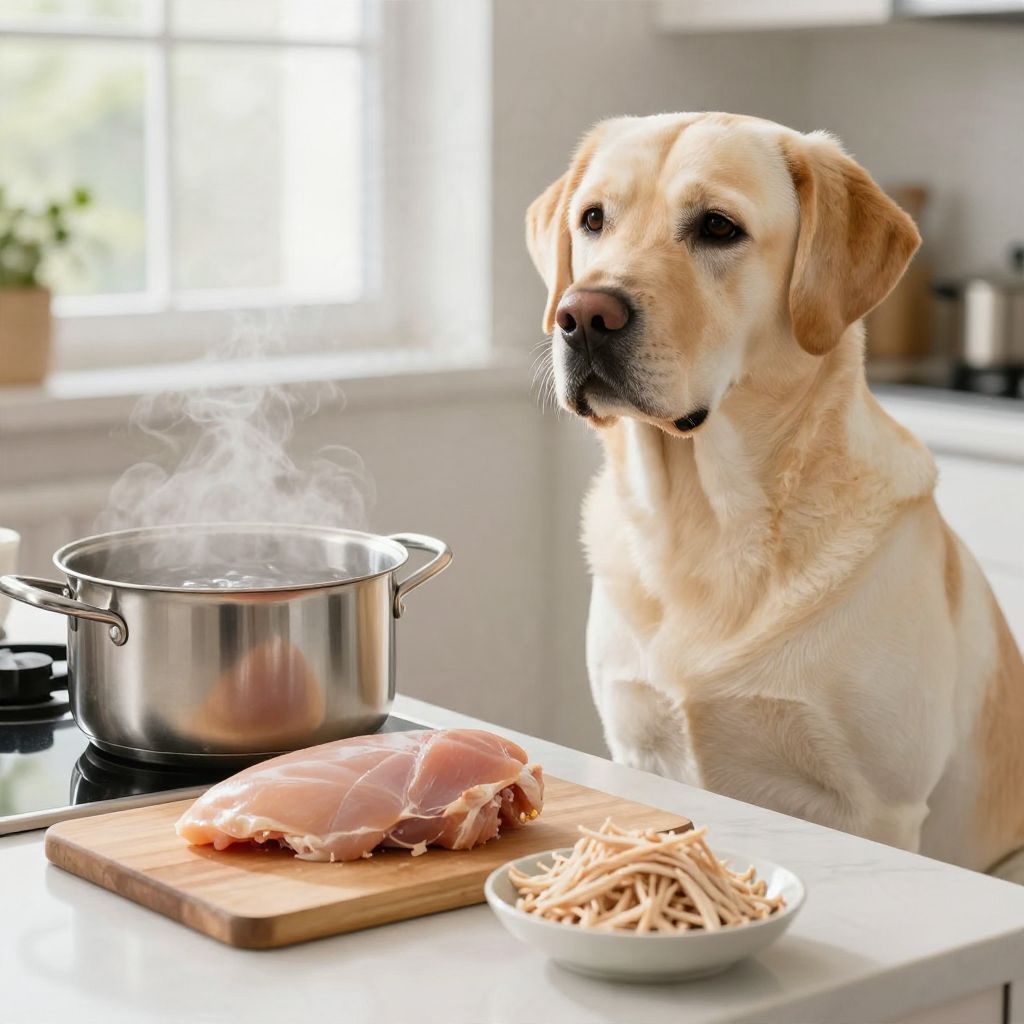
How do you boil chicken breast for dogs safely? The goal is simple: cook plain chicken thoroughly, keep it unseasoned, and serve it in small, appropriate portions. Boiled chicken can be useful as a short-term bland food or a topper, but it should not replace a complete dog diet.
When prepared correctly, it’s easy to digest for many dogs. The key is to avoid salt, onions, garlic, butter, and heavy seasonings, then cool and shred the meat before serving.
How To Boil Chicken Breast For Dogs?
Place boneless, skinless chicken breast in a pot, cover it with water, and simmer until the meat is fully cooked and no longer pink inside. Remove it, let it cool, and shred or chop it into small pieces before serving plain. Always check with your vet if your dog has a medical condition.
Step-by-Step Guide to Boiling Chicken Breast for Dogs
This method is meant for plain chicken only. If you are using it for a sensitive stomach, keep everything simple and avoid adding anything that could upset your dog.
- Choose boneless, skinless chicken breast.
- Rinse your hands, cutting board, and knife before and after handling raw poultry.
- Place the chicken in a pot and add enough water to cover it.
- Bring the water to a boil, then reduce to a gentle simmer.
- Cook until the chicken is fully opaque and no pink remains in the center.
- Remove the chicken and let it cool completely.
- Shred or chop it into bite-sized pieces for your dog.
- Serve plain, or store it safely for later use.
How to tell when it is done
Chicken should be fully cooked through, not just warm on the outside. If you cut into the thickest part, the meat should be opaque and the juices should run clear, not pink.
What You Should Never Add
Plain is best. Many ingredients people use for flavor can be harmful to dogs or can irritate an already sensitive stomach.
- Salt or seasoned broth
- Onion and garlic, including powders
- Butter, oil, cream, or gravy
- Hot spices, chili, or pepper blends
- Bouillon cubes or store-bought soup bases
- Cooked bones, which can splinter
If you want to make the chicken more appealing, keep it plain and mix it with your dog’s regular food after it cools.
How Much Boiled Chicken Can Dogs Eat?
The right amount depends on your dog’s size, age, activity level, and overall diet. Boiled chicken should usually be a small part of the meal, not the whole diet, unless your veterinarian has given you a specific short-term feeding plan.
As a general rule, use it as a topper, training treat, or temporary bland food in modest amounts. Too much chicken can unbalance your dog’s nutrition, especially if it replaces complete and balanced dog food for more than a short period.
Use extra caution with puppies and seniors
Puppies need carefully balanced nutrition for growth, and senior dogs may have dental issues, kidney disease, pancreatitis, or other conditions that change what they should eat. If your dog is very young, elderly, or medically fragile, ask your vet before making chicken a regular part of the diet.
When Boiled Chicken Can Help
Plain boiled chicken is often used when a dog needs a bland, easy-to-chew food. It may be helpful for short-term feeding after stomach upset, during appetite recovery, or as a high-value training reward.
- Short-term bland meals, if your veterinarian says it is appropriate
- Mixing with prescription or recovery diets when advised
- Training rewards for dogs that need a soft, tasty treat
- Encouraging eating in dogs with reduced appetite, with veterinary guidance
Even when it seems gentle, chicken is not the answer for every digestive problem. Some dogs need a different diet, medication, or diagnostic testing.
Safety Risks and Common Mistakes
Most problems with boiled chicken come from seasoning, poor food handling, or serving too much. A few simple precautions can prevent avoidable issues.
- Do not serve undercooked chicken. Raw or partly cooked poultry can carry harmful bacteria.
- Do not use bone-in chicken. Cooked bones can break and injure the mouth, throat, or intestines.
- Do not add broth unless you know it is dog-safe. Many broths contain onion, garlic, or excess salt.
- Do not make chicken the entire diet long-term. Dogs need a complete nutritional balance.
- Do not give large portions all at once. Sudden diet changes can worsen diarrhea or vomiting.
Food storage tips
Refrigerate cooked chicken promptly and use clean containers. If you are not serving it right away, store it in the fridge and discard it if it smells off, feels slimy, or has been left out too long.
Can Boiled Chicken Upset a Dog’s Stomach?
Yes, it can if the portion is too large, the chicken is greasy or seasoned, or your dog is sensitive to poultry. Some dogs also react to a sudden diet change, even when the food is plain.
If your dog has vomiting, diarrhea, gas, or abdominal discomfort after eating chicken, stop offering it and contact your veterinarian if symptoms continue or worsen. For more guidance on digestive upset, you may also find these resources helpful: how to help a dog with diarrhea and what to do if my dog has diarrhea.
When to Call the Vet
Reach out to your veterinarian if you are using chicken because your dog is sick, not eating, or having digestive problems. You should also get professional advice before feeding chicken regularly to a dog with a known health condition.
Seek urgent veterinary care if your dog has repeated vomiting, blood in vomit or stool, severe lethargy, a swollen abdomen, trouble breathing, collapse, signs of choking, or you suspect they ate cooked bones, onions, garlic, or another unsafe ingredient.
Practical Tips for Serving Boiled Chicken
Small adjustments can make chicken safer and easier for your dog to eat.
- Shred it finely for small dogs or dogs with dental trouble.
- Cut it into small cubes for training treats.
- Let it cool fully before serving to avoid mouth burns.
- Mix it with your dog’s usual food if you are transitioning slowly.
- Use it briefly, then return to a balanced diet unless your vet says otherwise.
If your dog is picky, anxious around food, or recovering from illness, keep mealtimes calm and predictable. A familiar routine often helps more than offering richer food.
Simple Takeaway
To boil chicken breast for dogs, keep it plain, cook it fully, cool it, and serve it in small pieces. Use it as a short-term bland food or occasional topper, not a complete diet, and call your vet if your dog has ongoing digestive signs or any red-flag symptoms.