
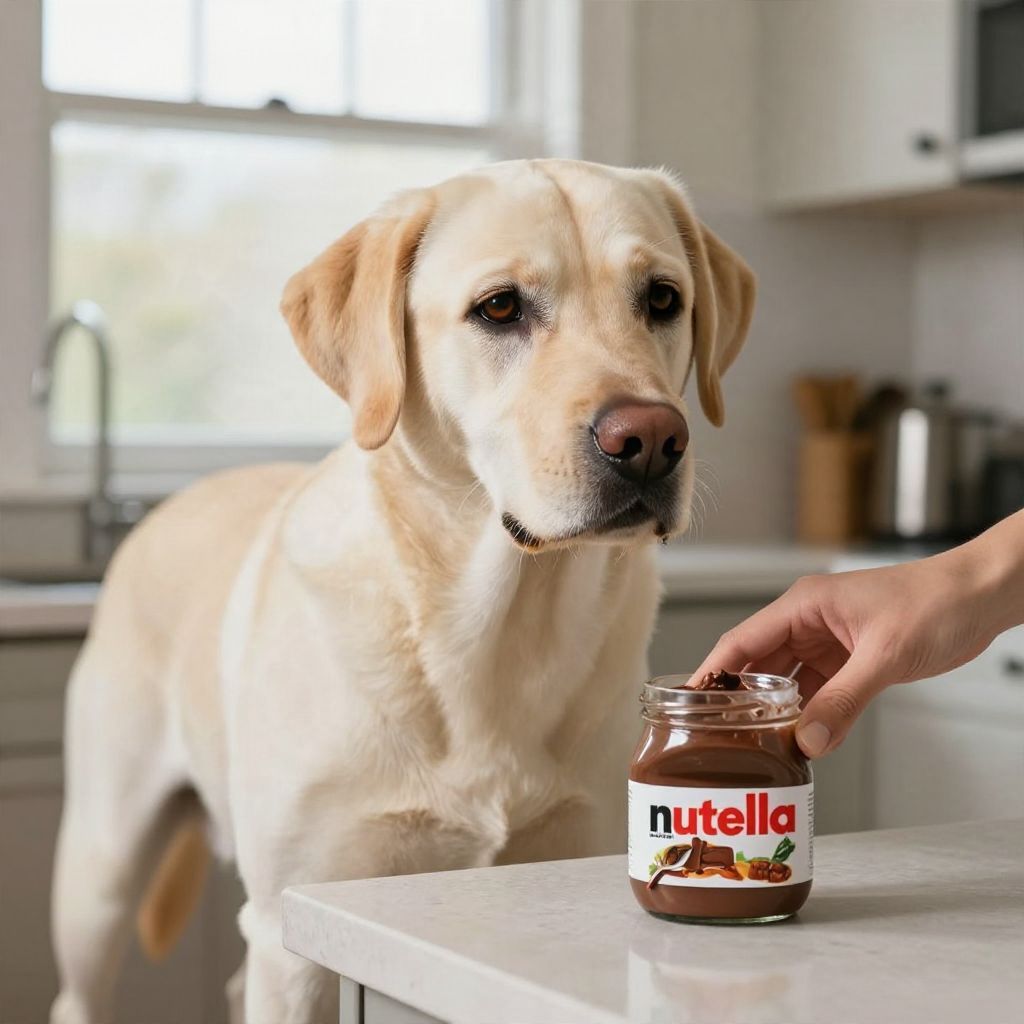
Can dogs eat Nutella? In general, no—Nutella is not a safe treat for dogs. It contains chocolate, sugar, and fat, which can upset digestion and may be risky depending on how much your dog ate.
If your dog licked a tiny amount, they may be okay, but larger amounts, small dogs, puppies, and dogs with health issues need closer attention. When in doubt, call your veterinarian promptly.
Can Dogs Eat Nutella?
No, dogs should not eat Nutella regularly or in meaningful amounts. It is a human spread made with chocolate, sugar, and fat, and those ingredients can cause stomach upset and other problems in dogs. The safest choice is to keep Nutella out of reach and offer dog-safe treats instead.
Why Nutella Can Be a Problem for Dogs
Nutella is not just sweet; it also contains cocoa, which means it includes theobromine and caffeine-related compounds that dogs process poorly. It also has a lot of sugar and fat, which can be hard on your dog’s digestive system.
Chocolate content
Chocolate is the main concern. The amount of risk depends on how much was eaten, your dog’s size, and the type of chocolate involved. Nutella is not the most concentrated chocolate product, but it is still not a safe dog food.
Sugar and fat
Even if the chocolate amount is small, the sugar and fat can still cause vomiting, diarrhea, or abdominal discomfort. In some dogs, a rich food like this can contribute to more serious digestive trouble.
Hazelnuts and added ingredients
Hazelnuts themselves are not the main danger in Nutella, but the spread is still not appropriate for dogs. Some dogs may also react badly to rich, sweet foods in general, especially if they have sensitive stomachs.
What Happens If a Dog Eats Nutella?
Many dogs that eat a small lick or taste will only have mild stomach upset, but symptoms can vary. Larger amounts may cause more noticeable illness, and dogs with smaller body size or pre-existing health problems may be affected more strongly.
- Vomiting
- Diarrhea
- Drooling
- Restlessness or hyperactivity
- Rapid heart rate
- Shaking or tremors
- Abdominal pain
- In severe cases, weakness or collapse
Signs can appear within a few hours, but the timing can vary. If your dog seems unwell after eating Nutella, do not assume it will pass harmlessly.
How Much Nutella Is Dangerous?
There is no single safe amount for every dog, and it is not wise to guess. Risk depends on your dog’s weight, age, overall health, and how much Nutella was eaten. A tiny lick is very different from eating a spoonful or more.
Because chocolate sensitivity varies, it is best not to use a homemade estimate as a safety test. If your dog ate Nutella and you are unsure whether it was enough to matter, contact your veterinarian or a pet poison helpline right away.
What to Do If Your Dog Ate Nutella
Stay calm and figure out what happened as quickly as you can. The more accurate information you have, the better your veterinarian can guide you.
- Check the container and estimate how much may be missing.
- Note your dog’s approximate weight.
- Look for the time the Nutella was eaten.
- Watch for any symptoms such as vomiting, restlessness, or tremors.
- Call your veterinarian for advice, especially if the amount was more than a lick.
Do not try to make your dog vomit unless a veterinarian specifically tells you to do so. Human home remedies can be unsafe and may make the situation worse.
When Nutella Becomes an Emergency
Seek urgent veterinary care if your dog has eaten a large amount of Nutella or shows any serious symptoms. Chocolate-related problems can become more serious over time, so it is better to act early.
- Repeated vomiting
- Severe diarrhea
- Marked agitation or inability to settle
- Muscle tremors or shaking
- Fast or irregular heartbeat
- Difficulty walking
- Seizures
- Collapse
If your dog is a puppy, very small, elderly, or has heart, pancreas, or digestive disease, call a veterinarian sooner rather than later. These dogs may be less able to tolerate rich foods or chocolate exposure.
Does the Risk Change by Dog Size, Age, or Health?
Yes. A large dog may tolerate a small accidental taste better than a toy breed, but that does not make Nutella safe. Smaller dogs can be affected by a smaller amount because the same food represents a larger exposure relative to body size.
Puppies
Puppies have smaller bodies and more sensitive digestive systems. Even a modest amount of Nutella can cause vomiting or diarrhea, and puppies can dehydrate faster if they get sick.
Senior dogs
Older dogs may have slower recovery from stomach upset and may also have other health conditions that make rich foods harder to handle. If your senior dog eats Nutella, it is sensible to call your vet even if symptoms are mild.
Dogs with medical conditions
Dogs with pancreatitis history, food sensitivities, diabetes, obesity, or heart disease may be at greater risk from fatty or sugary foods. For these dogs, even a small amount of Nutella may be a bigger concern.
Can a Dog Have a Tiny Lick?
A single lick is less concerning than a spoonful, but it is still not something to encourage. If your dog only got a tiny taste and seems normal, monitor them for stomach upset and keep the rest of the jar secured.
If your dog has a history of digestive issues or you are unsure how much was actually eaten, it is sensible to call your vet. Small exposures can still matter more in tiny dogs.
Safer Treat Alternatives to Nutella
If you want to share a special snack, choose dog-safe options instead of chocolate spreads. Treats should still be given in moderation and should not replace a balanced diet.
- Plain cooked pumpkin in small amounts
- Small pieces of apple without seeds or core
- Blueberries
- Plain cooked sweet potato
- Dog treats made specifically for canine diets
If you want to use food for training or enrichment, keep portions tiny and choose simple ingredients that your dog already tolerates well.
Common Mistakes to Avoid
People often assume that because Nutella is only a spread, it must be harmless. That can lead to accidental overfeeding or delayed action after a dog steals some from the counter.
- Assuming “just a little” is always safe
- Waiting for symptoms before calling for advice
- Giving more rich food after the incident
- Using human remedies without veterinary guidance
- Leaving jars, spoons, or toast within reach
Prevention matters because dogs are often quick to investigate sweet smells and sticky leftovers. Secure food storage is one of the easiest ways to avoid emergency calls.
How to Prevent Future Accidents
Simple management can reduce the chance of your dog getting into Nutella or other unsafe human foods.
- Store Nutella in a closed cabinet or high shelf.
- Do not leave toast, knives, or jars unattended on counters.
- Teach a reliable “leave it” cue using reward-based training.
- Keep trash cans covered and out of reach.
- Supervise children and guests who may not know the rules.
Training helps, but management is still important. Even well-trained dogs can be tempted by a sticky, sweet smell when no one is watching.
When to Call Your Veterinarian
Call your veterinarian if your dog ate more than a small taste of Nutella, if you do not know how much was eaten, or if your dog has any symptoms. Quick advice is especially important for small dogs and dogs with medical conditions.
If your dog is acting normally after a tiny lick, your vet may advise monitoring at home. If there is any doubt, it is always better to ask than to wait for symptoms to worsen.
For more help with chocolate-related accidents, see what to do if your dog eats chocolate. If you are also wondering about other human foods, you may find can dogs eat raw fish? useful for comparing safe and unsafe feeding choices.
Bottom line: dogs should not eat Nutella, and any accidental exposure should be taken seriously. A tiny lick may only cause mild upset, but larger amounts or any concerning symptoms deserve prompt veterinary advice.