
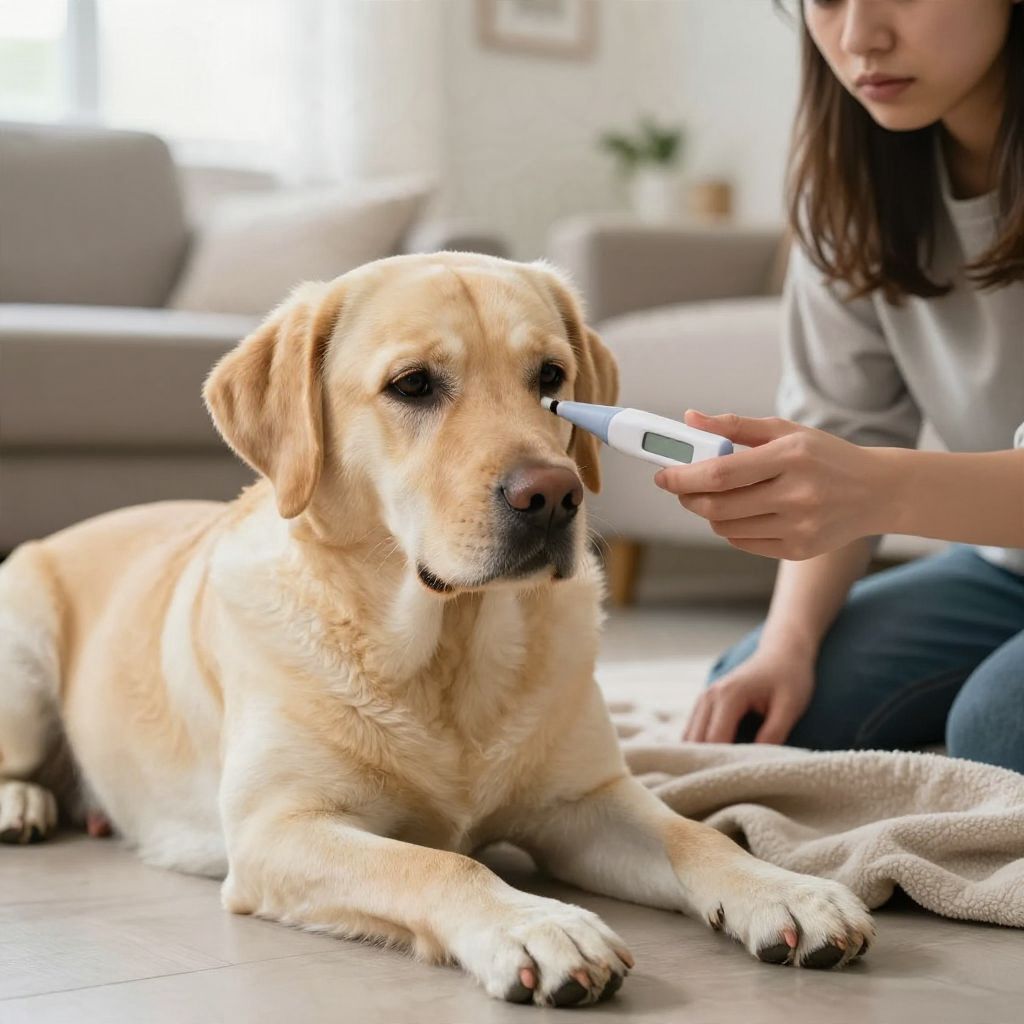
If you’re wondering how do you know if your dog has a fever, the safest answer is that you usually can’t tell for sure by touch alone. A warm nose, panting, or a sleepy mood can happen for many reasons, so the most reliable way to check is with a rectal thermometer and a calm, careful approach.
Fever can signal infection, inflammation, pain, or another health problem. If your dog seems unwell, watch for other symptoms and contact your veterinarian, especially if your dog is a puppy, senior, or has ongoing medical issues.
How do you know if your dog has a fever?
You can suspect a fever if your dog seems unusually tired, is eating less, is shivering, or feels warm, but these signs are not proof. The only dependable way to confirm a fever is to take your dog’s temperature with a digital rectal thermometer. A normal dog temperature is usually higher than a human’s.
What temperature counts as a fever in dogs?
In general, a dog’s normal temperature is about 100 to 102.5°F. A temperature above that range may indicate a fever, while a very high temperature can be an emergency. Because stress, exercise, and excitement can affect readings, take the temperature when your dog is resting if possible.
Common signs that may suggest your dog has a fever
Fever often comes with other changes, not just a warm body. Some dogs act obviously ill, while others only seem “off.”
- Low energy or unusual tiredness
- Reduced appetite
- Shivering or trembling
- Warm ears, paws, or body
- Dry nose or dehydration signs
- Red or glassy eyes
- Vomiting or diarrhea
- Coughing, nasal discharge, or other illness signs
These signs can also happen with pain, heat stress, anxiety, or other illnesses. That is why temperature checking matters.
Why feeling your dog’s nose is not enough
A dry or warm nose does not reliably mean fever, and a cool nose does not rule one out. Dogs’ noses change throughout the day based on weather, sleep, licking, hydration, and environment. Relying on nose temperature can lead to missed illness or unnecessary worry.
How to check your dog’s temperature at home
If your veterinarian has shown you how, a digital rectal thermometer is the most accurate home method. If your dog is painful, anxious, or difficult to handle, stop and call your vet rather than forcing the process.
- Use a digital thermometer labeled for pets or people.
- Have another person help if needed.
- Apply a small amount of pet-safe lubricant to the tip.
- Lift the tail gently and insert the thermometer carefully into the rectum.
- Wait for the reading, then remove it and clean it thoroughly.
If your dog resists strongly, seems painful, or becomes more distressed, do not keep trying. A vet visit is safer and less stressful.
When a home temperature reading may be unreliable
- Your dog has just exercised or been outside in heat
- Your dog is highly stressed or panting heavily
- The thermometer is not used correctly
- Your dog is too small, too painful, or too fearful to handle safely
What can cause a fever in dogs?
Fever is a symptom, not a diagnosis. Common causes include infections, inflammation, immune-related disease, wounds, and some medications or reactions. In some cases, the cause is not obvious without a veterinary exam and testing.
Examples may include:
- Ear, skin, urinary, or dental infections
- Respiratory illness
- Infected cuts or bite wounds
- Inflammatory or immune-mediated disease
- Heat-related illness
- Complications after surgery or injury
Because the cause matters, it is important not to assume a fever is “just a bug.”
When a fever is an emergency
Seek urgent veterinary care right away if your dog has a very high temperature, collapses, has trouble breathing, seems confused, or cannot stand. These signs can point to heatstroke, severe infection, or another life-threatening problem.
Call a veterinarian promptly if your dog has fever plus any of the following:
- Repeated vomiting or diarrhea
- Bloody stool or vomit
- Seizures
- Severe pain
- Swollen face or hives
- Refusal to drink
- Gums that look pale, blue, or brick red
- Fever lasting more than a day or returning repeatedly
What you should do while you’re waiting to see the vet
Keep your dog calm, cool, and comfortable. Offer fresh water, limit activity, and monitor for changes in breathing, alertness, and gum color. Do not give human fever medicines unless your veterinarian specifically instructs you to do so.
- Move your dog to a quiet, shaded, comfortable area
- Encourage small amounts of water if your dog is willing
- Keep notes on symptoms, appetite, and temperature readings
- Bring a list of recent exposures, medications, and injuries to the vet
Do not use over-the-counter human pain relievers or fever reducers without veterinary guidance. Some are dangerous to dogs.
How age, size, and health can affect fever concerns
Any dog can develop a fever, but some need faster attention. Puppies, senior dogs, and dogs with chronic illness may become dehydrated or weak more quickly than healthy adults. Small dogs can also seem to decline faster because they have less reserve.
Individual factors matter too. A dog with a history of immune disease, cancer, recent surgery, or ongoing medication may need a lower threshold for veterinary evaluation.
Why puppies need extra caution
Puppies can deteriorate quickly, and fever may be one of the first signs of a serious infection. If a puppy seems lethargic, won’t eat, or has vomiting or diarrhea, contact a veterinarian promptly.
Why senior dogs may show subtle signs
Older dogs may not act dramatically sick. A slight drop in energy, slower movement, or reduced appetite can still be important, especially if the change is new.
Common mistakes people make when checking for fever
It’s easy to misread signs when you’re worried about your dog. Avoid these common mistakes:
- Assuming a warm nose means fever
- Using touch alone instead of a thermometer
- Waiting too long because the dog “still seems okay”
- Giving human medication without veterinary advice
- Ignoring fever in a puppy, senior dog, or medically fragile dog
How your veterinarian may confirm the cause
If your dog has a fever, your vet may recommend an exam and tests based on the symptoms. Depending on the situation, this could include a physical exam, bloodwork, urine testing, imaging, or checks for infection or inflammation.
That approach helps identify whether the fever is linked to a localized problem, a systemic illness, or something that needs urgent treatment.
How to reduce the chance of missing illness
You can’t prevent every fever, but you can notice problems earlier by paying attention to your dog’s normal routine. Changes in appetite, energy, drinking, bathroom habits, and breathing often show up before a crisis.
- Know your dog’s usual behavior and appetite
- Check for cuts, swelling, discharge, or limping after outdoor activity
- Keep vaccines and parasite prevention current as advised by your vet
- Call sooner rather than later if your dog seems “not right”
When to call the vet even if you’re unsure
If you’re asking how do you know if your dog has a fever and your dog also seems sick, it is reasonable to call your veterinarian for advice. You do not need to wait until the symptoms become severe. Early guidance is especially important for puppies, seniors, and dogs with other health conditions.
If you want more help comparing signs and next steps, you may also find these guides useful: how to tell if your dog has a fever and how can you tell if a dog has a fever.
In short, the best way to know if your dog has a fever is to check their temperature, not just their nose or mood. If the reading is high or your dog has worrying symptoms, contact your veterinarian promptly so the cause can be found and treated safely.