
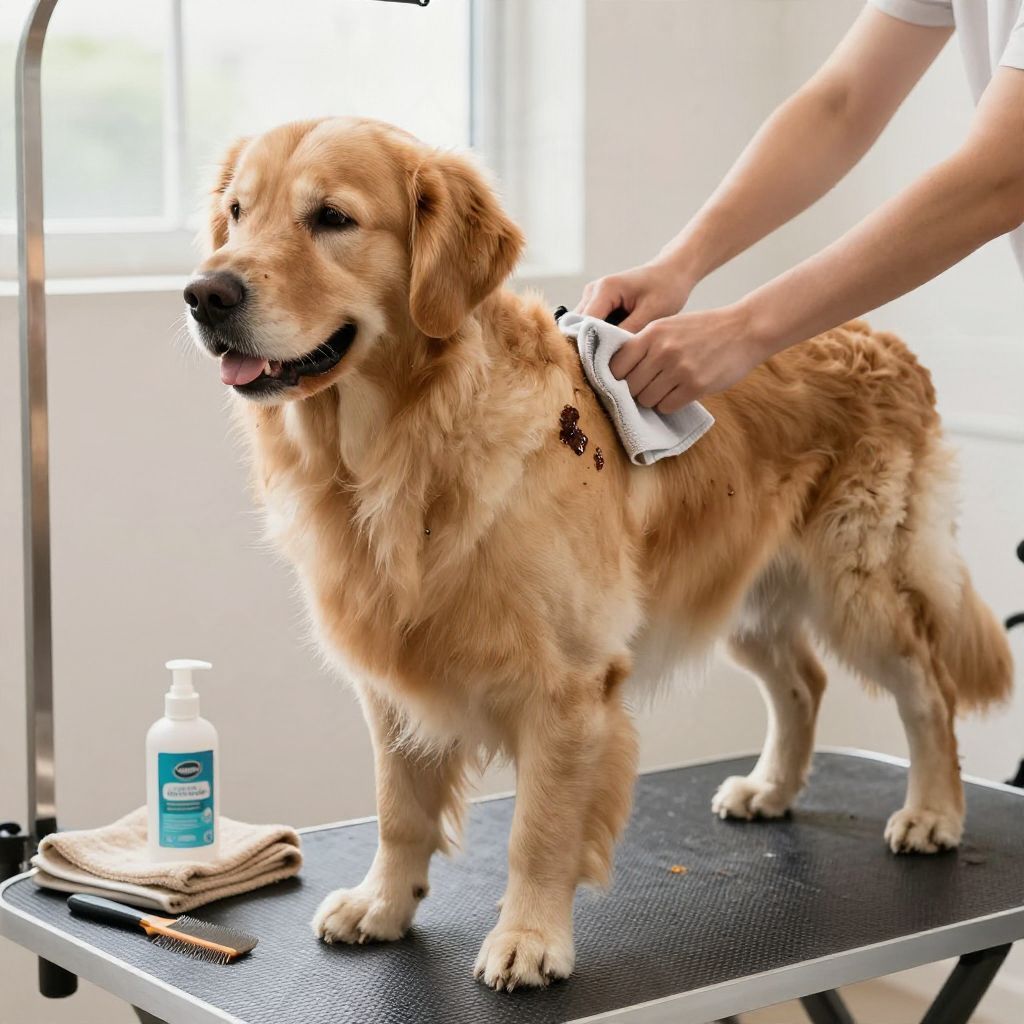
Sap in dog fur can be sticky, painful to remove, and frustrating for both of you. The safest approach is to soften the sap first, then work it out gently without pulling at the coat or irritating the skin.
You can usually remove small amounts at home with patience, a dog-safe oil or conditioner, and careful combing. If the sap is near the eyes, on broken skin, or deeply matted, contact your veterinarian or a professional groomer for help.
How do you get sap out of dog fur?
To get sap out of dog fur, soften the sap with a small amount of dog-safe oil or petroleum jelly, let it sit briefly, then gently work it out with your fingers and a comb. Wipe away residue with mild dog shampoo and warm water. Never pull hard or cut close to the skin.
What you need before you start
Gather everything first so you can keep your dog calm and avoid rushing. A few simple supplies are usually enough for light to moderate sap.
- Dog-safe grooming comb or slicker brush
- Soft cloths or paper towels
- Dog shampoo
- Dog-safe oil, unscented mineral oil, or petroleum jelly
- Warm water
- Optional: blunt-tipped grooming scissors for only severe mats, if you are trained to use them safely
If your dog is anxious, have treats ready and keep the session short. A second person can help gently steady your dog if needed.
Step-by-step: removing sap safely
1. Keep your dog calm and still
Choose a quiet area with good lighting. Speak calmly, and let your dog sniff the towel or comb before you begin.
If the sap is on a paw, you may be able to hold the paw gently while your dog stands or lies down. For a wiggly puppy or nervous dog, work in short breaks rather than trying to finish all at once.
2. Soften the sap
Apply a small amount of dog-safe oil or petroleum jelly directly to the sap. Let it sit for a few minutes so the sticky resin loosens.
This step matters because hard sap can cling tightly to hair shafts. Softer sap is much easier to remove without breaking fur or irritating the skin.
3. Work the sap out with your fingers
Use your fingers to gently separate the coated hairs. Start at the outer edge of the sap and slowly loosen it bit by bit.
Do not yank the fur. Pulling can hurt your dog and may cause the coat to tangle more tightly around the sap.
4. Comb through the area
Once the sap begins to loosen, use a comb to lift residue from the coat. Hold the fur near the skin with your free hand so you do not tug on the skin itself.
If the comb catches, stop and add a little more oil rather than forcing it through.
5. Wash the area
After most of the sap is gone, wash the fur with mild dog shampoo and warm water. Rinse thoroughly so no oily residue remains, since leftover oil can attract dirt and make the coat greasy.
Dry the area with a towel. If your dog tolerates it, you can brush the fur again once it is dry to check for any remaining sticky spots.
What not to do when removing sap
Some common shortcuts can make the problem worse or create a safety issue. Avoid these mistakes:
- Do not pull sap off forcefully.
- Do not use scissors close to the skin unless you are experienced and the mat is severe.
- Do not use harsh solvents, paint thinner, gasoline, or other chemicals.
- Do not use products that irritate skin or could be licked off and swallowed.
- Do not bathe first if the sap is still hard and sticky, because water alone may spread it through the coat.
For most dogs, gentle softening and combing works better than aggressive cutting or scrubbing.
When sap is especially hard to remove
Long-haired or curly-coated dogs
Dogs with long, dense, or curly coats may trap sap deeper in the hair. In these coats, the sap can form clumps that are harder to separate by hand.
You may need to work in smaller sections and spend more time combing. If the coat is heavily tangled, a groomer may be the safest option.
Puppies and senior dogs
Puppies may squirm because they are still learning to tolerate grooming, while older dogs may have sore joints or sensitive skin. In both cases, keep handling gentle and brief.
If your dog seems painful when touched, stop and check for skin irritation, cuts, or hidden debris under the sap.
Sap on the face, ears, or paws
These areas need extra care. Sap near the eyes, nose, or inside the ears can be difficult to remove safely at home.
For paws, check between the toes and around the pads. Sticky residue there can make walking uncomfortable and can trap dirt or small bits of debris.
When to call a veterinarian or groomer
Most minor sap problems can be handled at home, but some situations need professional help. Contact a veterinarian or groomer if:
- The sap is close to the eyes, mouth, or inside the ear
- Your dog has broken skin, redness, swelling, or bleeding
- The sap is stuck in a large mat that cannot be loosened gently
- Your dog is in visible pain or will not let you touch the area
- You suspect your dog licked or swallowed a questionable substance along with the sap
- The coat is so tangled that cutting it yourself could injure the skin
Urgent care is important if sap or a related substance gets into the eye, if your dog has trouble breathing, or if you notice severe swelling, repeated vomiting, or sudden weakness after exposure to a tree resin, plant, or chemical product.
How to prevent sap from getting stuck again
A few simple habits can reduce repeat messes, especially if your dog likes wooded trails, parks, or backyard trees.
- Check fur after walks, especially on the legs, chest, belly, and tail
- Brush long coats regularly to prevent tangles that trap sticky debris
- Keep fur trimmed around the feet if your groomer recommends it for your dog’s coat type
- Avoid letting your dog rub against fresh tree sap or sticky plant material
- Wipe paws and lower legs after outdoor play in wooded areas
Dogs that love exploring brush or climbing under trees may need more frequent coat checks than dogs that mostly stay on paved paths.
Common questions about sap removal
Can you use peanut butter or cooking oil?
Some people use household oils to loosen sticky substances, but it is better to choose a dog-safe grooming product when possible. If you use any oil, keep the amount small and wash the coat afterward so your dog does not lick up excess residue.
Should you cut the sap out?
Only if the affected area is small and you can safely trim just the sticky tips. If the sap is close to the skin or part of a tight mat, cutting can nick the skin fast, so a groomer is safer.
Will bathing alone remove sap?
Not usually. Water alone often spreads the sap and makes it harder to remove. Softening first is the key step.
What if the sap is already hard?
That is normal. Letting a dog-safe oil sit on the area for a few minutes usually helps break down the stickiness so you can comb it out more easily.
Bottom line
The safest way to get sap out of dog fur is to soften it first, remove it gently with your fingers and a comb, then wash the coat afterward. Stay patient, avoid harsh chemicals, and get professional help if the sap is near sensitive areas or the coat is badly matted.
If you are dealing with other sticky or smelly coat problems, you may also find it helpful to read about how to get skunk smell out of a dog and how to get dog pee out of a mattress.